
Diseases
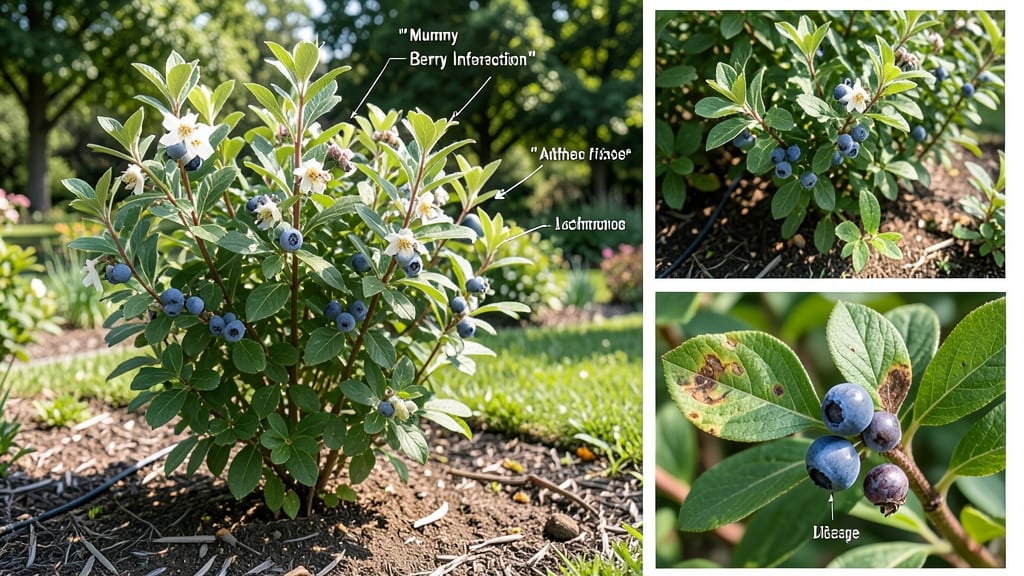
Spotting blueberry bush diseases with pictures can save your harvest from turning into a sad, spotted mess—if you catch them early. 🌿 I’ve spent years battling mummy berry, stem blight, and leaf spot, and the key to saving your bushes is knowing what to look for before it’s too late.
This guide breaks down the most common diseases with clear symptoms so you can act fast.
The worst part? Many of these diseases start small—tiny brown spots on leaves or fuzzy gray mold on berries—before spreading like wildfire. Mummy berry, for example, turns fruit into mummified shells, while stem blight causes blackened canes that weaken the whole plant.
Prevention is easier than cleanup, but once you spot the signs, organic sprays and pruning can turn things around.
By the end, you’ll recognize these diseases in seconds and know exactly how to treat them—whether it’s removing infected berries, applying copper fungicide, or adjusting watering habits. Your bushes will stay healthy, productive, and free of the ugly spots that ruin harvests.
Works for both backyard bushes and commercial plantings, and the fixes are simple enough for beginners but effective enough for experts. Let’s get those blueberries thriving again!
Root Causes Of Blueberry Struggles
Blueberry bushes may look delicate, but they’re tough little plants—when given the right conditions. Unfortunately, diseases don’t wait for permission to strike. Understanding why these issues pop up is half the battle in keeping your bushes thriving.
Let’s break down the science behind the chaos so you can outsmart the problems before they take root.
Blueberries are finicky about their environment, and Mother Nature often throws curveballs. Extreme temperatures, humidity swings, and poor air circulation create the perfect storm for fungal and bacterial invaders. Here’s how:
- High humidity + warm nights: Fungi like Botrytis cinerea (gray mold) and Venturia inaequalis (apple scab, which can affect blueberries too) thrive in damp conditions. When moisture lingers on leaves or fruit, spores germinate like popcorn in a microwave. 🌧️🍄
- Frost damage: Early spring frosts can rupture cell walls, leaving bushes vulnerable to secondary infections. The wounds act like open doors for pathogens.
- Drought stress: While blueberries love moisture, too little water weakens their defenses. Stressed plants produce less chlorophyll, making them more susceptible to sun scorch and disease.
💡 Pro Tip: Space bushes properly (3–6 feet apart) to improve airflow. Mulch with pine needles (blueberries love acidic soil!) to regulate soil moisture and deter fungal spores from splashing up onto leaves.
Not all microbes are bad—some are essential for decomposition—but when the wrong ones show up, your blueberry bush becomes a buffet. Here’s how these troublemakers sneak in:
🍄 Fungal Foes: The Silent Saboteurs
Fungi spread via spores, which hitch rides on wind, water, or even your gardening tools. Common culprits include:
- Mummy Berry Fungus (Monilinia vaccinii): This sneaky pathogen overwinters in infected mummified fruit, then releases spores in spring. When conditions are warm and wet, it infects flowers and fruit, causing them to wither into "mummies." 🧟♂️🍇
- Anthracnose (Colletotrichum spp.): Thrives in wet, humid conditions, causing dark, sunken lesions on leaves, stems, and fruit. It enters through natural openings or wounds.
- Powdery Mildew (Podosphaera aphanis): Spreads via windborne spores, coating leaves in a white, powdery film that blocks sunlight and stunts growth.
🦠 Bacteria: The Stealth Invaders
Bacterial diseases often enter through wounds or weak points. Two notorious offenders:
- Bacterial Blight (Xanthomonas campestris pv. vaccinii): Spreads through water splashing or contaminated pruners. It causes dark, water-soaked spots on leaves and fruit, leading to dieback. 💦🔪
- Canker Diseases (Pseudomonas spp.): Invades through pruning cuts or storm damage, creating sunken, oozing lesions that girdle stems and kill branches.
🦠 Viruses: The Invisible Hitchhikers
Viruses like Blueberry Shock Virus or Raspberry Bushy Dwarf Virus spread via infected plant material, aphids, or even contaminated tools. Once inside, they disrupt cell function, causing stunted growth, leaf distortion, and reduced fruit production. The worst part? There’s no cure. Prevention is key.
🔥 Action Step: Always sterilize pruners with rubbing alcohol between cuts. Remove and destroy infected plant debris immediately—do not compost diseased material!
Blueberries are divas about their soil. Too much or too little of anything—pH, nutrients, or organic matter—throws their immune system off balance. Here’s how:
- Wrong pH (too alkaline): Blueberries crave acidic soil (pH 4.5–5.5). If the soil pH creeps above 6.0, nutrient uptake falters, and the plant becomes stressed, making it easier for diseases like Phytophthora root rot to move in. 🧪📉
- Nitrogen overload: Too much nitrogen promotes lush, soft growth that’s magnet for fungal infections. It also delays hardening off, leaving bushes vulnerable to winter damage.
- Compacted or waterlogged soil: Poor drainage leads to root asphyxiation and invites Phytophthora or Pythium fungi, which rot roots and crowns. 💦😵
- Deficiencies in micronutrients: Lack of magnesium (causing yellowing between leaf veins) or boron (leading to cracked fruit) weakens the plant’s structural integrity and disease resistance.
🌡️ Soil Science Hack: Test your soil annually. If pH is off, amend with sulfur (to lower pH) or peat moss. For drainage, mix in perlite or sand. And never use fresh manure—it raises pH and burns roots!
Pests don’t just eat your blueberries—they deliver diseases. Here’s how their actions create perfect infection conditions:
- Aphids and mites: These sap-suckers weaken plants and excrete honeydew, a sticky residue that fosters sooty mold (a black fungal growth). They also spread viruses like Blueberry Leaf Mite. 🐜🍯
- Japanese beetles: Their feeding skeletonizes leaves, creating wounds where bacteria and fungi can enter. Plus, they love ripe blueberries, speeding up rot.
- Birds and rodents: They peck at fruit, creating entry points for mummy berry spores or bacterial blight. Their droppings also spread pathogens.
- Nematodes: These microscopic worms damage roots, reducing water and nutrient uptake. Weak roots = easier target for root rot fungi.
🎯 Prevention Tip: Use row covers early in the season to block pests. Introduce beneficial insects like ladybugs or lacewings to keep aphids in check. And clean up fallen fruit—it’s a buffet for pests and pathogens!
Fixing Blueberry Bush Problems
When your blueberry bushes show signs of distress, quick action can save the day! Below are practical, step-by-step solutions for the most common diseases, along with prevention tips to keep your bushes thriving. 🌱💧
Fix it:
- Prune infected fruit 🔪 – Cut off mummified berries (gray, shriveled) as soon as you spot them. Dispose of them in the trash (not compost).
- Clean up fallen debris 🧹 – Rake up leaves and fruit from under the bush to eliminate fungal spores.
- Apply fungicide 🛡️ – Spray with a copper-based fungicide (like Bordeaux mixture) in early spring (before blooms) and after harvest.
- Replace diseased bushes ⚰️ – If infection is severe, dig up and destroy the plant to prevent spread.
Prevent it:
- Choose resistant varieties (e.g., 'Duke,' 'Jersey') if mummy berry is common in your area.
- Improve airflow by spacing bushes 4–6 feet apart.
- Avoid overhead watering—use drip irrigation instead.
Fix it:
- Prune affected canes ⏰ – Cut back blackened, mushy stems 6 inches below the infected area.
- Remove infected fruit & flowers 🍇 – Discard any berries with gray mold.
- Spray fungicide 💦 – Use a fungicide with myclobutanil or captan at bud swell and again after harvest.
- Thin canes 🌿 – Overcrowding worsens humidity; prune to improve airflow.
Prevent it:
- Water in the morning so foliage dries quickly.
- Space bushes properly (4–5 feet apart).
- Avoid late-season nitrogen—it encourages lush growth that’s prone to rot.
Fix it:
- Remove infected leaves & fruit 🗑️ – Burn or trash them (do not compost).
- Prune for airflow 🌬️ – Thin canes to reduce humidity in the center.
- Apply fungicide 🛡️ – Use chlorothalonil or copper fungicide every 10–14 days during wet seasons.
- Clean tools 🔧 – Sterilize pruners with rubbing alcohol between cuts.
Prevent it:
- Plant in full sun (6+ hours/day) to dry foliage faster.
- Mulch properly (2–3 inches of straw) but keep it away from stems.
- Avoid wetting leaves when watering.
Fix it:
- Prune infected leaves 🍃 – Cut off orange pustules and dispose of them.
- Spray copper fungicide 🛡️ – Apply copper sulfate or copper hydroxide at bud break and again in summer.
- Remove alternate hosts 🌿 – Rust can jump to nearby plants like blackberry or raspberry; prune those too.
Prevent it:
- Rotate crops if possible—don’t plant blueberries in the same spot yearly.
- Choose rust-resistant varieties (e.g., 'Bluecrop,' 'Bluejay').
- Avoid overhead irrigation—use drip systems.
Fix it:
- Improve drainage 💧 – Amend soil with compost or sand if it’s clay-heavy.
- Adjust watering 🚰 – Water deeply but only when the top inch of soil is dry.
- Apply fungicide 🍄 – Use phosphite-based fungicides (like Subdue) to strengthen roots.
- Replace mulch 🌿 – If mulch is too thick, reduce it to 2 inches to prevent moisture buildup.
Prevent it:
- Plant on a slight mound to encourage runoff.
- Avoid compacted soil—loosen with a garden fork if needed.
- Test soil pH (4.5–5.5 is ideal for blueberries).
✅ Rotate fungicides – Don’t use the same one repeatedly to prevent resistance. ✅ Monitor regularly – Check bushes weekly during growing season for early signs. ✅ Buy certified plants – Purchase from reputable nurseries to avoid bringing diseases home.
With these simple fixes and smart prevention, your blueberry bushes will bounce back stronger—and you’ll enjoy juicy, disease-free berries for years! 🍇💙
Frequently asked questions
What are the most common signs of mummy berry disease in my blueberry bushes?
Look for gray, shriveled berries that look like tiny mummies hanging on the bush—this is the classic sign. You’ll also see dark brown spots on leaves and stems. These infected berries release spores in spring, starting the cycle all over again. Remove them immediately to stop the spread!
Can I use home remedies like baking soda or neem oil to treat blueberry diseases?
Yes, but with limitations! A 1 tablespoon baking soda + 1 teaspoon dish soap + 1 gallon water spray can help prevent fungal diseases like powdery mildew. Neem oil (mixed with water and a drop of soap) works against some fungal spores but won’t cure advanced infections. For serious issues like mummy berry, use copper fungicide instead—it’s more effective.
How do I know if my blueberry bush has root rot instead of another disease?
Root rot shows up as yellowing leaves even when soil is wet, mushy brown roots when dug up, and stunted growth. Unlike leaf spot or blight, root rot affects the whole plant—not just specific areas. Improve drainage immediately by amending soil with compost or sand, and reduce watering until the soil dries out.
Will pruning my blueberry bushes help prevent diseases?
Pruning does three critical things: improves airflow (reducing humidity), removes infected branches, and opens the bush to sunlight (which dries leaves faster). Cut out dead, crossing, or diseased canes in late winter/early spring, and thin the center to let light reach all parts. Sterilize your tools with rubbing alcohol between cuts!
Can blueberry diseases spread to other plants in my garden?
Some can! Diseases like leaf rust or mummy berry can jump to related plants (raspberries, blackberries). Others, like root rot, stay contained. To prevent cross-contamination, keep blueberries at least 10 feet away from other berry plants, sterilize tools between bushes, and avoid overhead watering that splashes spores.