
Fertilization
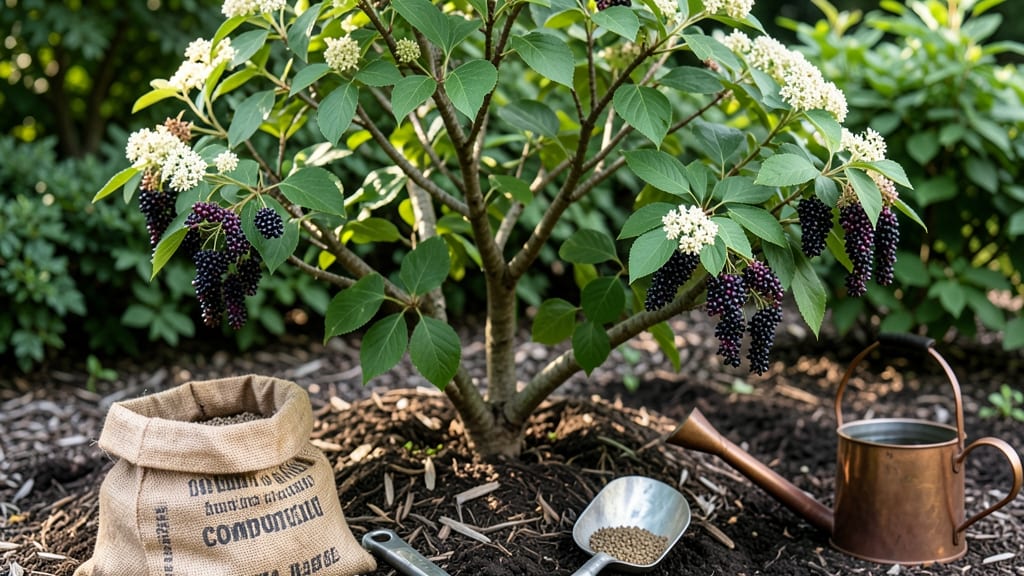
The right fertilizer for elderberry bushes is the secret to transforming those tiny green berries into plump, flavorful clusters 🫐 — and it’s easier than you think.
Picture this: You’ve spent months nurturing your elderberry bushes, only to harvest a meager crop of small, tart berries. The problem? More often than not, it’s not the soil or water — it’s the fertilizer.
Too much nitrogen makes leaves grow like crazy but leaves your berries underwhelming, while a potassium deficiency can stunt fruit production entirely. The right balance is everything.
Elderberries thrive when their fertilizer matches their needs: a moderate nitrogen kick to fuel growth, but with enough potassium and phosphorus to support strong roots and sweet berries.
Organic options like composted manure or synthetic blends with a 3-4-4 NPK ratio work wonders, but timing matters just as much as the mix. Apply it at the right moments, and you’ll see bigger harvests in just one season.
In this guide, I’ll walk you through the best organic and synthetic fertilizers for elderberries, when to feed them, and how to spot nutrient deficiencies before they ruin your harvest. No guesswork — just proven results for your backyard bushes.

Understanding the ideal nitrogen-potassium ratio for elderberry fertilizer
Elderberry bushes thrive when their nutrient needs align perfectly with their growth stages. The NPK ratio (nitrogen-phosphorus-potassium) is the foundation of any good fertilizer plan. For elderberries, a 3-4-4 or 5-10-10 ratio works best, balancing leafy growth with fruit development and disease resistance.
Nitrogen fuels foliage, while potassium strengthens berry sweetness and structural integrity.
Reading fertilizer labels can feel overwhelming, but the numbers tell you everything. The first number (nitrogen) promotes leaf and stem growth, the second (phosphorus) supports root development and flowering, and the third (potassium) enhances berry quality and disease resistance.
Elderberries need slightly more potassium than nitrogen to prevent weak, watery fruit.
Micronutrients like magnesium and calcium also play crucial roles. Magnesium helps with photosynthesis, while calcium strengthens cell walls. A deficiency in either can lead to poor berry set or deformed fruit. Soil tests can reveal these hidden deficiencies before they become visible problems.
Organic fertilizers, like composted manure or fish emulsion, release nutrients slowly, mirroring natural processes. They improve soil structure over time but require more frequent applications. Synthetic fertilizers, such as 10-10-10 or 5-10-10, provide immediate results and are easier to measure, but they can harm soil health if overused.
For young elderberry bushes, focus on nitrogen to build strong roots and stems. Once established, shift to a 5-10-10 ratio to prioritize berry production. Apply fertilizer in early spring, just as new growth begins, and again in late spring to support flowering.
Avoid fertilizing in fall, as this can stimulate tender growth that won’t survive winter.
Signs of over-fertilization include yellowing leaves, stunted growth, or excessive leafy growth with few berries. If you notice these symptoms, flush the soil with water to leach out excess nutrients.
For under-fertilization, look for pale leaves, weak stems, or small, sparse berries—these are clear signals your elderberries need more nutrients.
Micronutrients like iron and zinc also contribute to elderberry health. Yellowing between leaf veins often indicates iron deficiency, while stunted growth may signal zinc deficiency. A balanced organic fertilizer or foliar spray can correct these issues without disrupting the NPK balance.
In my own garden, I’ve found that mixing organic and synthetic fertilizers gives the best results. For example, I use compost in early spring to build soil health and switch to a 5-10-10 synthetic fertilizer in late spring to boost berry production.
This two-step approach ensures my elderberries get both the long-term benefits of organic matter and the immediate nutrient kick they need for a bountiful harvest.
Remember, elderberries are perennial plants, meaning they’ll produce for years. Investing time in soil preparation and balanced fertilization now will pay off with healthier bushes and sweeter berries for seasons to come. 🌱🫐
Step-by-step fertilizing schedule for elderberry bushes by season
Your elderberry bushes need a tailored fertilizer schedule to produce abundant, flavorful berries. Unlike many fruits, elderberries thrive with a balanced nitrogen-potassium approach—too much nitrogen early on leads to leafy growth at the expense of fruit. Let’s break down the perfect seasonal feeding plan to maximize your harvest.
Start with a soil test before planting to check pH (ideal: 5.0–6.5) and nutrient levels. Elderberries prefer slightly acidic soil, and amendments like composted manure or peat moss can adjust both pH and organic matter. This pre-planting prep sets the stage for healthier roots and better nutrient uptake all season.
⚠️ CRITICAL STYLED-LIST ⚠️
- Task: Apply high-nitrogen fertilizer (10-10-10 or 5-10-10)
- When: Early spring after last frost
- Amount: ½ cup per mature bush
- Organic alternative: Aged compost or blood meal
- Task: Shift to potassium-rich fertilizer (0-10-10 or 5-10-10)
- When: Every 6 weeks (June & August)
- Amount: ¼ cup per bush
- Organic alternative: Wood ash or banana peels
- Task: Add micronutrients (Epsom salt for magnesium)
- When: Early September only
- Amount: 1 tbsp Epsom salt per bush
- Goal: Boost berry sweetness for next year
- Task: No fertilization—let bushes rest
- Focus: Mulch heavily with straw or leaves
- Why: Prevents winter burn and soil erosion
In spring, focus on nitrogen to fuel leaf and stem growth. Use a balanced fertilizer (like 10-10-10) or organic options such as composted chicken manure to avoid burning young roots. Water thoroughly after applying to help nutrients penetrate the soil.
By mid-summer, switch to a potassium-focused feed (e.g., 0-10-10) to support berry development. Elderberries need potassium to prevent blossom-end rot and improve fruit flavor. Apply this in June and August, pairing it with a light mulch to retain moisture during hot months.
In fall, a light top-up of micronutrients like magnesium (via Epsom salt) or calcium (crushed eggshells) prepares your bushes for dormancy. Avoid heavy feeding—this can stimulate late-season growth, making them vulnerable to frost damage.
During winter, your elderberries are dormant, so skip fertilizing entirely. Instead, focus on mulching and protecting roots from freezing. This rest period ensures stronger growth when spring arrives.