
Vegetables
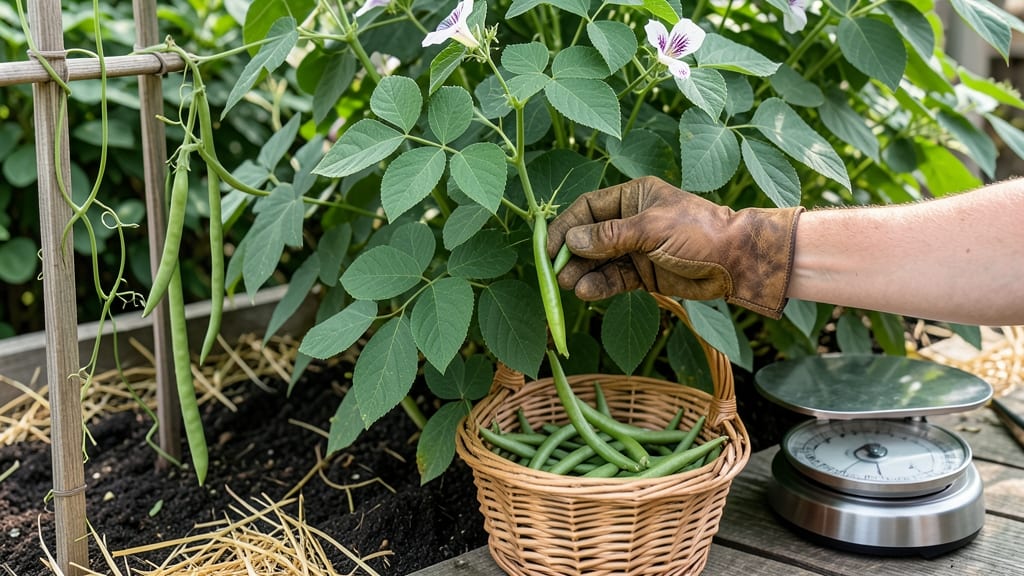
Green bean bushel weight ranges from 28 to 32 pounds, with variations based on bean type and harvest timing. Snap beans typically fall at 28–30 lbs per bushel, while wax or larger-pod varieties can reach 32 lbs. Individual plants yield 0.5–1 bushel per season when grown under ideal conditions.
Understanding this weight helps gardeners and farmers accurately estimate harvests and storage needs. 🌱 The difference between 28 and 32 pounds per bushel comes down to pod thickness and moisture content—thicker beans and those picked at peak maturity pack more pounds.
For example, pole beans often exceed snap beans in weight due to their longer growing season, while bush varieties may stay lighter. Knowing these ranges is especially useful when planning for market sales or large-scale processing.
What's interesting is how plant density affects overall yield. 🌿 A single healthy plant might produce just 0.5 bushels in poor soil, but with proper spacing, trellising, and nutrient-rich soil, that same plant could easily double its output.
This is why commercial growers focus so much on optimizing growing conditions—even small improvements in care can translate to noticeable weight gains per bushel.
💡 In This Article
- Factors Affecting Green Bean Bushel Weight
- Maximizing Green Bean Yield per Bushel
Factors affecting green bean bushel weight
Green bean weight per bushel isn't just about counting pods—it's a complex interplay of pod thickness, moisture content, and fiber density. Thicker-walled varieties like wax beans pack more weight than their snap bean cousins, which have thinner skins.
For example, a single wax bean pod can weigh 0.25–0.35 ounces, while snap beans average 0.15–0.25 ounces due to their delicate structure. This difference explains why wax beans often hit the 32-pound bushel mark while snap beans stay closer to 28–30 pounds.
The maturity stage at harvest plays a critical role too. Beans picked at peak maturity (when pods are firm but not woody) contain 85–90% moisture, which translates to heavier bushels. 🌱 Overripe beans lose moisture and fiber density increases, reducing weight per pod.
Even a 5% drop in moisture can cut bushel weight by 2–3 pounds—that's why commercial growers monitor harvest timing so precisely. Temperature also matters: cooler nights preserve moisture better than hot days, which is why early morning harvests yield heavier beans.
Variety selection makes a huge difference in final bushel weight. Pole beans generally produce heavier yields than bush varieties because they grow taller and produce pods over a longer season.
For instance, the 'Blue Lake' pole bean variety consistently yields 30–32 pounds per bushel, while 'Contender' bush beans average 26–28 pounds. This is why commercial operations often choose pole beans—they maximize weight through extended production cycles.
Even within varieties, plant health affects weight: stressed plants produce smaller pods with thinner walls.
Moisture content is the hidden variable most people overlook.
A bushel of freshly harvested beans might weigh 32 pounds, but after just 24 hours of drying, that same volume could weigh 28 pounds due to moisture loss. 💧 This is why accurate weighing requires standardized moisture levels—typically 85–90% for fresh beans.
Commercial graders use moisture meters to ensure consistency, while home gardeners can approximate by checking pod firmness. The key takeaway: bushel weight isn't fixed—it's a moving target influenced by growing conditions and post-harvest handling.
Here's a quick comparison of how these factors stack up:
- Pod Thickness: Wax beans (+3–5 lbs/bushel vs. snap beans)
- Maturity Timing: Peak harvest (+2–3 lbs/bushel vs. overripe)
- Variety Type: Pole beans (+2–4 lbs/bushel vs. bush beans)
- Moisture Content: 85% moisture = +4 lbs vs. 80% moisture
Understanding these variables helps explain why your neighbor's beans might consistently weigh more per bushel—it's not just luck, but careful attention to these scientific factors. 🔍