
Pests and Diseases
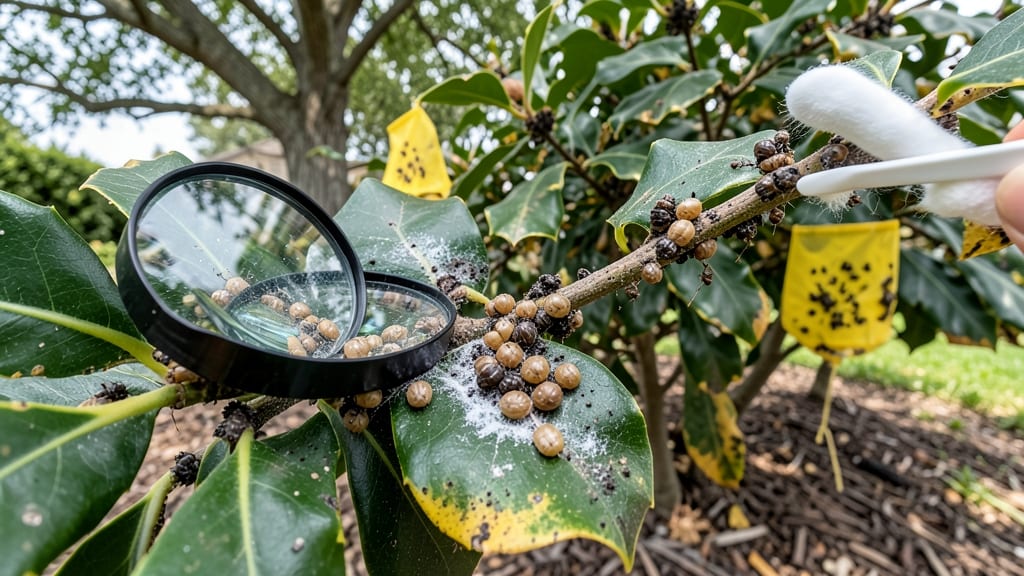
Your glossy holly leaves are hiding a tiny, stubborn enemy—holly bush scale. 🌿 These waxy bumps suck sap, leaving leaves yellowed and stunted, and without action, your plant’s health spirals fast.
The good news? A 3-step organic cure can revive your holly in weeks, without harsh chemicals that harm pollinators or your soil.
First, you’ll learn to spot the scale’s telltale signs: sticky residue on leaves (honeydew), distorted growth, and those pesky white or gray bumps clinging to stems. Then, we’ll tackle the three organic methods that work—neem oil spray, horticultural oil smothering, and beneficial insect allies—each with step-by-step instructions for maximum effectiveness.
The real game-changer? Prevention. After treatment, your holly will bounce back stronger, but only if you implement a few simple habits—like regular inspections and encouraging natural predators. I’ve saved multiple hollies from decline using these exact steps, and you can too, even if your plant looks hopeless now.
No more guessing what’s wrong or wasting money on ineffective sprays. This guide cuts through the confusion so you can act fast, protect your holly’s future, and enjoy lush, scale-free foliage all season long. Let’s get started—your holly’s revival begins here.
Root Causes Of Infestation
Understanding why these tiny pests target your holly bushes is the first step toward effective control. Holly bush scale (Saissetia coffeae or Chionaspis spp.) thrives due to a mix of environmental, biological, and human factors.
Below, we break down the key reasons these sap-sucking insects take over your plants—and how to address them.
Stressed holly bushes are like open invitations to scale insects. When plants struggle, their natural defenses weaken, making them easier targets. Here’s what puts your holly at risk:
- Nutrient Deficiencies: Holly bushes deprived of essential nutrients—especially nitrogen, phosphorus, or potassium—produce weaker leaves and stems. Scales detect these deficiencies through plant volatiles (chemical signals) and flock to compromised areas. Actionable fix: Conduct a soil test and amend with compost or organic fertilizers like fish emulsion or bone meal.
- Drought or Overwatering: Both extremes stress holly bushes. Drought weakens roots, while soggy soil suffocates them. Scales thrive in these conditions because stressed plants exude more honeydew (a sticky byproduct of sap-sucking), which attracts more pests. Actionable fix: Maintain consistent moisture—aim for 1–2 inches of water per week—and improve drainage with organic mulch.
- Physical Damage: Pruning wounds, hail, or pest damage (like spider mites) create entry points for scales. The exposed sap acts as a food source, drawing them in. Actionable fix: Seal pruning cuts with horticultural sealant and monitor for secondary pests after storms.
Holly bush scales aren’t random invaders—they’re opportunistic survivors with biological traits that make them hard to stop:
- Reproductive Speed: Female scales lay hundreds to thousands of eggs in a single batch, which hatch into crawlers (mobile nymphs) that disperse rapidly. These crawlers are highly attracted to young, tender holly growth. Actionable fix: Time treatments before crawler emergence (usually spring) to disrupt their life cycle.
- Natural Predator Decline: Scales rely on predators like ladybugs, lacewings, and parasitic wasps to keep populations in check. However, broad-spectrum pesticides (even years prior) can decimate these helpers, leaving scales unchecked. Actionable fix: Avoid chemical sprays and encourage beneficial insects with nectar-rich plants like dill or yarrow.
- Honeydew Feedback Loop: Scales produce honeydew, a sugary waste that attracts sooty mold—a black fungal growth that further stresses the plant. This mold blocks sunlight, reducing photosynthesis and making the holly even more vulnerable. Actionable fix: Knock off scales physically (see Step 2) to break the cycle before mold takes hold.
Sometimes, the problem isn’t the environment—it’s us. Unintentional actions can introduce or worsen scale infestations:
| Action | How It Helps Scales | How to Fix It |
|---|---|---|
| Buying Infested Nursery Plants | Scales often hitchhike on new holly bushes, especially if they’re not inspected. | Quarantine new plants for 2 weeks and inspect under leaves and stems with a magnifying glass. |
| Ignoring Overcrowded Plantings | Tightly packed hollies create microclimates with high humidity—ideal for scale survival. | Prune to improve airflow and space bushes 3–5 feet apart. |
| Using Plastic Mulch | Plastic traps heat and moisture, accelerating scale reproduction. | Switch to organic mulch (straw, wood chips) to regulate temperature. |
Pro Tip: 💡 If you’ve had scales before, always inspect secondhand gardening tools (pruners, gloves) before use—they can carry crawlers from plant to plant.
Beat Back Stubborn Leaf Invaders
Now that you understand why those glossy, sticky leaves are showing up, it’s time to roll up your sleeves and tackle the problem—naturally and effectively. Holly bush scale isn’t just an eyesore; it weakens your plants over time, so acting fast is key.
Below, we’ve broken down solutions by the most common causes and matched them with the best fixes. Plus, we’ll share some pro tips to keep your holly bushes thriving long-term.
Cause: Light infestations (fewer than 10% of leaves affected) or newly noticed sticky residue.
Fix: 🔥 Blast Them Off with Water
- Why it works: Scales have a waxy shell that water can dislodge, especially if they’re still small.
- How to do it:
- Fill a hose-end spray nozzle with a strong jet setting (not just a gentle mist).
- Wet the leaves thoroughly from top to bottom, focusing on the undersides where scales hide.
- Repeat every 5–7 days for 2–3 weeks to catch any newly hatched crawlers.
- Pro tip: Do this on a cloudy day or evening to avoid stressing the plant with direct sun + water.
🍳 Soap Up the Problem
- Why it works: Insecticidal soap disrupts the scale’s protective layer, dehydrating them.
- How to do it:
- Mix 1–2 tablespoons of mild liquid soap (like Castile soap) with 1 quart of water.
- Spray directly on the scales until leaves are damp (avoid over-soaping, which can harm plants).
- Reapply every 7 days for 3 weeks.
- Pro tip: Test a small leaf first—some holly varieties are sensitive to soap.
Cause: More than 10% of leaves covered, visible black sooty mold, or wilting branches.
Fix: 👨🍳 Horticultural Oil Attack
- Why it works: Oil smothers scales by clogging their breathing pores. It’s organic, fast-acting, and effective against all life stages.
- How to do it:
- Use a refined horticultural oil (like Neem oil or dormant oil).
- Mix 1–2 tablespoons of oil per gallon of water (follow label instructions).
- Spray thoroughly, covering all leaf surfaces, including stems and buds.
- Apply once a week for 3–4 weeks (or until scales disappear).
- ⚠️ Warning: Do not apply if temps are above 90°F (32°C)—it can burn leaves!
🔪 Manual Removal for Bad Cases
- Why it works: When infestations are severe, sometimes physical removal is the fastest way to regain control.
- How to do it:
- Put on gloves and a mask (scales can irritate skin).
- Use a soft brush or cloth to gently scrape off visible scales.
- Drop them into soapy water to kill them.
- Best for: Small shrubs or when combined with other treatments.
- Pro tip: Do this after a rain—wet scales are easier to remove!
Once you’ve kicked the scales to the curb, prevention is your best defense. Here’s how to keep your holly bushes scale-free:
💡 Encourage Natural Predators
- Ladybugs, lacewings, and parasitic wasps love eating scales. Attract them by:
- Planting companion plants like dill, fennel, or yarrow near your holly.
- Avoiding broad-spectrum pesticides that kill beneficial bugs.
🎯 Keep Your Holly Healthy
- Stressed plants attract pests. Boost defenses by:
- Watering deeply but infrequently (scales love drought-stressed plants).
- Fertilizing in early spring with a balanced, organic fertilizer (like compost or fish emulsion).
- Pruning for airflow—remove crowded branches to reduce humidity (scales thrive in damp, shaded spots).
✨ Monitor & Act Fast
- Check your holly every 2 weeks during growing season (spring–fall).
- Look for early signs: Sticky leaves, tiny bumps, or white fluff (scale eggs).
- Act at the first sign—early treatment is 10x easier than a full-blown infestation!
Final Reminder: Consistency is key! Scales can take multiple treatments to fully eradicate, so stick with your chosen method until you see no new crawlers for at least a month.
With patience and these organic fixes, your holly bushes will be back to their glossy, pest-free best in no time! 🌿💚
Frequently asked questions
What do holly bush scale eggs look like, and how can I tell them apart from adult scales?
Holly bush scale eggs appear as tiny white, cottony fluff clustered under leaves or along stems. Adult scales are 1/8-inch oval bumps that look like tiny gray or brown buttons. The key difference? Eggs are fuzzy and mobile (crawlers), while adults are stationary and waxy. Check stems and leaf undersides with a magnifying glass for early detection.
Will neem oil harm my holly bush if I use it too often?
Neem oil is safe when used correctly, but applying it more than once a week can stress the plant. Stick to the 3-4 week treatment schedule and avoid spraying during peak sun (10 AM–4 PM). If you notice yellowing leaves, dilute the oil further (1 tbsp per gallon) or switch to a soapy water rinse between treatments.
Can I use the same method to treat scales on other plants like oleander or citrus?
Yes, but with caution! Holly bush scales affect many plants, but citrus trees and oleander may require stronger oils (like horticultural oil) or different soap concentrations. Always test a small area first—some plants (like azaleas) are sensitive to soap. For citrus, use 1.5 tbsp oil per gallon and avoid neem oil, which can harm beneficial predators.
How do I know if my holly bush is recovering after treatment?
Look for new green growth and fewer sticky residues (honeydew). Healthy recovery also means no new scale bumps after 4-6 weeks of consistent treatment. If leaves still look dull, your holly may need fertilizer (like fish emulsion) to rebuild strength. Monitor for sooty mold—if it appears, clean leaves with a damp cloth.
Are there any chemical treatments that work faster than organic methods?
Chemical options like dormant oil with pyrethrin or horticultural oil + insect growth regulators (IGRs) can speed up results, but they’re not organic and may harm beneficial insects. If you choose chemicals, apply in early morning and avoid spraying flowering plants nearby. For fastest organic results, combine horticultural oil + manual removal—this disrupts scales at all life stages.