
Shrubs
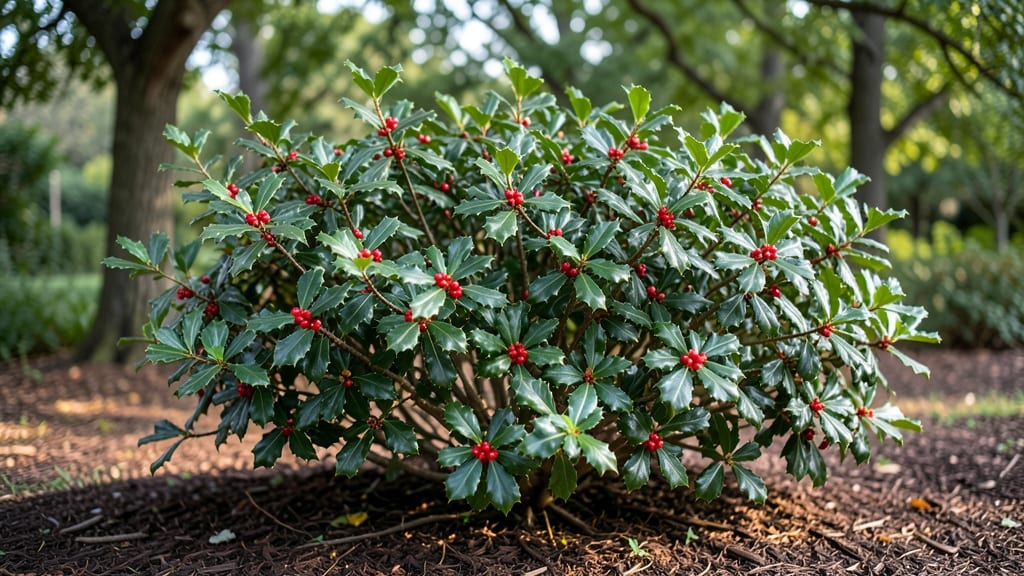
Shade-tolerant holly bushes can turn even the dimmest corners of your garden into a lush, evergreen oasis 🌿—with the right varieties and care, that is.
Picture this: a glossy-leaved holly thriving under the canopy of mature trees, its berries adding a pop of color even in winter. Most gardeners assume holly needs full sun, but the truth is, some varieties flourish in partial shade.
The key? Choosing the right type and giving it the right conditions.
In this guide, I’ll walk you through the best holly varieties for shady spots, how to plant them for maximum growth, and companion plants that make the most of low-light conditions.
Whether you’re designing a hedge, a border, or a striking focal point, these tips will help your holly bushes thrive where others fail.
From soil prep to seasonal care, you’ll learn the game-changer techniques that keep holly bushes healthy and vibrant—no matter how little sunlight your garden gets.
 Best Window Placement
Best holly bush varieties that thrive in shade conditions
If your garden has shady spots where sunlight barely reaches, don’t assume holly bushes won’t thrive there. Many shade-tolerant holly varieties not only survive but flourish, offering glossy foliage and vibrant berries year-round.
The key is selecting the right species that adapt well to low-light conditions without compromising their stunning ornamental features.
Holly bushes like Ilex glabra and Ilex verticillata are top performers in shady gardens, thanks to their natural ability to photosynthesize efficiently in partial to full shade. These varieties also handle acidic soil and moisture retention—critical factors for shade gardens where soil can stay damp.
Let’s explore the best options to bring life to your dimly lit spaces.
| Variety | Light Needs | Mature Height | Hardiness Zones | Berry Color |
|---|---|---|---|---|
| Ilex × 'Blue Princess' | Partial shade (2-4 hrs sun) | 6-8 ft | 5-9 | Blue-green |
| Ilex verticillata 'Winter Red' | Full shade to partial sun | 3-5 ft | 3-9 | Bright red |
| Ilex glabra 'Strongbox' | Full shade (tolerates deep shade) | 4-6 ft | 5-9 | White |
| Ilex × 'Nellie R. Stevens' | Partial shade (morning sun) | 10-15 ft | 7-9 | Red |
| Ilex crenata 'Green Lustre' | Full shade to partial sun | 2-3 ft | 6-8 | None (ornamental foliage) |
Ilex × 'Blue Princess' is a standout for its compact size and silver-blue foliage, making it ideal for foundation plantings or hedges in shaded borders. This variety thrives in USDA zones 5-9 and produces small white flowers followed by blue-green berries that persist into winter. Its ability to handle 2-4 hours of morning sun makes it perfect for east-facing gardens.
The Ilex verticillata 'Winter Red' is a winter gardener’s dream, offering bright red berries that contrast beautifully against deep green leaves. This dwarf winterberry holly grows well in full shade and is hardy in zones 3-9, making it one of the most versatile shade holly bushes.
Its arching branches add texture and movement to shady landscapes.
For those seeking a low-maintenance option, Ilex glabra 'Strongbox' is a shade-tolerant evergreen with leathery leaves and white berries that birds adore. This variety thrives in deep shade and is drought-tolerant once established, making it perfect for woodland gardens or understory plantings.
It’s also deer-resistant, a bonus for rural or suburban gardens.
If you’re looking for a taller holly bush that still performs well in shade, Ilex × 'Nellie R. Stevens' is a classic choice. This fast-growing variety reaches 10-15 feet tall and produces abundant red berries that add a pop of color to shady corners.
It prefers partial shade with morning sun and is hardy in zones 7-9, making it ideal for southern gardens.
Finally, Ilex crenata 'Green Lustre' is a compact, ornamental holly prized for its dense, glossy foliage rather than berries. This Japanese holly thrives in full shade to partial sun and stays under 3 feet tall, making it perfect for borders, edging, or container gardens.
Its small, spiny leaves add structure and year-round interest to shaded areas.
When selecting a holly bush for shade, consider your garden’s specific light conditions and desired height. Most shade-tolerant holly varieties will reward you with lush foliage and seasonal berries, turning even the darkest corners into a vibrant, evergreen oasis. 🌿🌳
Proven planting and care hacks for shade-loving holly bushes
Shade-loving holly bushes can be your garden's secret weapon—adding structure, color, and texture to dim corners while requiring minimal sunlight. The key lies in soil preparation, planting depth, and seasonal adjustments that mimic their natural woodland habitat.
Unlike sun-loving varieties, these holly bushes thrive with just 2-4 hours of dappled light, making them perfect for under trees or north-facing yards.
Many gardeners make costly mistakes like planting too deep or using alkaline soil, which stunts growth. Holly bushes prefer acidic soil (pH 5.0-6.0) and well-draining conditions—critical factors I’ll cover step-by-step. With the right approach, you’ll enjoy glossy foliage and vibrant berries year-round, even in the shadiest spots.
🌿 Holly Bush Shade Care Quick Guide
Test pH (aim for 5.0-6.0). Mix in peat moss or compost for acidity.
Place root ball 2 inches above ground to prevent rot.
Deep soak once weekly; reduce in winter.
Trim late winter to shape; avoid cutting more than 1/3 of growth.
Mulch with 3 inches of pine straw to insulate roots.
Overwatering, alkaline soil, or planting in waterlogged areas.
Start with soil testing—holly bushes despise alkaline conditions. If your soil pH is above 6.0, amend it with sulfur or pine needles to lower it gradually. For planting, dig a hole twice as wide as the root ball but only 2 inches deeper to prevent crown rot.
This subtle adjustment makes all the difference in shade conditions where drainage is often poor.
Mulching is non-negotiable for shade-loving holly bushes. Use 3-4 inches of organic mulch (like pine straw or shredded bark) to retain moisture and regulate soil temperature. Replenish mulch annually in early spring—this simple step reduces watering needs by 30% and protects roots from temperature swings.
Avoid piling mulch against the trunk to prevent rot.
Seasonal care keeps your holly bushes thriving year-round. Prune in late winter (before new growth) to remove dead branches and shape the shrub. Fertilize lightly in early spring with a balanced 10-10-10 formula, then again in fall to encourage root growth.
Skip summer feeding—holly bushes slow down in heat and can scorch if over-fertilized.
Winter protection is critical for young holly bushes. Apply a thick layer of mulch (up to 4 inches) around the base before the first frost. For extreme climates (below Zone 6), wrap the base with burlap to shield roots from freezing winds.
This extra care ensures your holly bushes bounce back strong in spring, even after harsh winters.
Watch for yellowing leaves or stunted growth—common signs of overwatering or poor drainage. If your holly bush struggles, check the soil: it should feel moist but not soggy.
Adjust your watering schedule to every 10-14 days once established, and consider adding sand to heavy clay soil for better aeration. With these adjustments, your shade-loving holly will flourish for decades.