
How To
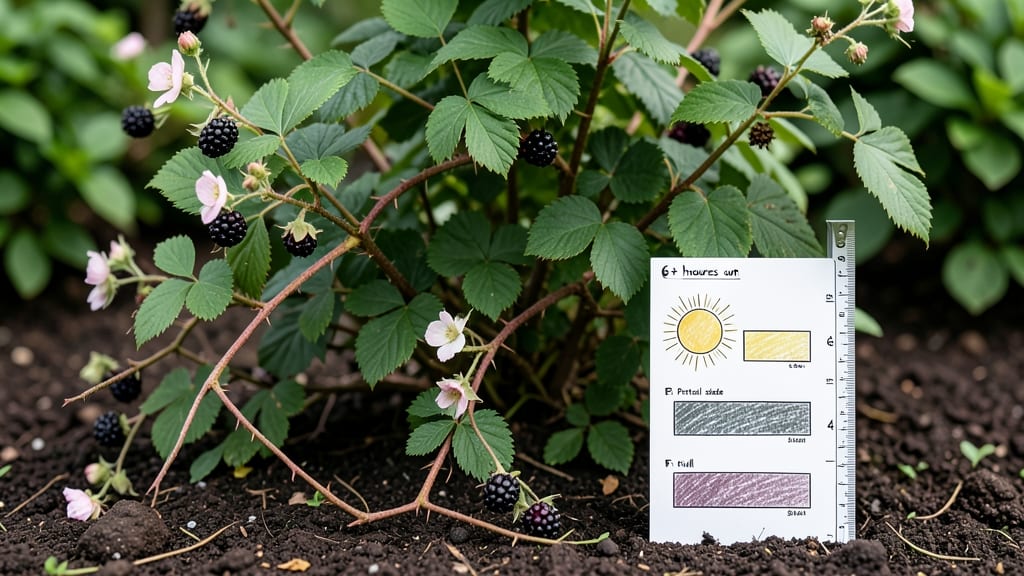
A blackberry bush needs how much sun does a blackberry bush need—specifically 4 to 6 hours of sunlight daily—to produce sweet, abundant fruit 🍇 — but getting the balance right can mean the difference between a thriving patch and a disappointing harvest.
Picture this: you’ve spent weeks nurturing your blackberry bush, only to find tiny, bland berries or no fruit at all. The culprit? Too much shade or scorching afternoon sun.
Blackberries are sun-lovers but hate the stress of extreme heat, which is why the golden window matters more than just calling it "full sun."
In cooler climates like USDA Zone 6a, morning sun paired with afternoon shade keeps canes healthy, while hotter regions may need afternoon relief.
Below, I’ll break down how to measure sunlight accurately, adjust for your microclimate, and spot the signs when your bush is either starving for light or wilting under too much.
You’ll also discover practical hacks for small spaces, container growing, and seasonal tweaks to maximize fruit production—no guesswork, just data-backed tips to turn your blackberries into a bountiful harvest.

Blackberry sun requirements: the ideal 4-6 hours daily breakdown
Blackberries are sun-hungry plants, but not all varieties crave the same intensity. While most need 6 hours of direct sunlight daily, the morning vs. afternoon split and seasonal adjustments make all the difference.
Traditional blackberries tolerate full sun exposure, but thornless varieties often prefer partial afternoon shade to prevent leaf scorch in hot climates.
Your blackberry's sunlight needs aren't static—they change with seasons. In summer, 4-6 hours of morning sun paired with 2-4 hours of filtered afternoon light works best for most varieties.
Meanwhile, spring and fall can handle full sun all day as temperatures moderate. Understanding these nuances helps you avoid underripe fruit or heat-stressed canes.
Measuring sunlight accurately is trickier than you think. Use a sunlight tracker app or place a white plate where your blackberries will grow—if it's dark by noon, you're in low-light conditions. For precise data, check sunlight hours at eye level (where leaves grow), not ground level.
This simple trick reveals why your north-facing garden might be getting only 3 hours of sun when you assumed 6.
| Blackberry Type | Ideal Sunlight | Morning Sun | Afternoon Sun | Seasonal Note |
|---|---|---|---|---|
| Traditional (thorny) | 6+ hours | 4-6 hours | 2-4 hours (filtered) | Tolerates full sun year-round |
| Thornless varieties | 4-6 hours | 4-5 hours | 0-2 hours (avoid hot sun) | Needs afternoon shade in summer |
| Northern climates | 5-7 hours | Full morning sun | Full afternoon sun | Extend growing season with sun |
| Southern climates | 4-5 hours | 4 hours max | Dappled shade | Prevents leaf burn in heat |
Microclimates play a sneaky role in sunlight exposure. A south-facing fence might cast 3 hours of shade at peak fruiting time, while a north-facing slope could extend sunlight by 2 hours.
Test your spot for 2 weeks before planting—place a white bucket where your blackberry will go and mark the sunniest hours. This reveals hidden sun traps or shade pockets that could ruin your harvest.
Morning sun is your blackberry's golden hour. 6-9 AM sunlight provides gentle warmth without the midday intensity that stresses leaves. If your garden gets hot afternoon sun (like 1 PM+), consider dappled shade from trees or a lightweight shade cloth.
Even 30% shade cloth can reduce leaf scorch by 50% while maintaining fruit production.
Seasonal adjustments are critical. In spring and fall, blackberries thrive with full sun exposure—this builds strong canes and healthy roots. But by late June, shift to morning sun only in hot zones.
This 2-hour afternoon break prevents fruit sunscald and keeps berries sweeter and juicier. Think of it as giving your plants a siesta during peak heat.
Urban gardeners face unique challenges. A balcony in Brooklyn might get only 3 hours of sun, while a backyard in Arizona could have 10+ hours. For limited sun, choose thornless varieties like 'Arapaho' or 'Natchez'—they tolerate partial shade better than traditional types.
If you're in a high-rise, place your blackberry on a south-facing balcony with reflective surfaces (like white walls) to bounce extra light.
Common mistakes derail even the best-laid plans. Planting blackberries in deep shade leads to weak canes and poor fruiting, while unfiltered afternoon sun causes leaf curl and fruit drop.
The fix? Prune nearby trees to open the canopy or install a trellis with adjustable shade. Even 1-2 hours of afternoon shade can make the difference
Signs your blackberry bush isn’t getting enough (or too much) sun
Your blackberry bush might be silently screaming for help—literally. When sunlight is off, the first clues appear in the leaves and fruit. Too little sun means weak canes and powdery mildew, while too much causes leaf scorch and bitter berries.
I’ve seen both extremes in my own garden, and the difference in fruit quality is night-and-day.
Start by checking your blackberry canes. If they’re thin, leggy, and struggling to stand upright, your plant is begging for more direct sunlight. Conversely, crispy, brown edges on leaves?
That’s a classic sign of sunburn from too much afternoon heat. The key is finding that 4-6 hour sweet spot where your bushes get morning sun and gentle afternoon shade.
Blackberry Sunlight Balance: Pros & Cons
- Juicy, flavorful berries
- Strong, upright canes
- Minimal pest issues
- Healthy leaf color
- Leaf scorch/browning
- Bitter, small berries
- Increased water needs
- Stress cracks on fruit
- Weak, floppy canes
- Powdery mildew risk
- Sparse fruiting
- Pale, yellow leaves
- Morning sun + afternoon shade
- Dappled light tolerance
- Proper spacing for airflow
- Reflective mulch for light
One common mistake I see is planting blackberries under large trees that provide filtered sunlight. While they might survive, they’ll never thrive. If your bushes are in a shady spot, try moving them to a sunnier location during spring or fall when roots are less stressed.
For afternoon heat zones, use a lightweight shade cloth (30-50%) during peak summer hours.
Pay attention to your fruit development too. Blackberries that stay small and tart? That’s a clear sign of insufficient sunlight. On the flip side, if your berries are overly sweet but dry, your plant might be getting too much harsh afternoon sun.
The perfect balance creates plump, glossy berries that burst with flavor when ripe.
Don’t forget to check your microclimate. A north-facing fence can block critical sunlight, while a south-facing wall might create a heat trap. I once had blackberries thriving against a brick wall in full sun until a late-spring frost hit—now I use frost cloth for protection.
Small adjustments make a big difference in your harvest.
If you’re still unsure, try this quick test: Place a white piece of paper near your bush at noon. If shadows are sharp and dark, you’ve got plenty of sun.
If they’re fuzzy or nonexistent, it’s time to relocate or add a reflective surface like a mirror or light-colored mulch to bounce extra sunlight onto your plants.