
How To
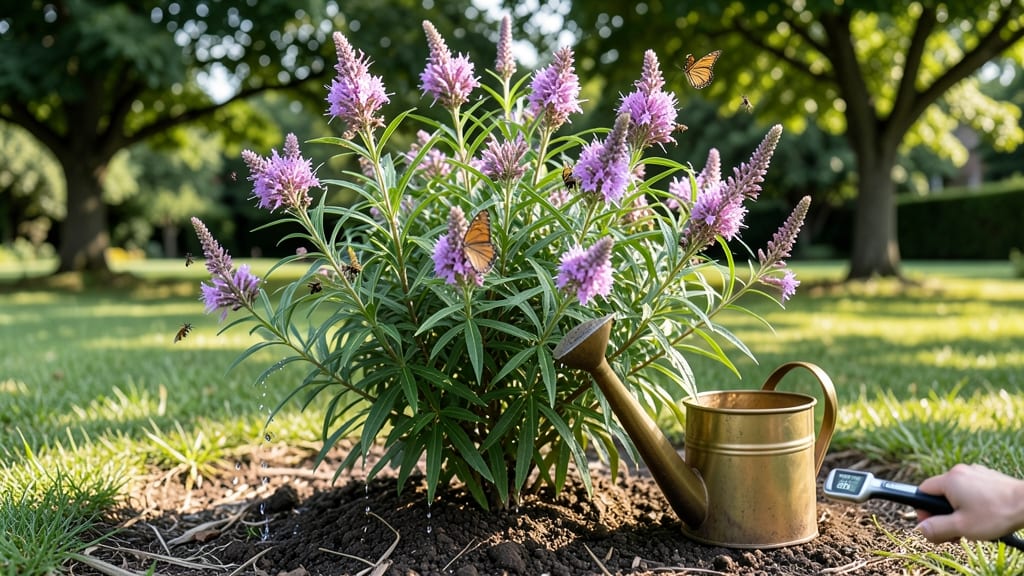
Watering your 🦋 butterfly bush the right way keeps it blooming all season—and skipping the guesswork means no more wilted stems or drowned roots.
Here’s the truth: Most gardeners water their butterfly bushes too often, turning the soil into a soggy mess that invites root rot. The key? A simple soil check method that adapts to your climate, not a rigid schedule.
In USDA Zone 6a, spring and summer demand deep soaks every 5-7 days, while winter slows things down to once a month. But before you water, stick your finger 2 inches into the soil—if it’s dry, it’s time; if it’s damp, hold off.
Below, I’ll walk you through the exact steps to check moisture, adjust for drought, and spot the signs of over- or under-watering before they ruin your plant’s vibrant purple blooms.
Butterfly bush watering schedule by season: when and how much
Your butterfly bush (Buddleia) thrives on a seasonal watering rhythm that matches its natural growth cycle. Too much water causes root rot, while too little stresses the plant and reduces those vibrant purple blooms that attract butterflies.
The key is understanding how soil moisture and seasonal needs change month by month.
Butterfly bushes are drought-tolerant once established, but young plants and mature shrubs in full sun exposure need consistent moisture. A 3-inch soil check is your best tool—stick your finger into the soil, and if it feels dry at that depth, it's time to water.
Adjust this schedule based on your local rainfall and humidity levels.
| Season | Watering Frequency | Soil Moisture Goal | Water Amount (per plant) | Key Adjustments |
|---|---|---|---|---|
| Spring (March-May) | Weekly (established) / Every 3-4 days (new plants) | Top 3 inches moist | 1-2 gallons deep soak | Increase if <1 inch rain/week |
| Summer (June-August) | Every 5-7 days | Top 2-3 inches moist | 2-3 gallons (morning watering) | Reduce if heavy rain; mulch helps |
| Fall (September-November) | Bi-weekly (every 10-14 days) | Top 4 inches slightly dry | 1 gallon deep soak | Stop fertilizing; reduce watering |
| Winter (December-February) | Monthly (or when soil freezes) | Top 6 inches dry | ½ gallon (if unfrozen) | Avoid wet soil; protect from frost |
In spring, your butterfly bush wakes up from dormancy and needs regular watering to support new growth. Water deeply once a week for established plants, but newly planted bushes require water every 3-4 days to establish roots.
Look for wilted leaves or yellowing foliage as signs you're not watering enough.
Summer is the peak blooming season, so your watering schedule becomes more frequent. Aim for every 5-7 days with 2-3 gallons per plant, always in the early morning to prevent fungal diseases.
If you notice drooping flowers or crispy leaf edges, increase watering immediately—these are classic signs of heat stress.
As fall approaches, reduce watering to bi-weekly intervals and let the top 4 inches of soil dry out between waterings. This helps the plant prepare for winter dormancy.
Stop fertilizing in late summer to avoid tender new growth that won't survive cold snaps. Apply a 2-3 inch mulch layer to protect roots.
Winter care is minimal—water only when the ground isn't frozen, typically monthly with just ½ gallon per plant. Overwatering in winter leads to root rot in cold, soggy soil.
If your region experiences freezing temperatures, reduce watering entirely until spring. Young plants may need slightly more attention, but mature bushes handle dry spells beautifully.
Watch for these drought stress signs: Leaf curling, grayish-green foliage, or buds failing to open. These mean it's time to water deeply. On the flip side, yellow leaves, mushy stems, or fungus at the base signal overwatering.
Adjust your schedule based on these visual cues rather than sticking rigidly to the calendar.
Pro tip: Mulch heavily in spring and fall to retain moisture and regulate soil temperature. A 3-inch layer of wood chips reduces watering needs by 30-50% while suppressing weeds. For container-grown butterfly bushes, check soil moisture d
The finger test method: how to check soil moisture like a pro
Mastering the finger test method is your secret weapon for keeping your butterfly bush thriving without guesswork. This simple, science-backed technique helps you determine exactly when to water by checking soil moisture at the right depth.
Unlike relying on schedules, this method adapts to your local climate and soil type, ensuring your plant gets just the right amount of water.
Most gardeners overlook the importance of soil moisture depth—watering too shallowly leads to weak roots, while overwatering drowns them. The 2-inch rule is perfect for butterfly bushes because it targets their root zone where moisture matters most.
Whether you're in a hot, dry climate or a humid region, this method keeps your plant's roots happy year-round.
⚠️ callout warning ⚠️
Butterfly bushes hate soggy roots. If your soil feels damp at 2 inches, wait 2-3 more days before watering. Yellowing leaves or mushy stems mean you're overdoing it—cut back immediately and improve drainage with organic mulch.
Pro Tip: Stick your finger in multiple spots around the plant—soil moisture varies!
To perform the test, insert your index finger about 2 inches deep into the soil near your butterfly bush's base.
The texture you feel will tell you everything you need to know. Dry soil feels like a powdery powder or crumbles easily between your fingers—this is your cue to water deeply. Moist soil, on the other hand, feels slightly damp but not soggy, like a wrung-out sponge.
Adjust your watering frequency based on what you find. In summer heat, you might need to water every 5-7 days, while spring and fall may only require weekly checks. Winter months often need minimal watering—just enough to keep the soil from drying out completely.
Pay attention to your region's rainfall too; native plants like butterfly bushes often need less water during wet seasons.
For container-grown butterfly bushes, the finger test is even more critical since pots dry out faster. Check the soil daily during peak summer and reduce frequency as temperatures drop.
If the soil feels dry at the surface but still moist 2 inches down, only water lightly to avoid disturbing the roots. Morning watering is ideal—it gives excess moisture time to evaporate before nightfall.
Remember, the finger test isn't just about when to water—it's about how much. Always water until you see moisture seep out the bottom of the pot or the soil feels saturated 3-4 inches deep.
This ensures your butterfly bush develops a deep, resilient root system that supports those stunning blooms all season long. 🦋