
Shrubs
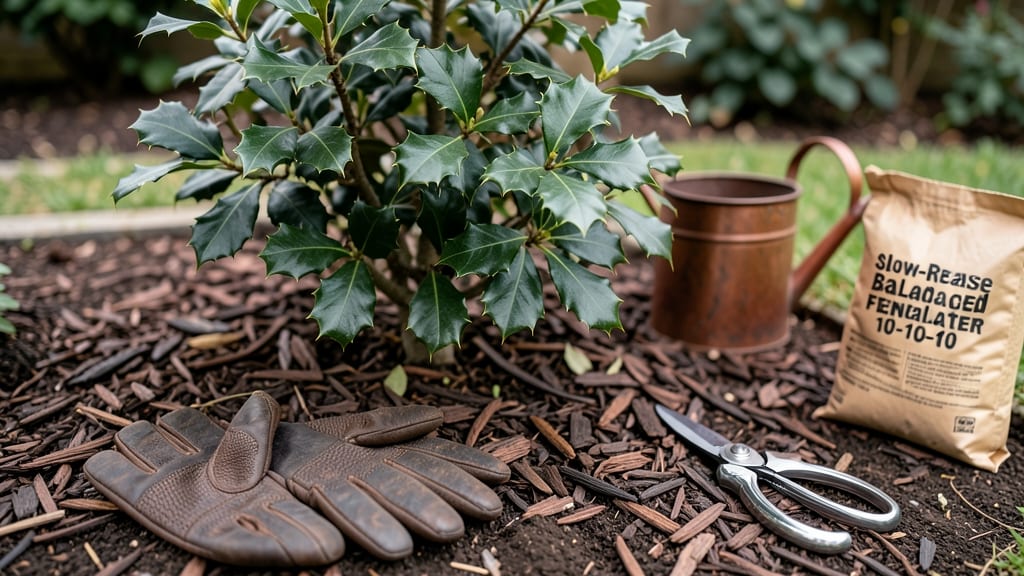
Caring for holly bushes rewards you with year-round structure and color—if you get the basics right. 🌿 I’ve learned the hard way that holly thrives on consistency, not just occasional attention, and the key is understanding its quiet needs: acidic soil, patience with slow growth, and strategic pruning to keep it dense.
The first rule is soil—holly demands acidic, well-draining soil (think pH 4.5–6.0). Amend with peat moss or pine needles if yours is alkaline, and mulch heavily to retain moisture. Sunlight? Morning sun with afternoon shade works best in hot zones, while full sun is fine in cooler climates.
Water deeply once a week (more in summer), but never let it sit soggy—root rot is holly’s arch-nemesis. Pruning feels counterintuitive: never cut into old wood (no new growth emerges there), and shape lightly in late winter. Fertilize once a year with an acid-loving plant formula in early spring.
The payoff? Glossy leaves year-round and bright red berries that last through winter—if you avoid the classic mistake of overwatering or pruning too aggressively. For berries to stick around, hand-pollinate if bees are scarce, and protect from deer (they adore holly).
With these habits, your holly will outlast trends—and your neighbors’ envy.
📚 In This Guide
- What you need
- Instructions
- Tips and common mistakes
- Wrapping up and next steps
What you need
- ● Pruning shears – Sharp, clean, and sterilized (bypass pruners work best for precision cuts). Quantity: 1 pair
- ● Garden gloves – Heavy-duty, chemical-resistant gloves to protect your hands from thorns and soil. Quantity: 1 pair
- ● Mulch – Organic mulch (e.g., shredded bark, pine straw, or compost) to retain moisture and regulate soil temperature. Quantity: 2–3 inches per plant
- ● Fertilizer – Slow-release, acid-loving plant fertilizer (e.g., 10-10-10 or holly-specific formula). Quantity: As per package instructions (typically 1–2 lbs per 100 sq ft)
- ● Watering can or hose – With a gentle spray nozzle for deep watering. Quantity: 1
- ○ Soil pH tester – To ensure your soil is acidic (ideal pH: 4.5–6.0). Optional: Sulfur or peat moss to amend alkaline soil
- ● Pest control – Neem oil or insecticidal soap (for aphids, spider mites, or scale). Quantity: As needed
- ● Pruning saw – For thicker branches (if your holly has grown large)
- ● Soil moisture meter – To monitor watering needs without over/under-watering
- ● Decorative stakes or wire cages – To support young or leggy holly bushes
- ● Bird netting – If birds are snacking on your berries before they ripen!
Step-by-step guide for year-round holly bush care
Holly bushes thrive with consistent attention—here’s my battle-tested approach for vibrant growth every season.
🌿 Step 1: Plant in the Right Location and Soil
Holly bushes demand full sun to partial shade (at least 4-6 hours of direct light daily) and well-draining soil with a slightly acidic pH of 4.5-6.0. I always amend native soil with 2-3 inches of organic compost before planting to improve fertility and drainage. Dig a hole twice as wide as the root ball but no deeper—holly roots spread horizontally, not vertically.
Position the bush so the top of the root ball sits 1-2 inches above ground level. This prevents waterlogging, which holly hates. Backfill with native soil mixed with compost, then water deeply to settle everything. Mulch with 2-3 inches of pine bark or shredded leaves to retain moisture and suppress weeds, but keep mulch 3 inches away from the trunk to prevent rot.
☀️ Step 2: Water Deeply and Consistently
Holly bushes establish deep root systems, so I water them 1-2 times per week during the first growing season, delivering 1-1.5 gallons per foot of plant height. After establishment, water only when the top 2-3 inches of soil feel dry. Overwatering causes root rot, while underwatering stresses the plant and reduces berry production.
Water at the base in the morning to allow foliage to dry before evening. Avoid wetting leaves, especially during humid months, to prevent fungal diseases like leaf spot. Drip irrigation or soaker hoses work best—they deliver moisture directly to roots without splashing foliage.
✂️ Step 3: Prune for Shape and Health
Prune holly bushes late winter or early spring (before new growth begins) to remove dead, diseased, or crossing branches. I use clean, sharp pruners to make cuts at a 45-degree angle just above a bud or branch collar. Never leave stubs—holly responds poorly to improper cuts.
Shape the bush by thinning out crowded branches from the center to improve airflow. Holly grows slowly, so limit pruning to 10-20% of the plant’s volume per year. Avoid heavy pruning in fall—new growth won’t harden off before winter, leaving it vulnerable to frost damage.
🌱 Step 4: Fertilize for Berry Production
Feed holly bushes in early spring with a balanced, slow-release fertilizer (10-10-10 or 8-8-8) applied at half the recommended rate. Holly doesn’t need heavy feeding, but a light application encourages lush foliage and berry production. I also top-dress with 1-2 inches of compost in fall to replenish nutrients naturally.
For female bushes (the ones that produce berries), a low-nitrogen, high-phosphorus fertilizer (like 5-10-5) in late summer promotes fruit development. Avoid high-nitrogen fertilizers—they boost foliage at the expense of berries. Always water the soil thoroughly after fertilizing to prevent root burn.
⏰ Step 5: Protect and Maintain Year-Round
In winter, holly bushes need protection from harsh winds and heavy snow. I wrap young plants with burlap or frost cloth during extreme cold snaps (below 10°F). Mature bushes usually handle winter well, but a thick layer of mulch around the base insulates roots and prevents temperature fluctuations.
Monitor for pests like spider mites and scale insects, which thrive on stressed holly. Spray with neem oil or insecticidal soap at the first sign of infestation. Holly rarely suffers from diseases, but if you spot yellowing leaves, check for iron chlorosis—a sign of alkaline soil. Amend with sulfur or peat moss to lower pH if needed.
Tips & tricks for perfect holly bush care
Holly bushes are the unsung heroes of landscaping—here's how to keep them thriving year after year without the common pitfalls.
Soil Preparation Secret: Before planting, I always test my soil's pH using a simple kit from the garden center. Holly bushes are particular about their acidic environment—aim for that 4.5-6.0 range. If your soil tests higher, mix in sulfur or peat moss at planting time. I've seen holly bushes struggle in alkaline soil despite perfect care, so don't skip this step. The 2-3 inches of organic compost mentioned in Step 1 is your best friend for improving both drainage and fertility simultaneously.
Watering Wisdom: The 1-2 times per week guideline works for most climates, but adjust based on rainfall. I check soil moisture by sticking my finger 2-3 inches deep—if it feels dry, that's your cue. For container-grown holly bushes, you'll need to water more frequently since they dry out faster. And here's a pro move: water deeply but infrequently to encourage those deep root systems holly loves. A soaker hose makes this effortless—just set it for 30 minutes once a week during dry spells.
Pruning Precision: When shaping your holly in Step 3, focus on creating an open center rather than just trimming the outer edges. This improves airflow and prevents fungal issues. I always prune on a dry day when temperatures are above 50°F—holly handles stress better in these conditions. For that 45-degree angle cut, imagine slicing just above a bud where new growth will emerge. The 10-20% annual pruning rule prevents shock—think of it as giving your holly a gentle haircut rather than a buzz cut.
Winter Protection Strategy: For those below 10°F cold snaps, I don't just wrap young plants—I also create a windbreak using burlap or frost cloth on the north and west sides where cold winds hit hardest. Mature bushes rarely need this, but if you're in Zone 5 or colder, consider adding a thick layer of mulch (up to 4 inches) around the base. This creates an insulating blanket that protects roots from freeze-thaw cycles. And here's what nobody tells you—remove any protective wrapping in early spring before new growth begins to prevent overheating.
Pro Tips for Care For Holly Bushes
- Holly bushes are the unsung heroes of landscaping—here's how to keep them thriving year after year without the common pitfalls.
- Soil Preparation Secret: Before planting, I always test my soil's pH using a simple kit from the garden center.
- Watering Wisdom: The 1-2 times per week guideline works for most climates, but adjust based on rainfall.
Frequently asked questions
Got questions about keeping your holly bushes thriving? Here are answers to the most common concerns—so you can enjoy those classic red berries and glossy leaves year-round!
How often should I water holly bushes, and do they need special care in extreme heat?
Holly bushes are drought-tolerant once established (after 1–2 years), but water deeply 1–2 times per week during their first year. In extreme heat, mulch around the base to retain moisture and water every 5–7 days. Avoid wetting the leaves to prevent fungal issues like leaf spot.
When is the best time to prune holly bushes, and how do I do it correctly?
Prune holly bushes late winter or early spring (February–March), just before new growth begins. Remove dead, diseased, or crossing branches first, then shape lightly to maintain density. Never prune in fall—it can stimulate tender new growth that won’t survive winter. Use clean, sharp shears!
Why aren’t my holly bushes producing berries, even though they have flowers?
Holly bushes are dioecious, meaning male and female plants must be nearby for pollination (and thus berries). If you only have one bush, plant a male variety (like 'Jim Dandy') within 30–50 feet to ensure pollinators can transfer pollen. Patience is key—berries may take 2–3 years to appear after planting a female bush.
What pests or diseases should I watch for, and how do I treat them?
Holly bushes are generally pest-resistant, but watch for:
- Scale insects: Wipe off with soapy water or use horticultural oil in early spring.
- Spider mites: Spray with water (they hate humidity!) or neem oil if webs appear.
- Leaf spot fungus: Remove infected leaves and improve airflow; avoid overhead watering.
Can I grow holly bushes in containers, and what’s the best soil mix?
Yes! Use a large container (at least 15–20 gallons) with drainage holes and a mix of 50% potting soil, 30% perlite, and 20% compost. Holly prefers slightly acidic soil (pH 4.5–6.0), so add peat moss if your mix is alkaline. Repot every 2–3 years and water consistently—containers dry out faster!
Wrapping up and next steps
Caring for holly bushes is all about patience, consistency, and a little seasonal love—and the reward is a stunning, evergreen centerpiece that brightens your landscape year-round! 🌿 With the right soil, sunlight, and pruning know-how, your holly will thrive, offering vibrant foliage and festive berries for decades.
Now that you’re armed with these year-round secrets, why not take the next step?
🌟 Ready to Elevate Your Garden?
Start by planting a new holly or giving your existing one a fresh boost with the tips you’ve learned. Need inspiration? Explore holly varieties or design ideas to match your space. Happy gardening—your future holly will thank you! 🎄✨