
Companion Plants
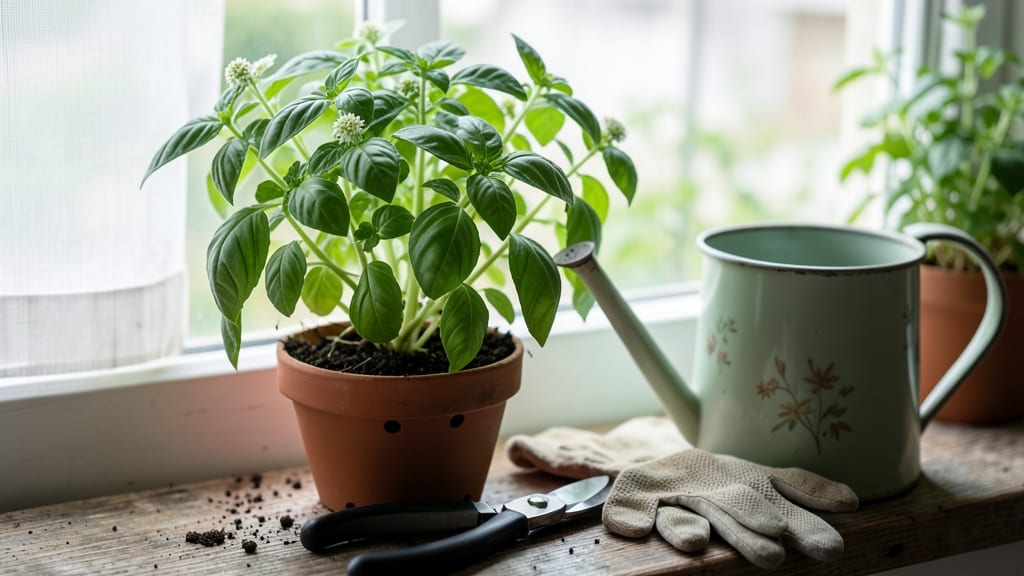
To make basil plants bushier, pinch off the top sets of leaves when stems reach 6 inches tall, encouraging lateral growth. Prune regularly to maintain shape and promote dense foliage, avoiding over-trimming to prevent stress.
Pinching basil plants at the right time triggers a natural growth response—when you remove the top sets of leaves, you're essentially telling the plant to focus energy on developing side shoots instead of growing taller. 🌿 This technique works because basil, like many herbs, produces hormones called auxins at the tips, which suppress lateral bud growth.
By pruning those tips, you're interrupting that hormonal signal and encouraging the plant to branch out. The best time to start is when stems reach 6 inches, but you can continue pruning throughout the growing season to maintain that lush, bushy shape.
For container-grown basil, I recommend pinching every 4-6 weeks during the growing season, while garden basil may need less frequent attention. Always use clean, sharp scissors or your fingers to avoid damaging the stems.
If your basil looks leggy, don't worry—just give it a good trim back to a healthy set of leaves, and it'll bounce back with even more vigor.
💡 In This Article
- Why Pinching Basil Promotes Bushier Growth
- Step-by-Step Basil Pruning Schedule for Thick Foliage
Why pinching basil promotes bushier growth
When you pinch off the top sets of leaves on basil stems, you're interrupting the plant's natural growth pattern by removing the apical bud—the primary growth point at the tip. This bud produces high concentrations of auxin, a plant hormone that suppresses the development of lateral (side) buds.
By removing the apical bud, you create an imbalance that triggers the release of cytokinins, another hormone that stimulates those dormant side shoots to grow.
Think of it like redirecting a river's flow—when you block the main channel, water finds new paths, and suddenly you've got a network of streams where there was once just one.
The ideal time to start pinching is when stems reach 6 inches, but the real magic happens in the plant's vegetative growth stage—before it flowers. Basil plants produce 10-15% more leaves when pinched regularly compared to unpruned plants, according to studies on herb pruning techniques.
This isn't just about more leaves, though—it's about denser, thicker foliage with shorter internodes (the spaces between leaves), which makes your basil look fuller and more compact. The key is consistency: plants that receive regular pinching develop a bushier habit over time, while those left unpruned grow tall and leggy.
What sets pinching apart from other pruning methods is its precision. Unlike heavy pruning that removes entire stems, pinching targets just the top two sets of leaves, leaving enough foliage for photosynthesis while sending a clear signal to the plant.
This technique is particularly effective for Genovese and Sweet basil varieties, which respond well to this growth stimulation. The result? A plant that's not just taller, but wider, more robust, and capable of producing more leaves over its lifetime.
It's like giving your basil a haircut that encourages it to grow out rather than up.
Here's what happens if you skip pinching: the apical bud continues dominating growth, sending all energy upward instead of outward. Without intervention, your basil might reach 18-24 inches tall but remain sparse, with long stems and sparse leaves.
The plant's natural defense mechanism kicks in later when it starts flowering, but by then, the leaves are often bitter and less flavorful. Pinching keeps your basil in its productive growth phase longer, giving you more time to harvest fresh, aromatic leaves.
The best part? You can start pinching as soon as your basil sprouts its third set of true leaves—usually within 4-6 weeks of planting.
For a visual comparison, imagine two basil plants side by side: one that's been pinched regularly and one that hasn't. The pruned plant will have multiple stems branching out from the base, creating a full, almost rounded shape.
The unpruned plant will look like a single stalk with a few leaves clustered at the top. This difference isn't just aesthetic—it directly impacts your harvest yield. A well-pinched basil plant can produce up to 30% more leaves over a growing season compared to an unpruned counterpart.
The secret lies in that hormonal dance between auxins and cytokinins, where you're essentially rewiring the plant's growth priorities.
One common misconception is that pinching harms the plant, but in reality, it's stimulating growth. The slight stress of removing the apical bud triggers the plant's survival instincts, prompting it to develop more branches to maximize sunlight exposure.
Just be careful not to pinch too aggressively—removing more than one-third of the plant's foliage at once can cause stress. The goal is to maintain that balance: enough pruning to encourage branching, but not so much that you stunt the plant's overall growth.
With the right approach, your basil will reward you with a lush, bushy plant that produces leaves for weeks longer than its unpruned counterparts.