
Shrubs
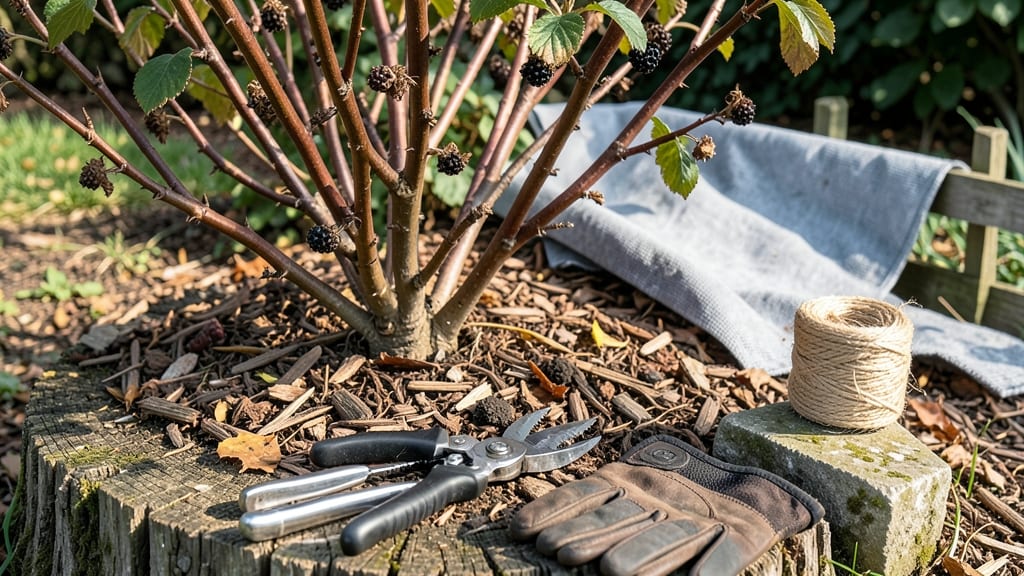
Preparing blackberry bushes for winter is the key to keeping your canes strong and productive for years to come 🫐 — and it starts with the right late-season care.
Picture this: you head outside in November, expecting to see your blackberry patch thriving, only to find brittle canes snapping under the weight of snow or worse, disease creeping in from last year’s dead wood.
That’s why timing your prune, choosing the right mulch, and shielding your plants from frost aren’t just optional—they’re essential for survival in USDA Zones 5-9.
In this guide, I’ll walk you through the exact steps to winterize your blackberries, from when to prune (and how much to cut) to the best mulching and wrapping methods for your climate. No guesswork, just proven techniques to protect your investment.
By the end, you’ll know how to turn your blackberry bushes into winter warriors—ready to bounce back with stronger growth and a bountiful harvest next season.
When and how to prune blackberry canes for winter survival
Winterizing your blackberry bushes starts with late-season pruning, a critical step that determines whether your canes survive freezing temperatures. Pruning too early or too late can leave your plants vulnerable to disease and frost damage.
The key is timing—late fall (after the first frost) is ideal for most varieties, but primocane types (like 'Prime-Ark Freedom') may need a different approach. Let’s break down the exact steps to protect your blackberries without sacrificing next year’s harvest.
Before you grab your pruning shears, understand the two main types of blackberry canes: floricane (last year’s growth, which produces fruit) and primocane (current year’s growth, which may fruit in some varieties). Floricane varieties (like 'Triple Crown') require aggressive pruning, while primocane-bearing types (like 'Natchez') need a gentler touch.
Misidentifying your variety can lead to over-pruning or leaving weak canes that won’t survive winter. Always confirm your blackberry type before starting.
Your pruning tools are just as important as the technique. Use sharp, clean pruning shears or loppers for thicker canes to make clean cuts that heal faster. Dull tools crush canes, inviting disease, while dirty blades spread pathogens like anthracnose.
Disinfect your tools with rubbing alcohol or a 10% bleach solution between cuts. Pro tip: Keep a small spray bottle of alcohol handy for quick cleanups in the field.
Now, let’s tackle the perfect pruning timeline. For floricane varieties, prune after the first hard frost (typically late November in USDA Zone 6a), but before temperatures drop below 20°F.
This gives canes time to harden off while removing last year’s spent fruit-bearing canes. Primocane varieties can be pruned slightly later—early to mid-winter—since their current year’s canes bear fruit. Always check your local frost dates to adjust timing accordingly.
🌿 Step-by-Step: How to Prepare Blackberry Bushes for Winter
-
Step 1: Identify and Remove Dead/Diseased Canes
Scan your bush for blackened, mushy, or hollow canes. These are dead or infected and should be cut at the base with sterilized loppers. Bag and dispose of them immediately to prevent spore spread. -
Step 2: Prune Floricane Varieties (Late Fall)
Cut all last year’s canes (floricanes) to the ground. These canes have already fruited and won’t survive winter. Leave this year’s primocanes (current growth) intact—they’ll fruit next season. -
Step 3: Thin Primocane Varieties (Winter)
For primocane-bearing types, remove weak, crossing, or overcrowded canes (about 1/3 of the thinnest canes). This improves airflow and reduces winter rot risk. -
Step 4: Cut Back Tips for Hardening
Trim the top 6-12 inches off remaining canes to encourage woody growth and reduce wind damage. This also prevents snow breakage during storms. -
Step 5: Apply Wound Sealant (Optional)
For large cuts (1+ inch diameter), use pruning sealant to prevent bacterial entry. Skip this for small cuts—they heal faster without it. -
Step 6: Clean Up Debris
Rake up and remove all pruned canes and leaves from the bed. This eliminates overwintering pests and disease spores. Compost only if debris is disease-free.
✂️ Pro Tip: Label your pruned canes with the date and variety if you’re experimenting with new types!
After pruning, your blackberries still need protection from freezing winds and moisture fluctuations. The next critical step is mulching. Apply a 4-6 inch layer of straw or wood chips around the base of the plant, but avoid piling mulch against the canes—this can cause rot.
Mulch insulates roots and retains moisture, which is vital during winter thaws. For extra protection in Zone 5 or colder, consider wrapping canes with burlap or frost cloth after pruning.
One common mistake is pruning too aggressively in early fall, which stimulates new growth that won’t harden off before winter. This tender growth is frost-sensitive and often dies back. Another error is leaving crowded canes, which trap moisture and foster fungal diseases like botrytis.
Always aim for open airflow around canes—this is your best defense against winter woes. If your blackberries are in a container, move them to a protected location (like a garage or under a porch) before temperatures drop below 25°F.
Finally, don’t forget to water deeply before the ground freezes. This helps canes plump up with moisture, making them more resilient to freeze-thaw cycles. Aim for 1-2 inches of water in the 2 weeks before frost.
Avoid watering once the ground is frozen—it can disrupt root systems and increase winter damage. With these steps, your blackberry bushes will thrive through winter and reward you with bountiful harvests next season.
Ready to tackle winter prep? Grab your tools, follow the steps above, and give your blackberries the care they deserve to bounce back stronger than ever. Happy pruning! 🫐✂️
Protecting blackberry bushes from frost: mulching, wrapping, and shelter methods
Once you’ve pruned your blackberry canes, the next step is shielding them from freezing temperatures and windburn. Frost can crack canes, while harsh winds dry out tender tissues.
The right protective measures make the difference between a thriving bush and a frost-killed disaster. Let’s break down the best strategies for your USDA Zone 5-9 garden.
Your first defense is mulching, which insulates roots and moderates soil temperature. But not all mulch is equal—some materials work better than others for blackberries. For example, straw mulch breathes better than wood chips, preventing moisture buildup that can rot canes.
Meanwhile, frost cloth wraps offer more flexibility than burlap for wrapping individual canes, especially in windy areas.
For floricane varieties, focus on protecting the older canes that produce fruit next season. Wrap them individually with frost cloth if your winters drop below 10°F. Primocane varieties, which fruit on new growth, benefit more from row covers or mulch blankets to shield the entire plant.
In windy climates, combine methods for maximum protection. Start with a 4-inch layer of straw mulch around the base, then wrap canes in frost cloth and secure with plastic clips.
For extra insulation, add a clear plastic tunnel over the entire bush—just remember to remove it in early spring to prevent overheating.
Timing is everything: apply mulch after the ground freezes but before heavy snowfall. Wrap canes in late fall, just before the first hard frost. If you live in Zone 5 or colder, consider adding a second layer of frost cloth for extreme protection.
With these steps, your blackberries will bounce back stronger in spring, ready for another bountiful harvest.
Don’t forget to check your work in early spring! Remove wraps and shelters as soon as temperatures rise above freezing to prevent rot from trapped moisture. A quick inspection will reveal any canes that didn’t survive—and you’ll know exactly where to focus your spring pruning efforts.