
Pruning
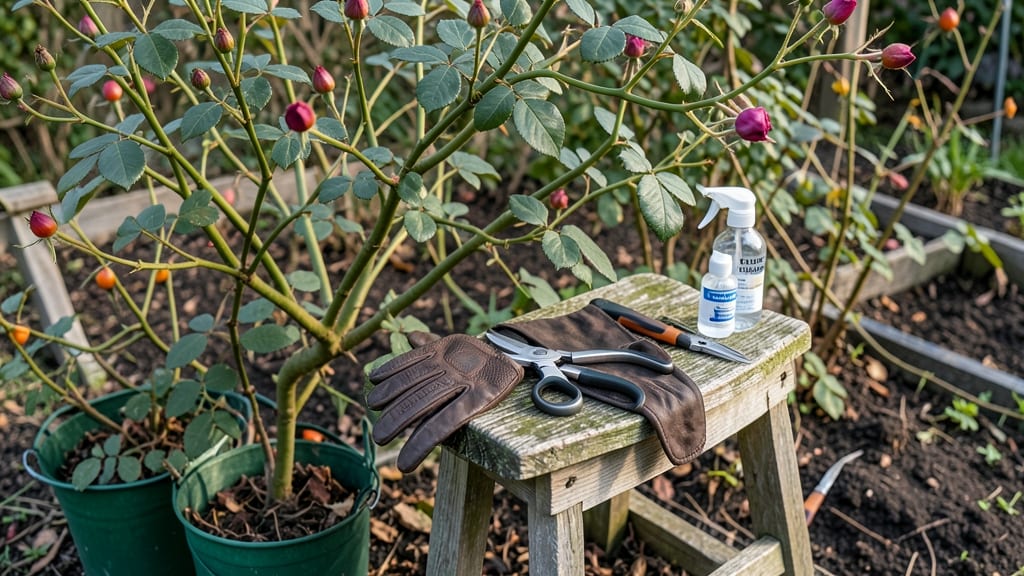
Your leggy rose bush isn’t doomed—it just needs a strategic haircut. ✂️ Three well-placed cuts can transform that lanky, overgrown mess into a bushy, blooming powerhouse within weeks.
I’ve brought back roses from "I-give-up" states using these same techniques, and the secret lies in understanding why they stretch out in the first place.
The culprits are usually too much shade, overcrowding, or improper pruning last season. Roses stretch toward light like sunbathing teens, and if they can’t reach it, they grow tall and weak.
The good news? You can fix it with sharp pruners, a sunny spot, and a little patience—no fancy tools or horticultural degree required.
By the time you’re done, you’ll have a compact, sturdy bush with energy focused on blooms, not just leaves. The first flush of flowers will arrive stronger than ever, and future growth stays balanced. This isn’t just quick damage control; it’s a reset button for your rose’s whole structure.
Works for hybrid teas, floribundas, and even old garden roses. The same principles apply whether you’re dealing with a single bush or a whole hedge. Let’s get those branches trimmed—and those blooms back on track.
Why it happens
When your rose bush stretches out like a sleepy cat basking in sunlight—long, spindly canes reaching for the sky—it’s not just a cosmetic issue. These leggy stems signal a plant under stress, often due to imbalances in light, nutrients, or environmental conditions.
Understanding the why behind this growth habit is the first step to fixing it. Let’s break down the science and uncover the real culprits behind your rose bush’s vertical obsession. 🌱🔍
Roses are light-hungry plants, and when they don’t get enough, they stretch their stems toward the nearest source—even if it’s weak sunlight or artificial light. This phenomenon, called etiolation, occurs when:
- Photosynthesis slows down: Without adequate light, the plant can’t produce enough energy (glucose) to fuel strong, compact growth. Instead, it prioritizes elongating stems to access more light, even at the expense of leaf and flower production.
- Hormonal shifts: Low light triggers a surge in gibberellins, a class of plant hormones that promote stem elongation while suppressing leaf and bud development.
- Weak cell walls: In dim conditions, rose canes produce thinner, weaker cell walls, leading to those floppy, leggy stems that snap easily in wind or rain.
Actionable fix: Move your rose bush to a location with 6–8 hours of direct sunlight daily. If indoors or in a shaded garden, supplement with a full-spectrum grow light (12–16 hours/day) to mimic natural light cycles.
A leggy rose bush often screams, “I’m hungry—but not for the right things!” While nitrogen is essential for leafy growth, an overabundance (especially in synthetic fertilizers) can backfire:
- Excess nitrogen = soft, fast growth: Nitrogen fuels rapid stem elongation but starves the plant of phosphorus and potassium, which are critical for root strength and flower development.
- Weak structural support: High-nitrogen feedings lead to sappy, weak canes that can’t support their own weight, causing them to flop or snap.
- Micronutrient deficiencies: Without balanced nutrients (like magnesium, calcium, or iron), chlorophyll production suffers, forcing the plant to stretch for light.
Actionable fix:
- Switch to a balanced fertilizer (e.g., 10-10-10 or 5-10-10 NPK ratio) or an organic option like fish emulsion or compost tea.
- Test your soil’s pH (ideal: 6.0–6.5 for roses). Low pH can lock out essential nutrients like phosphorus.
- Add compost or aged manure to improve soil structure and microbial activity, which helps roots access nutrients efficiently.
Roses are temperature-sensitive, and extreme heat or cold can disrupt their growth patterns:
- Late-winter/early-spring warmth: If temperatures spike too early (e.g., 60°F+ before last frost), roses may break dormancy prematurely, sending out weak, leggy shoots that can’t survive a return to cold. This is common in zones 5–8 during unpredictable springs.
- Summer heatwaves: High temperatures (>90°F) combined with low humidity cause transpiration stress, forcing the plant to prioritize water uptake over compact growth. The result? Long, watery stems with sparse leaves.
- Cold snaps in fall/winter: Sudden drops can stunt root growth, leaving the plant unable to support vigorous above-ground growth in spring.
Actionable fix:
- Mulch heavily (3–4 inches of organic mulch) to regulate soil temperature and retain moisture.
- Provide afternoon shade in hot climates (use shade cloth or plant near taller shrubs).
- Avoid fertilizing in extreme heat or cold—roots can’t absorb nutrients efficiently.
While roses love moisture, too much water (or waterlogged soil) creates a double whammy:
- Oxygen deprivation: Roots need oxygen to function. Soggy soil suffocates them, forcing the plant to divert energy to above-ground growth in a desperate bid to photosynthesize.
- Nutrient leaching: Excess water washes away essential minerals like nitrogen and potassium, leaving the plant starving for structural support.
- Weak cell development: In waterlogged conditions, rose canes grow long and weak because cells lack the turgor pressure needed for sturdy stems.
Actionable fix:
- Ensure your rose bush has well-draining soil. Amend clay soil with sand, perlite, or compost.
- Water deeply but infrequently—aim for 1–1.5 inches per week, including rainfall. Let the top 2–3 inches of soil dry out between waterings.
- Check for compaction—aerate the soil annually to improve drainage.
When roots are physically restricted (by tight planting, girdling roots, or competing plants), they can’t support the bush’s growth needs. This leads to:
- Limited nutrient uptake: Crowded roots compete for space, reducing the plant’s ability to absorb water and minerals efficiently.
- Stress-induced stretching: The plant “reaches” upward to escape the root-bound stress, producing leggy, weak canes.
- Fungal risks: Poor air circulation in dense root zones encourages root rot or powdery mildew, further weakening the bush.
Actionable fix:
- Prune girdling roots (roots circling the base of the stem) to improve airflow and nutrient flow.
- If the bush is root-bound, transplant it to a larger area with loose, fertile soil.
- Avoid planting roses too close together—space them 3–4 feet apart for hybrid teas and 2–3 feet for shrub roses.
Revitalize Your Rose Bush Now
A leggy rose bush isn’t a lost cause—it’s just waiting for the right pruning techniques to transform it back into a lush, vibrant plant. The key is understanding the root cause of the legginess (whether it’s overgrowth, poor light, or improper pruning) and applying the correct fix.
Below, we’ve broken down practical, step-by-step solutions tailored to each common issue, plus prevention tips to keep your roses healthy long-term.
If your rose bush has long, sparse stems with few leaves or blooms, it’s likely suffering from overgrowth or lack of structure. Here’s how to bring it back:
✂️ Step 1: Assess the Damage
- Examine the bush for weak, leggy stems (those stretching upward with few side branches).
- Look for dead or diseased wood (brown, mushy, or hollow stems—cut these out immediately).
- Identify the strongest canes (thick, green, and flexible) that will form the new framework.
🔥 Step 2: Prune for Structure (Not Just Length) - Cut back leggy stems to a healthy bud (a small bump on the stem) that faces outward from the center of the bush.
This encourages outward growth. - Shorten overly long canes by one-third to one-half—this forces the plant to redirect energy into bushier growth. - Remove competing stems: If multiple canes are growing in the same direction, prune the weaker ones to avoid congestion.
🌿 Step 3: Encourage Bushier Growth
- After pruning, fertilize with a balanced rose food (high in nitrogen for foliage, but not too much—this can cause more legginess).
- Water deeply (1–2 inches per week) to help the plant recover and promote new shoots.
- Mulch around the base with compost or aged bark to retain moisture and nutrients.
💡 Pro Tip: Avoid pruning in extreme heat or cold—aim for early spring (just as new growth begins) or late winter for best results.
If your rose bush is stretching toward light (common in shaded areas), it’s likely etiolated—weak stems with pale leaves. Here’s how to correct it:
🌳 Step 1: Relocate or Supplement Light
- Move the bush to a sunnier spot (roses need 6–8 hours of direct sunlight daily).
- If relocating isn’t possible, prune aggressively to reduce the plant’s size and encourage denser growth in the available light.
- Reflect light using white walls, mirrors, or light-colored mulch near the bush.
🌱 Step 2: Prune to Reset Growth Habits
- Cut back all leggy stems to within 6–12 inches of the ground (this may seem drastic, but it forces the plant to regrow from the base).
- Remove weak, spindly growth entirely—these won’t recover well.
- Shape the bush into a rounded form to maximize light exposure to the center.
💧 Step 3: Boost Recovery with Care
- Fertilize lightly with a phosphorus-rich fertilizer (like 5-10-5) to encourage root and bloom development.
- Avoid overwatering—soil should be moist but not soggy, as leggy plants are often weak from poor root health.
- Use a growth regulator (like B-Nine) if your roses are too top-heavy—this can help control excessive stretching.
🔥 Warning: If the bush is severely etiolated, it may take a full growing season to recover. Be patient!
If legginess stems from past pruning errors (like cutting too late, wrong buds, or not enough structure), here’s how to correct the damage:
📝 Step 1: Diagnose the Pruning Flaw
| Mistake | Signs | Fix |
|---|---|---|
| Cutting at the wrong angle | Stems die back or bleed sap | Prune at a 45° angle just above a healthy outward-facing bud. |
| Pruning too late in season | Leggy, weak new growth | Now is the time—prune in early spring to encourage strong regrowth. |
| Removing too many canes | Bush looks bare, sparse | Keep 3–5 strong canes as the main structure; prune back others to 1/3 their length. |
| Cutting blindly (no plan) | Unbalanced, chaotic growth | Shape the bush into an open center to allow light and air circulation. |
🌟 Step 2: Corrective Pruning Techniques
- For hybrid teas & floribundas: Prune to 5–7 buds per stem to encourage longer, stronger canes.
- For climbers & ramblers: Shorten last year’s growth by half, leaving 3–5 buds per stem.
- For shrub roses: Prune to open the center—cut back old wood (dark, brittle stems) and thin out crowded canes.
🌿 Step 3: Post-Pruning Care
- Disinfect pruners with rubbing alcohol between cuts to prevent disease spread.
- Apply a fungicide (like neem oil) if you see signs of black spot or powdery mildew.
- Stake weak stems if needed to prevent them from flopping.
🎯 Prevention Tip: Always prune with a clear goal—whether it’s more blooms, bushier growth, or better airflow. Sketch a rough plan before you start!
Once you’ve revived your rose bush, keep it healthy with these habits:
✅ Prune at the right time – Late winter/early spring (just before new growth starts). ✅ Fertilize smartly – Use low-nitrogen fertilizer in early spring and high-phosphorus in late spring for blooms. ✅ Water deeply but infrequently – 1–2 inches per week (avoid shallow watering, which encourages weak stems). ✅ Mulch properly – 2–3 inches of organic mulch (like wood chips) to retain moisture and regulate soil temp. ✅ Watch for pests/disease – Aphids, spider mites, and fungal diseases can weaken roses—treat early! ✅ Rotate pruning tools – Use clean, sharp shears to make precise cuts (dull blades tear stems).
Final Thought: A leggy rose bush is a sign of stress, not a death sentence. With the right cuts, care, and a little patience, your bush will bounce back stronger than ever—and next season, you’ll have fuller blooms and a more compact shape. 🌹✂️
Frequently asked questions about leggy rose bushes
Why does my rose bush grow so tall and skinny?
Leggy growth happens when roses stretch toward light due to insufficient sunlight (less than 6 hours daily) or nutrient imbalances. Too much nitrogen without phosphorus/potassium creates weak, elongated stems. Check for shade issues or over-fertilizing—both force roses to prioritize height over structure.
Can I fix a leggy rose bush without cutting it back drastically?
Yes! Start by pruning just the top third of leggy stems to encourage branching. Remove only the weakest canes (those with few leaves/buds). Add balanced fertilizer (like 10-10-10) and move the bush to full sun to trigger denser regrowth. This gradual approach works for mild cases.
How do I know which buds to cut back to?
Look for outward-facing buds (not inward) on healthy stems. Cut just above the bud at a 45° angle to prevent water pooling. For leggy roses, aim to shorten stems by 1/3—this forces energy into lateral buds, creating bushier growth. Pro tip: Use a magnifying glass if buds are tiny!
Will pruning leggy roses hurt their blooming?
Not if done right! Pruning stimulates new growth—just time it correctly. For spring-blooming roses, prune in late winter; for repeat-bloomers, prune after the first flush of flowers. You’ll sacrifice this year’s blooms on pruned stems, but next season’s growth will be fuller and stronger.
Can I use leggy rose cuttings to propagate new plants?
Take 4–6 inch cuttings from healthy leggy stems (use sharp shears at a 45° angle). Remove lower leaves and dip in rooting hormone. Plant in moist perlite/sand mix and keep humid (use a plastic bag). Roots form in 3–6 weeks—perfect for creating bushier, compact roses!