
Watering
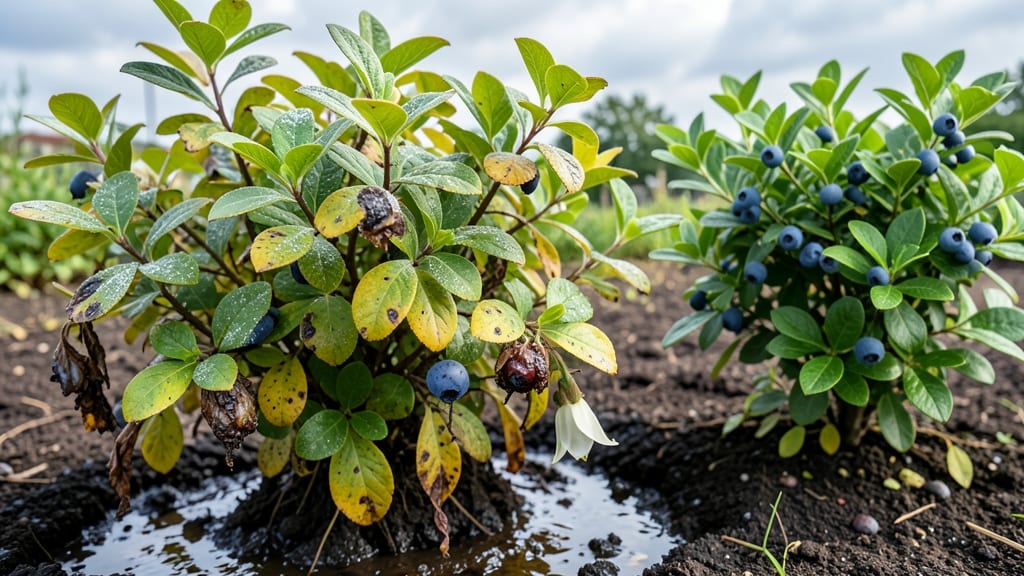
Your overwatered blueberry bush is drowning in its own soggy soil. 🌱 The telltale signs—yellowing leaves, mushy stems, and roots that smell like wet socks—aren’t just cosmetic; they’re a cry for help. Overwatering isn’t just about too much H₂O—it’s about the wrong conditions that strangle roots and invite rot.
Blueberries hate soggy feet as much as they love acidic soil. The first step? Stop watering until the top 2 inches of soil dry out. Then, dig in coarse sand or perlite to break up compacted earth and let water drain.
Prune back any mushy stems with clean shears—those are the bush’s weak spots.
Within 2-3 weeks, you’ll see new growth pushing through. The leaves will firm up, and those telltale blueberries will return next season. The key is consistency: water deeply but only when the soil is dry, and mulch with pine needles to keep moisture steady without suffocating roots.
This works for container-grown bushes too—just swap the sand for gravel in the bottom of the pot. Prevent future drama by checking soil moisture with your finger before watering. Your bush will thank you with bold, glossy leaves and a harvest to brag about.
Root Causes Of Overwatering
Overwatering your blueberry bush can turn your thriving plant into a soggy, struggling mess—often without obvious signs until it’s too late. Understanding the why behind this common issue helps you fix it fast. Here’s a breakdown of the key culprits:
Blueberries thrive in acidic, well-draining soil with a sandy loam texture. When soil lacks proper drainage—whether due to clay, compacted earth, or organic matter overload—water pools around roots instead of draining away. This creates anaerobic (oxygen-deprived) zones, where roots suffocate and rot.
- Clay-heavy soil acts like a sponge, holding moisture for days.
- Added compost or mulch (too close to the base) can smother roots and trap humidity.
- No raised beds or amendments (like perlite or sand) worsen the problem.
💡 Pro Tip: Test your soil’s drainage by digging a 6-inch hole, filling it with water, and timing how long it takes to drain. If it takes more than 4 hours, your soil is too dense.
Blueberries need consistent moisture, but their roots are sensitive to excess.
Common watering mistakes include: - Ignoring the "finger test"—stick your finger 2 inches into soil; if it’s damp, wait. - Automatic sprinklers that run on timers without accounting for rain or humidity. - Watering at the wrong time—early morning is best (reduces evaporation), but never water at night (promotes fungal diseases).
📊 Science Alert: Overwatering disrupts root respiration, forcing roots to switch from oxygen to less efficient fermentation—leading to weak growth and disease susceptibility.
Mulch is a double-edged sword. Too little leaves roots exposed to temperature swings, while too much (especially thick layers of wood chips or straw) smothers the soil, trapping moisture and blocking airflow.
- Incorrect mulch depth: Keep it 2–3 inches thick, 3–4 inches away from the trunk.
- Wrong mulch type: Avoid fresh grass clippings (they mat down) or dense bark (can suffocate roots).
✨ Fix It Fast: Fluff existing mulch to improve airflow, or switch to pine needles or shredded leaves (they decompose slowly and improve acidity).
Blueberries hate wet feet—especially in cool, cloudy, or high-humidity climates. If your region gets frequent rain, your watering routine may be compounding the problem.
- Rain + overhead watering = fungal feast (like botrytis or root rot).
- No wind or airflow in dense plantings traps moisture at soil level.
🔥 Action Step: Install a rain gauge to track weekly rainfall. Adjust watering to supplement, not drown, the soil.
Potted blueberries are high-risk for overwatering because:
- Smaller root zones fill up faster with excess water.
- Cheap pots without drainage holes act like water traps.
- No leach field (a saucer under pots to catch runoff) leads to root suffocation.
👨🍳 DIY Fix: Drill extra drainage holes in the bottom and sides (if possible), and use terracotta pots (they breathe better than plastic).
Many gardeners wait until yellowing leaves, wilting, or mold appear—by then, roots may already be compromised. Watch for:
- Soggy, dark soil that smells like wet socks (anaerobic bacteria at work).
- Mushy, blackened roots when gently unearthed.
- Leaves curling or dropping despite "plenty of water."
🎯 Preventative Tip: Use a moisture meter ($10–$20) to monitor soil moisture in real time—no guesswork!
Bottom Line: Overwatering is rarely just about "too much water"—it’s about poor drainage, timing, and soil conditions. By addressing these root causes, you’ll give your blueberry bush the aerated, balanced moisture it craves. Next up: How to Revive an Overwatered Bush (coming soon!).
Fixing Overwatered Blueberry Bushes
Reviving your soggy blueberry bush starts with identifying the root cause—literally! Whether it’s from too-frequent watering, poor drainage, or a heavy rainstorm, each issue requires a tailored approach. Below, we break down practical fixes for the most common causes, along with prevention tips to keep your bush thriving.
If your bush is drowning in excess moisture, the first step is cutting back on water.
How to Fix It: ✅ 🔥 Adjust Your Watering Schedule
Blueberries prefer consistent moisture but hate soggy roots.
Water deeply 2–3 times per week (more in extreme heat) and never let the soil stay waterlogged. - Test the soil: Stick your finger 1–2 inches deep. If it’s damp, wait before watering again.
✅ 🍳 Improve Drainage Immediately - Raise the soil level by adding 2–3 inches of organic matter (like compost or pine bark) around the base.
This helps water drain faster. - If planting in containers, ensure pots have drainage holes and use a well-draining mix (50% peat moss, 30% perlite, 20% sand).
✅ 👨🍳 Redirect Water Away from the Base
- Use a soaker hose or drip irrigation to deliver water slowly at the drip line (outer edge of the bush), not the center.
- Avoid overhead watering—it encourages fungal diseases.
💡 Prevention Tips:
- Use a moisture meter ($10–$20) to track soil dampness.
- Water in the morning so excess moisture evaporates by evening.
- Mulch properly: Apply 2–3 inches of wood chips or pine straw (but keep it 4–6 inches away from the trunk to prevent rot).
Clay-heavy or tightly packed soil traps water, suffocating roots.
How to Fix It:
✅ 🔪 Aerate the Soil
- Loosen compacted soil with a garden fork or tiller (gently!) to 12–18 inches deep.
- Mix in sand or perlite (20–30%) to improve airflow.
✅ 🥘 Amend the Soil Permanently
- Dig in compost, peat moss, or coconut coir to break up clay and boost drainage.
- For containers, repot every 2–3 years with fresh, airy soil.
✅ 🌡️ Elevate the Planting Area (If Possible)
- If your yard has poor drainage, consider planting on a slight mound or in a raised bed.
💡 Prevention Tips:
- Test your soil (DIY kits or lab tests) to check drainage before planting.
- Avoid walking on garden beds—compaction worsens over time.
- Plant in containers if your yard is naturally waterlogged.
A sudden downpour can overwhelm even the hardiest blueberry bush.
How to Fix It:
✅ ⏰ Speed Up Drying Time
- Remove mulch temporarily (if soggy) to let moisture evaporate.
- Use a fan (yes, really!) on a sunny day to circulate air around the bush.
✅ 🌡️ Monitor for Fungal Issues
- Check leaves for yellowing or mold (signs of root rot or powdery mildew).
- Trim affected branches with sterilized pruners and dispose of them.
✅ 🎯 Adjust Future Watering
- If rain was extreme, skip watering for 3–5 days to let the soil recover.
💡 Prevention Tips:
- Plant in a slightly elevated spot to reduce flood risk.
- Choose disease-resistant varieties (like ‘Duke’ or ‘Bluecrop’).
- Install a French drain if your yard floods often.
If the bush is wilting despite dry soil, root rot may have set in.
How to Fix It:
✅ 🔪 Prune Damaged Roots (If Necessary)
- Gently dig around the base and trim mushy, black roots with clean shears.
- Dust cuts with cinnamon (natural antifungal) before replanting.
✅ 🍳 Repot or Replant in Fresh Soil
- If root rot is severe, move the bush to a new spot with sterile, well-draining soil.
- Avoid watering for 5–7 days to let roots recover.
✅ 💡 Prevention Tips:
- Never let blueberries sit in saucers (even for a few hours).
- Use fungicides (like copper-based sprays) if your area is prone to rot.
Final Thought: 🌱 Patience is key—reviving an overwatered blueberry bush takes time, but with the right fixes, your plant will bounce back stronger. Check soil moisture weekly, adjust habits, and soon you’ll be harvesting juicy berries again!
Frequently asked questions
How can I tell if my blueberry bush is overwatered vs. underwatered?
Check the soil first! Overwatered bushes have soggy, dark soil that smells musty, while underwatered ones have dry, cracked soil. Look for yellowing leaves (overwatered) or crispy, brown edges (underwatered). Wilting despite damp soil? That’s a red flag for root rot from overwatering.
Can I save my blueberry bush if the roots are rotting?
Yes, but act fast! Trim away mushy, black roots with clean shears, then replant in fresh, well-draining soil (mix in perlite or sand). Avoid watering for 5-7 days to let roots recover. For severe cases, consider repotting entirely—just use a container with drainage holes!
How often should I water my blueberry bush after fixing overwatering?
Water deeply 2-3 times per week (adjust for heat/drought), but only when the top 2 inches of soil are dry. Use a moisture meter or the finger test—if damp, wait! Morning watering prevents fungal growth, and drip irrigation keeps water away from the base.
Will overwatering kill my blueberry bush permanently?
Not necessarily! With quick action (pruning rotten roots, improving drainage, and adjusting watering), most bushes recover within 2-3 weeks. The key is catching it early—chronic overwatering can weaken the plant long-term, but roots are resilient with proper care.