
Flowers
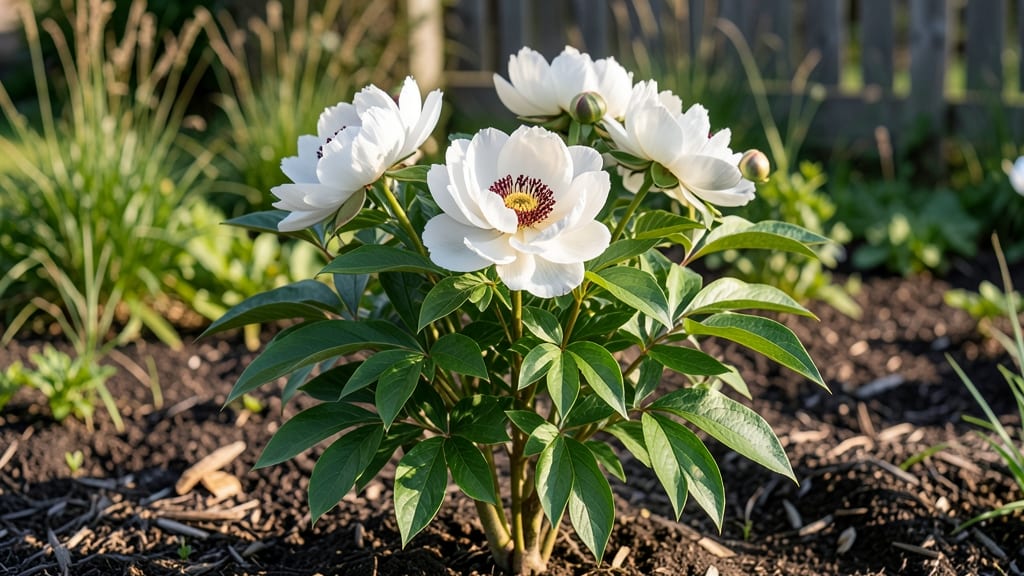
The peony bush white transforms any garden into a timeless masterpiece with its cloud-like blooms. ✨ I’ve designed countless spaces where these elegant shrubs become the centerpiece—whether as a bold statement in cottage gardens or a refined accent in formal landscapes.
Their lush foliage and fragrant blossoms create a serene atmosphere that lasts for weeks, even in partial shade.
Pair them with lavender for a soft purple contrast or interplant with ornamental grasses for movement and texture. In formal gardens, their rounded shape works beautifully as a clipped hedge, while cottage-style borders thrive with their natural, slightly wild charm.
The key to their lasting beauty? Minimal pruning—just a light cleanup in early spring—and they’ll reward you with years of effortless elegance.
📚 In This Guide
- What you need
- Instructions
- Tips and common mistakes
- Wrapping up and next steps
What you need
- ● Peony bush (white variety): 1 mature plant (3–5 years old for best blooms) or
- ● 5–10 peony seeds (slower to bloom, ~3 years to maturity)
- ● Well-draining soil: Mix 60% topsoil, 30% compost, and 10% perlite or coarse sand (pH 6.0–7.0).
- ● Organic mulch: 2–3 inches of shredded bark or straw to retain moisture.
- ● Slow-release fertilizer: 10-10-10 or peony-specific formula (apply in early spring).
- ● Garden trowel or spade (for planting)
- ● Pruning shears (sterilized with rubbing alcohol)
- ● Watering can or hose with a gentle spray nozzle
- ● Garden gloves (to protect from thorns)
- ● Measuring tape (for spacing—peonies need 3–4 feet apart)
- ● Copper fungicide (to prevent powdery mildew)
- ● Stake or trellis (if growing tall varieties)
- ● Drip irrigation system (for consistent moisture)
- ● Garden journal (to track blooming cycles and pruning notes)
How to cultivate a stunning white peony bush for season-long blooms
Here's the method I've refined over years to grow peonies that burst into lush white blooms year after year—with minimal fuss.
🌱 Step 1: Select the Perfect Planting Site and Soil
Peonies thrive in full sun with at least 6 hours of direct light daily. Choose a location that gets morning sun and afternoon shade if you live in a hot climate—this prevents scorching. The soil should drain well but retain moisture; peonies hate soggy roots but also dry out quickly.
Test your soil's drainage by digging a 12-inch deep hole. If water pools after 30 minutes, amend with 2 inches of coarse sand or perlite mixed into the native soil. Peonies prefer slightly alkaline soil with a pH between 6.5 and 7.5. You'll know you've got it right when the soil crumbles easily between your fingers and holds moisture like a damp sponge.
☀️ Step 2: Plant Bare-Root Peonies at the Right Depth and Time
Plant your peony roots in early fall, about 6-8 weeks before the first frost. This gives roots time to establish before winter. Dig a hole 2 feet wide and deep—peonies need room to spread. Place the roots so that the "eyes" (buds) sit 2 inches below the soil surface. Planting too deep delays blooming; too shallow risks frost damage.
Spread the roots evenly in the hole, then backfill with soil, pressing gently to remove air pockets. Water thoroughly until the soil is moist 12 inches down. A good rule of thumb: if you can't easily push a finger into the soil, water again. Mulch with 2-3 inches of organic mulch to protect roots in winter and retain moisture in summer.
✂️ Step 3: Prune Strategically for Health and Abundant Blooms
Wait until late spring—after the foliage turns brown—to prune. Cut back stems to 1 inch above the ground using clean, sharp pruners. This may seem drastic, but it prevents disease and encourages stronger growth. Never prune in fall or early spring; peonies store energy in their roots, and early pruning removes next year's blooms.
Remove only dead or diseased stems immediately. Healthy stems should snap cleanly when bent—if they bend without breaking, they're still alive. After pruning, apply a 2-3 inch layer of compost around the base to replenish nutrients. You'll see new shoots emerge within 2-3 weeks, signaling successful pruning.
💧 Step 4: Water and Fertilize for Long-Lasting Blooms
Water deeply once a week during the growing season, aiming for 1-1.5 inches of water per week. Peonies are drought-tolerant once established, but consistent moisture ensures vibrant blooms. Water at the base to avoid wetting the foliage, which reduces fungal risks. You'll know you're watering right when the soil feels damp 6 inches down.
Fertilize in early spring with a 10-10-10 balanced fertilizer, applying it 6 inches away from the plant base to avoid root burn. Avoid high-nitrogen fertilizers—they promote leafy growth at the expense of flowers. After blooming, side-dress with 2-3 inches of compost to replenish nutrients for next year's flowers.
🌿 Step 5: Protect and Maintain for Year-Round Elegance
In late fall, add 4-6 inches of mulch around the base to insulate roots during winter. This prevents frost heave, which can uproot shallowly planted peonies. In spring, remove the mulch as new growth appears. Peonies are low-maintenance, but watch for aphids—spray with a strong stream of water to dislodge them if you spot clusters on new shoots.
Divide mature peonies every 4-5 years in early fall to prevent overcrowding. Dig up the plant, separate the roots, and replant immediately. You'll know it's time to divide when blooms become smaller or less frequent. With proper care, your white peony bush will reward you with 2-3 weeks of lush, fragrant blooms each spring for decades.
Tips & tricks for perfect white peony cultivation
Here's what I've learned after years of growing these stunning white blooms—simple tricks that make all the difference.
Lighting Strategy: If your garden gets intense afternoon sun, consider planting near a north-facing wall or fence. This creates natural shade during peak heat hours while still allowing those crucial 6 hours of morning sun peonies need. I've seen peonies in full afternoon sun develop brown spots on their petals—something you definitely want to avoid with white varieties.
Soil Test Shortcut: Don't have a soil pH test kit? Use this trick: crush a handful of your garden soil between your fingers. If it feels gritty with minimal stickiness, it's likely too alkaline. If it forms a tight ball that crumbles when poked, it's probably in the ideal 6.5-7.5 pH range for peonies. For acidic soils, mix in 2 inches of crushed limestone per square foot—it's cheap and works wonders over time.
Planting Depth Visual: The 2-inch depth for those "eyes" (buds) can be tricky to judge. Here's my method: after placing roots in the hole, cover them with a thin layer of soil, then use a pencil to mark where the eyes should be. The pencil's width gives you a perfect visual guide for that critical 2-inch depth. Too deep and you'll wait years for blooms; too shallow and frost will damage them.
Watering Technique: When aiming for 1-1.5 inches of water weekly, use a rain gauge or even a tuna can to measure. Place it near your peonies and fill it with water until it reaches 1.5 inches—this gives you a tangible reference. Watering at the base with a soaker hose prevents fungal issues that come from wetting the foliage, and you'll notice the soil stays perfectly damp 6 inches down without over-saturation.
Pro Tips for Peony Bush White
- Here's what I've learned after years of growing these stunning white blooms—simple tricks that make all the difference.
- Lighting Strategy: If your garden gets intense afternoon sun, consider planting near a north-facing wall or fence.
- Soil Test Shortcut: Don't have a soil pH test kit?
Frequently asked questions
Got questions about growing and caring for your peony bush white? You’re not alone! Here are some of the most common queries—plus straightforward answers to keep your blooms thriving year-round.
How do I encourage more white peony blooms?
White peonies love full sun (6+ hours daily) and well-draining soil. After flowering, trim back spent blooms but leave the foliage until it yellows naturally—this helps next year’s buds form. Fertilize lightly in early spring with a balanced bloom booster. Pro tip: Avoid over-pruning!
When is the best time to prune a white peony bush?
Prune late winter or early spring (just before new growth emerges) to avoid disturbing dormant buds. Cut back dead or weak stems to 1–2 inches above the ground. Never prune in fall—this can weaken the plant before winter. For minimal maintenance, a light trim after blooming also works!
Can white peonies survive in hot climates?
Yes! While they prefer cooler zones (3–8), white peonies tolerate heat if given morning sun and afternoon shade. Mulch the base with 2–3 inches of organic matter (like straw) to retain moisture and cool roots. Water deeply once a week during dry spells—avoid wetting the foliage to prevent mildew.
What are some low-maintenance alternatives to white peonies?
If peonies feel high-maintenance, try these easy-care white bloomers:
- Shasta daisies: Thrives in sun, blooms all summer, and spreads gently.
- White hydrangeas: Loves shade, changes color with soil pH, and blooms prolifically.
- White clematis: Climbs trellises, drought-tolerant once established, and flowers twice a year.
Why aren’t my white peony buds opening?
Bud blast (unopened flowers) often signals stress. Check for these fixes:
- Too much shade? Move to sunnier spot.
- Overcrowded roots? Dig up and divide clumps every 5–7 years.
- Frost damage? Protect buds with burlap in late winter if your zone dips below 20°F.
Still stumped? Snap a photo of your peony’s foliage/stems and share it with local gardening groups—they’re full of troubleshooting tips!
Wrapping up and next steps
Transforming your garden into a year-round haven with a stunning peony bush white is simpler than you think! With the right care—minimal pruning, proper sunlight, and a touch of seasonal love—you’ll enjoy lush blooms and graceful foliage that steals the show.
Whether you’re a seasoned gardener or just starting, this elegant plant is your ticket to effortless beauty.
Ready to elevate your outdoor space? Start by planting your peony bush white this season and watch it thrive with confidence. Happy gardening! 🌸✨