
Pruning
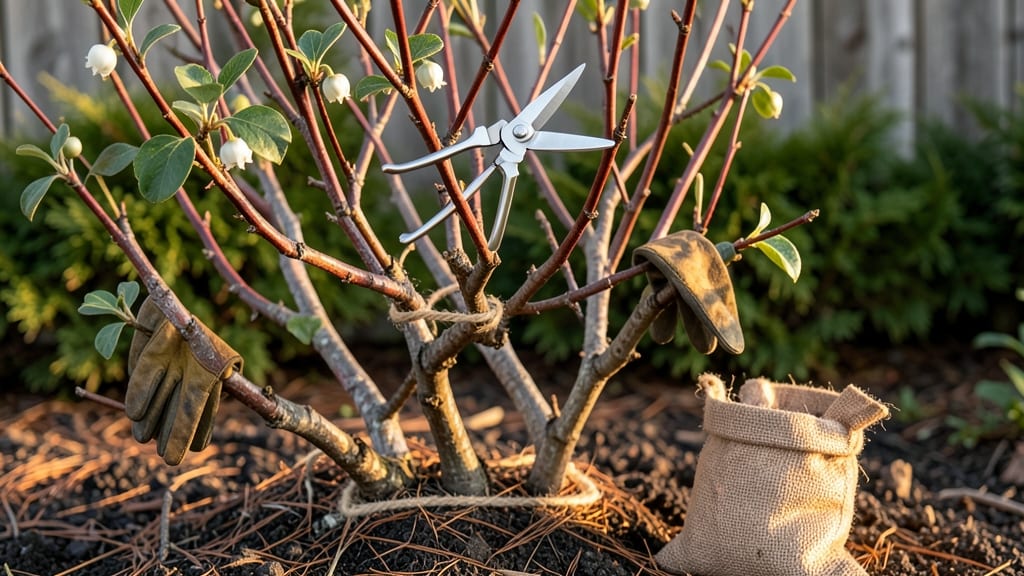
Winter pruning blueberry bushes transforms next summer’s harvest from a handful of berries to a bucketful. ✂️ I’ve learned the hard way that timing matters—prune too early, and you risk frost damage; too late, and you rob the plant of energy it needs to fruit.
The sweet spot is late winter, when the ground is still frozen but buds haven’t swollen yet.
You’ll need sharp pruners, gloves (those thorns are vicious), and a clear day with temps above freezing. The goal is to open up the center of the bush so sunlight reaches all the canes—this is what turns next year’s flowers into fruit.
I cut out dead wood first, then remove any crossing branches, and finally thin out older canes to make room for new growth.
What you’ll end up with is a bush that looks like a well-groomed hedge, not a tangled mess. The berries that follow are larger, sweeter, and more abundant than ever before, because the plant isn’t wasting energy on crowded, shaded branches.
Plus, you’ll spend less time fighting through thorns come harvest time.
This method works for both northern and southern growers—just adjust for your last frost date. In colder zones, prune after the ground thaws but before buds break; in milder areas, you might have until early spring.
Either way, you’ll be rewarded with a bush that’s ready to produce its best crop yet.
📚 In This Guide
- What you need
- Instructions
- Tips and common mistakes
- Wrapping up and next steps
What you need
- ● Pruning shears: Bypass pruners (sharp, clean, and disinfected with rubbing alcohol or bleach to prevent disease). Quantity: 1 pair per person.
- ● Loppers: For thicker branches (1–2 inches in diameter). Specs: Long handles (20–24 inches) for leverage.
- ● Gloves: Heavy-duty, cut-resistant gloves (e.g., leather or reinforced fabric) to protect against thorns and scratches.
- ● Disposable pruning bags: 2–3 large bags (13-gallon capacity) to collect debris and prevent disease spread.
- ● Rake or broom: For clearing fallen leaves and twigs from the pruning area.
- ● Measuring tape or ruler: To ensure you’re pruning to the correct height (e.g., 12–18 inches from the ground for dwarf varieties).
- ● Hose with nozzle: For rinsing tools and cleaning up sap residue.
- ● Pruning saw: If dealing with very thick, woody stems (rare in young bushes).
- ● Marking twine or flags: To tag branches for removal if you’re unsure about cuts.
- ● Compost bin: For repurposing pruned branches as mulch or compost.
- ● Safety glasses: If your bushes are densely thorny or you’re working in windy conditions.
- ● ✅ Timing: Prune on a dry, frost-free day in late winter (after the worst cold snaps but before buds swell). Ideal temps: 40–50°F.
- ● ✅ Weather check: Avoid pruning if rain or snow is forecasted within 24 hours.
- ● ✅ Tool sharpening: Hone your pruners and loppers before the session for clean cuts.
- ● ✅ Safety first: Wear long sleeves and pants to protect against thorns and scratches.
Instructions for pruning blueberry bushes in winter
Here’s how I prune my blueberries in late winter—when the bushes are dormant but the plan is crystal clear.
✂️ Step 1: Identify and Remove Dead or Diseased Wood
Start by scanning your bushes for branches that are brown, brittle, or hollow—these are dead or diseased and need to go. I grab my pruners and cut these out first, making clean cuts at the base of the branch where it meets the main stem. This prevents unsightly stubs and keeps the bush healthy.
Watch for signs like blackened bark or mushy stems—these are red flags. If you see them, remove the entire branch immediately. Healthy wood should be firm and light brown or green underneath the bark. Cutting out the bad wood first makes the rest of the job easier and reduces stress on the plant.
✂️ Step 2: Thin Out Crowded or Weak Branches
Next, focus on thinning the bush to improve airflow and sunlight penetration. I look for branches that cross each other or grow inward—these compete for resources and often lead to smaller fruit. Remove about one-third of the oldest, thickest branches from the center of the bush, cutting them back to the main stem or a strong lateral branch.
Don’t worry about leaving a few small branches behind—blueberries thrive when they have a mix of old and new growth. You’ll know you’re doing it right when you can see light filtering through the center of the bush. This step is all about balance—too much thinning weakens the plant, but too little keeps it crowded and prone to disease.
✂️ Step 3: Shape the Bush for Better Fruit Production
Now it’s time to shape the bush into an open vase-like form. I start by selecting 4-6 of the strongest, most upright branches—these will be your main scaffold. Cut back any branches that grow too close together or angle downward, as these rarely produce fruit. Aim to leave branches that are spaced 6-12 inches apart and angled outward.
For branches that are still productive but overcrowded, I make a clean cut just above an outward-facing bud—this encourages new growth in the right direction. Avoid leaving stubs or cutting back to a fork in the branch, as this can lead to weak regrowth. Step back occasionally to visualize the bush’s shape—it should look like an open umbrella with plenty of room for sunlight to reach the center.
⏰ Step 4: Time Your Pruning for Late Winter
The best time to prune is after the worst of winter has passed but before new growth begins—typically late February to early March in most climates. I wait until temperatures are consistently above 32°F to avoid damaging the plant. If you prune too early, cold snaps can stress the bush, and if you wait too long, you’ll encourage early growth that can be damaged by late frosts.
After pruning, I clean up all the clippings and dispose of them away from the garden to prevent disease from spreading. A quick rake around the base of the bush removes any fallen leaves or debris, giving the plant a fresh start. Water the base lightly if the ground isn’t frozen—just enough to keep the roots hydrated without soaking the soil.
🌱 Step 5: Monitor and Adjust for Next Year
Keep an eye on your blueberry bushes throughout the growing season. If you notice new branches growing too close together or crossing, trim them back during the dormant season next year. I also make a note of which branches produced the most fruit—these are the ones to prioritize in future pruning sessions.
Blueberries respond well to consistent care, so don’t be afraid to adjust your approach each year. Over time, you’ll develop a rhythm with your bushes, and they’ll reward you with larger berries and heavier yields. Just remember: the goal is to keep the bush open, airy, and full of strong, healthy branches ready to burst into life when spring arrives.
Tips & tricks for pruning blueberry bushes in winter
These simple yet game-changing tips will help you prune like a pro and set your blueberries up for a stellar harvest next summer.
Tool Prep: Sharpen your pruners before you start—dull blades tear wood instead of making clean cuts, which can damage the plant. I also like to wipe down my tools with rubbing alcohol between cuts to prevent spreading disease. A small brush in your pocket helps remove debris from cuts, keeping them clean for faster healing.
Step 2 Visual Cue: When thinning branches in Step 2, imagine sunlight streaming through the center of your bush. You're aiming for that "open umbrella" look where you can see light filtering through. If you can't see through, you haven't thinned enough. For reference, I like to hold my hand about 6 inches from the center—if I can't fit it through, there's still work to do.
Bud Selection Secret: In Step 3, when making those critical cuts above outward-facing buds, look for buds that are plump and slightly raised. These are the strongest growth points. Avoid cutting above buds that look shriveled or sunken—they won't produce vigorous new growth. I find it helps to run my thumb along the branch to feel the buds before making my cut.
Post-Pruning Care: After finishing your cuts, give your bushes a light watering if the ground isn't frozen—just enough to settle the soil around the roots. This helps reduce transplant shock from the pruning. I also make it a habit to apply a 2-inch layer of organic mulch around the base (but not touching the trunk) to protect roots and retain moisture during late winter.
Pro Tips for Pruning Blueberry Bushes In Winter
- These simple yet game-changing tips will help you prune like a pro and set your blueberries up for a stellar harvest next summer.
- Tool Prep: Sharpen your pruners before you start—dull blades tear wood instead of making clean cuts, which can damage the plant.
- Step 2 Visual Cue: When thinning branches in Step 2, imagine sunlight streaming through the center of your bush.
Frequently asked questions
Got questions about pruning blueberry bushes in winter? You’re not alone! Here are some of the most common concerns—plus clear, actionable answers to keep your bushes thriving.
When is the exact best time to prune blueberries in winter?
Prune your blueberry bushes in late winter (just before buds swell but after the worst cold snaps). For most regions, this means February to early March. Avoid pruning in fall—it stresses the plant and invites pests.
Can I prune blueberry bushes in early winter (December/January)?
Not ideal! Pruning too early (Dec/Jan) exposes cuts to harsh winter winds and frost, which can damage the plant. Wait until dormancy is broken but growth hasn’t started—usually after the ground thaws slightly. If you must prune earlier, cover cuts with pruning sealant temporarily.
What if I missed winter pruning? Can I still prune in spring?
Yes, but lightly! If you skip winter pruning, do a minimal spring cleanup (remove only dead/diseased wood) in early spring (March–April). Avoid heavy pruning then—it can delay fruit production and stress the bush. Think of it as a “catch-up” trim, not a full makeover.
How do I tell the difference between old and new wood on blueberry bushes?
Old wood (keep it!) is thicker, woody, and has last year’s fruit clusters. New wood (prune it!) is slender, green/brown, and grows from the base or along branches. Look for pencil-thin canes—these are the ones to remove to improve airflow and fruit quality.
Will pruning in winter attract pests or diseases?
Pruning correctly (with clean, sharp tools) reduces pest/disease risk by improving airflow. However, avoid pruning during wet weather—moisture can spread fungal issues. Sterilize tools with rubbing alcohol, and remove all pruned branches from the area to prevent fungal spores from lingering.
Pro Tip: Should I fertilize after winter pruning?
Yes! Apply a balanced, acidic fertilizer (like 10-10-10 or a blueberry-specific blend) 4–6 weeks after pruning (late March–April). This gives roots time to recover before new growth starts. Avoid high-nitrogen fertilizers—they promote leafy growth over fruit.
Wrapping up and next steps
Pruning your blueberry bushes in late winter is a game-changer—it boosts air circulation, encourages healthier growth, and sets the stage for a juicy, abundant harvest come summer. 🌱 With the right tools, timing, and technique, you’ll turn winter chores into a rewarding ritual that pays off in flavorful berries.
Now that you’re armed with expert tips, roll up your sleeves and give your bushes the care they deserve!
Ready to take the next step? Mark your calendar for late winter (just before buds swell) and grab your pruners—your future blueberry feasts are waiting! 🍇