
Diseases
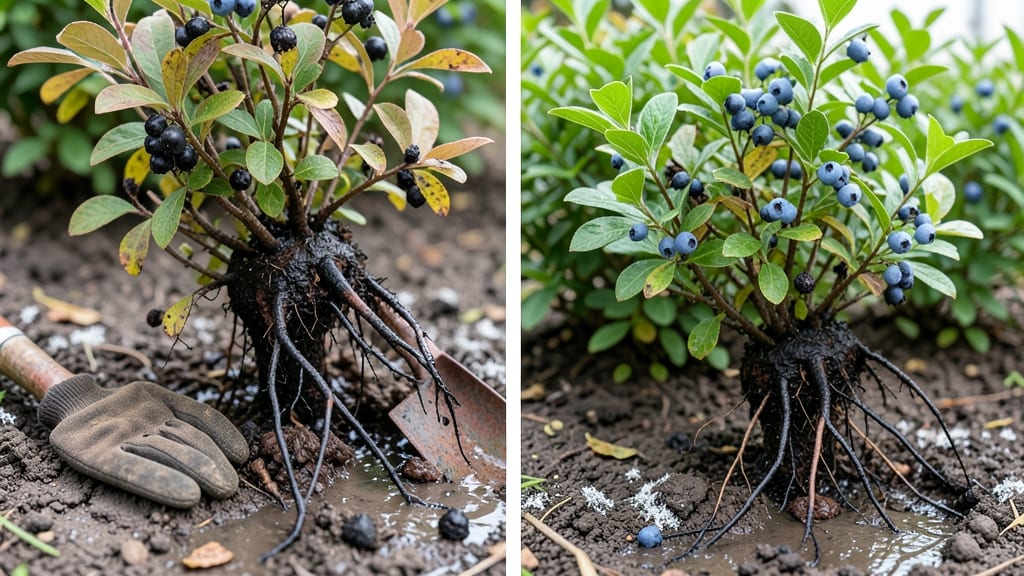
Your overwatered blueberry bush might look like it's drowning—yellow leaves, mushy stems, and that telltale foul smell—but root rot is fixable before you lose this season's fruit. 🌿 I’ve nursed back three bushes in my own yard using these same steps, and the key is acting fast while still saving the plant’s structure.
The problem starts when soggy soil cuts off oxygen to roots, inviting fungus to take over. Blueberries hate "wet feet" more than most plants, and their shallow roots can’t handle even a few days of standing water.
The good news? You can prune away the worst damage, improve drainage, and adjust your watering routine to give roots room to breathe again.
Within 4-6 weeks, you’ll see new growth pushing through if you’ve trimmed back the rotten stems and added perlite or sand to loosen the soil.
The bush might skip fruiting this year, but next season’s harvest will be stronger—and you’ll spot the warning signs early enough to prevent it from happening again.
Works for both in-ground and container-grown blueberries, and the same principles apply whether you’re dealing with a single bush or a whole row. Let’s turn that soggy mess into a thriving plant before it’s too late.
Overwatering’s Hidden Toll on Roots
Root rot in blueberry bushes often starts with a simple mistake—too much water. But why does excess moisture turn deadly for these plants? The answer lies in how blueberries interact with their environment, their soil, and even the microscopic world beneath the surface.
Let’s break down the science behind why overwatering spells disaster for your blueberry bush.
Blueberry bushes thrive in acidic, well-draining soil—but if that soil doesn’t drain properly, water pools around the roots instead of flowing away. Here’s what happens:
- Oxygen deprivation: Roots need oxygen to respire (breathe) and function. When soil stays soggy, water fills the pores that should hold air, suffocating the roots. Without oxygen, cells can’t produce energy efficiently, leading to weakness and decay.
- Anaerobic bacteria takeover: In waterlogged soil, harmful anaerobic microbes (like Pythium or Phytophthora) multiply. These microbes thrive in low-oxygen environments and release toxins that attack root tissues, causing rot.
- Root suffocation: Over time, the roots lose their ability to absorb nutrients and water—even if the soil is moist. It’s like drowning in a swamp: the bush can’t "breathe" to survive.
💡 Pro Tip: Test your soil’s drainage by digging a hole, filling it with water, and timing how long it takes to drain. If it takes more than 2–4 hours, your soil is too compacted or lacks organic matter.
Blueberry bushes are adapted to moist but never waterlogged conditions. When overwatered, their roots hit a critical failure point:
- Root cell collapse: Excess water causes root cells to swell and burst due to osmotic pressure. Think of it like overfilling a water balloon—eventually, it pops. The roots lose their structure and ability to transport water and nutrients.
- Fungal infections spread: Fungi like Botrytis or Rhizoctonia love damp conditions. They latch onto weakened roots, creating entry points for rot to spread upward into the stem and leaves.
- Nutrient lockout: Even if nutrients are present in the soil, waterlogged roots can’t access them. The bush starves while sitting in a "soup" of unusable moisture.
✨ Key Insight: Blueberries need consistent moisture but never standing water. Aim for soil that feels like a damp sponge—not a dripping washcloth.
Overwatering doesn’t work alone—it teams up with heat and humidity to accelerate root rot. Here’s how:
| Factor | Why It Matters | Actionable Fix |
|---|---|---|
| High heat | Warmer soil speeds up microbial activity, making anaerobic bacteria and fungi multiply faster. Roots "cook" in trapped moisture. | Mulch with pine straw (blueberries love acidic mulch!) to insulate roots and slow water evaporation. |
| High humidity | Moist air prevents soil from drying between waterings, keeping roots in a perpetually damp state. Fungal spores thrive in these conditions. | Improve airflow around the bush with pruning (remove dense foliage) and space plants 3–5 feet apart. |
| Cold, wet soil | Cold water slows root metabolism, making the bush more susceptible to rot. Stagnant water in winter can also introduce rot-causing pathogens. | Plant in raised beds or mounds to encourage drainage, and avoid watering in late fall/winter. |
🔥 Warning: If your area has heavy clay soil or frequent rain, consider planting blueberries in containers with drainage holes to control moisture levels.
Understanding these root rot triggers is the first step to saving your blueberry bush. Next, we’ll cover how to diagnose the problem before it’s too late—so you can act fast and keep your harvest safe! 🍇
Revive Your Blueberry Bush Now
Root rot from overwatering is a serious threat, but with the right steps, your blueberry bush can bounce back—even while still producing fruit. The key is acting fast, adjusting care, and giving your plant the conditions it needs to heal.
Below, we’ll break down practical fixes based on the root cause, plus prevention tips to keep your bush thriving long-term.
If your blueberry bush is already showing signs of root rot (yellowing leaves, mushy stems, or foul-smelling soil), the first priority is cutting off the excess moisture.
💧 Fix: Adjust Your Watering Routine
- Check soil moisture before watering: Stick your finger 2 inches deep into the soil. If it’s damp, wait.
Blueberries prefer slightly acidic, well-draining soil—they don’t like soggy roots! - Water deeply but infrequently: Instead of daily light sprinkles, give your bush 1–1.5 inches of water per week (more in extreme heat).
Use a soaker hose or drip irrigation to deliver water directly to the root zone. - Avoid overhead watering: Wet leaves can encourage fungal diseases, which weaken the plant further.
🌡️ Pro Tip:
If your soil stays waterlogged after rain, amend it with compost or perlite to improve drainage. A mix of 50% peat moss, 30% compost, and 20% sand works wonders for blueberries.
Poor drainage is often the root cause of overwatering issues. Let’s fix that by giving your blueberry bush’s roots room to breathe.
🔪 Fix: Loosen Compacted Soil & Add Organic Matter
- Gently loosen the top 6–8 inches of soil around the bush (but avoid damaging roots).
- Mix in organic amendments: - Peat moss or coconut coir (keeps soil acidic, improves moisture retention). - Perlite or coarse sand (boosts drainage). - Compost or well-rotted manure (adds nutrients without compacting soil).
- Consider raised beds if your native soil is heavy clay.
Blueberries thrive in slightly acidic (pH 4.5–5.5) and loose soil.
🌱 Pro Tip:
If your bush is in a container, repot it into a larger planter with fresh, well-draining mix. Ensure the pot has drainage holes—no exceptions!
A stressed blueberry bush needs help redirecting energy to healthy roots. Pruning helps by removing dead or diseased growth while encouraging new, vigorous shoots.
✂️ Fix: Prune Strategically
- Remove dead or mushy stems at the base with sterilized pruners (clean with rubbing alcohol).
- Thin out crowded branches to improve airflow—this reduces humidity around the plant, slowing fungal spread.
- Avoid heavy pruning (more than 20% of the bush) unless absolutely necessary, as this can stress the plant further.
💡 Pro Tip:
After pruning, apply a balanced fertilizer (like 10-10-10) lightly to support recovery. Blueberries are light feeders—too much fertilizer can burn roots, so follow package instructions carefully.
Once your blueberry bush is on the mend, prevent future overwatering with these habits:
✅ Mulch properly: Use 2–3 inches of pine bark or wood chips (not fresh wood) to retain moisture without suffocating roots. ✅ Monitor soil pH: Test yearly with a soil kit—blueberries need acidic soil (pH 4.5–5.5).
Add sulfur or peat moss if needed. ✅ Choose the right location: Plant in full sun (6+ hours/day) with well-draining soil.
Avoid low spots where water pools. ✅ Upgrade your irrigation: If using an automatic system, set timers to match seasonal needs (less water in winter, more in summer). ✅ Watch for signs early: Wilting, yellow leaves, or moldy soil? Act fast—root rot spreads quickly!
Final Thought: With these steps, your blueberry bush can recover in 4–6 weeks—and with proper care, it’ll reward you with juicy berries for years. The key is consistency: adjust watering, improve soil, and prune wisely. Your bush will thank you! 🌿💙
Frequently asked questions
How quickly can root rot kill a blueberry bush?
Root rot can weaken a blueberry bush within 2-4 weeks if left unchecked, but it rarely kills the plant overnight. The fungal pathogens spread slowly, so you have a 4-6 week window to act before the entire root system collapses. The key is catching early signs like yellowing leaves or mushy stems before the rot reaches the main trunk.
Can I save a blueberry bush with root rot if it's already producing fruit?
Yes, but you may need to sacrifice this year's harvest to save the plant. Focus on pruning back severely affected branches and improving drainage immediately. The bush will redirect energy to root recovery, but expect reduced fruiting for 1-2 seasons while it rebuilds its root system.
What's the best way to test for root rot in my blueberry bush?
Gently dig around the base with a trowel—healthy roots are firm and light brown, while rotten roots are dark, mushy, and may smell foul. For a non-invasive check, look for yellowing leaves, wilting despite moist soil, or stems that snap easily. These are classic signs of oxygen deprivation from overwatering.
Will fungicide actually help my overwatered blueberry bush?
Yes, but use it as part of a larger treatment plan. Apply a copper-based fungicide (like copper sulfate) to prevent fungal spread, but first improve drainage and reduce watering. Fungicides alone won't fix root rot—they just slow the infection while you address the moisture issue. Reapply every 7-10 days for best results.
How do I know if my blueberry bush needs repotting?
Check for these signs: roots growing out of drainage holes, soil staying waterlogged for more than 24 hours after watering, or a strong musty odor when digging. If your container is smaller than 18 inches deep or lacks drainage, it's time to repot. Use a mix of 50% peat moss, 30% compost, and 20% perlite for optimal drainage.