
Diseases
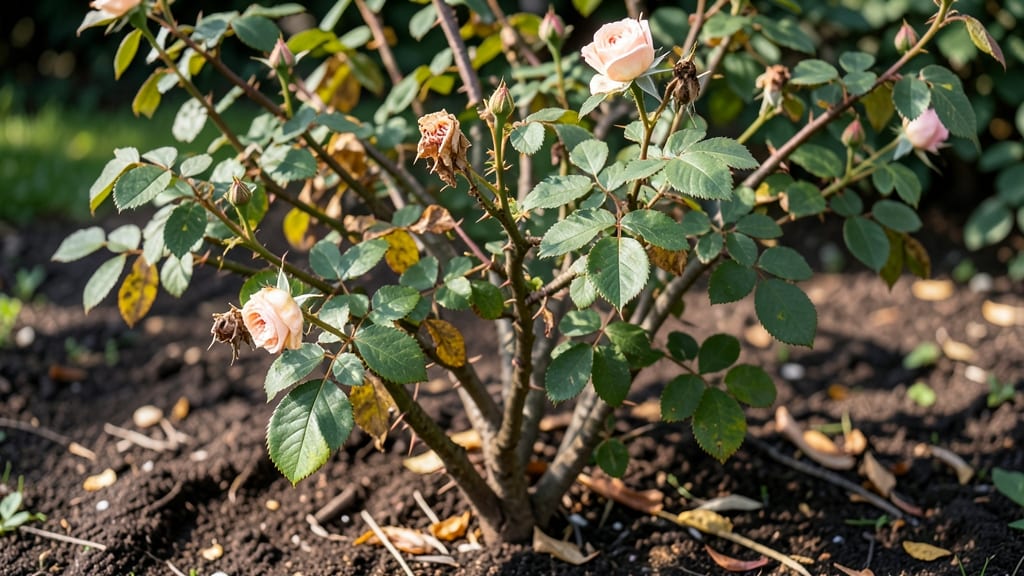
Your rose bush dropping leaves faster than spring snowmelt? 🌿 That sudden defoliation isn’t just unsightly—it’s your plant’s SOS signal. The culprits run from fungal infections like black spot to spider mite invasions, plus environmental missteps like overwatering or nutrient starvation.
The good news? Most causes have quick fixes, and I’ll walk you through identifying the exact problem and stopping the leaf loss in its tracks.
Start by inspecting the leaves for telltale signs: yellow spots with black edges mean black spot, while tiny webs or stippled leaves scream spider mites. Overwatering leaves a soggy base, while nutrient issues show as pale, weak growth.
Once you pinpoint the cause, targeted treatment—fungicide sprays, neem oil, or adjusting watering—can revive your bush in 2-4 weeks. The key is acting fast before the stress weakens the roots.
📚 In This Guide
- What you need
- Instructions
- Tips and common mistakes
- Wrapping up and next steps
What you need
- ● Gloves (2 pairs): One pair of nitrile or rubber gloves (for handling chemicals) and a pair of gardening gloves (for pruning and soil work).
- ● Hand lens or magnifying glass (1): A 10x magnification tool to inspect leaves, stems, and buds for pests or disease signs.
- ● Pruning shears (1): Bypass pruners with sterilized blades (clean with rubbing alcohol or bleach solution).
- ● Disinfectant (1 bottle): 70% isopropyl alcohol or a 1:10 bleach-water solution (for sterilizing tools).
- ● Garden trowel (1): A stainless-steel or aluminum trowel for gently lifting soil or inspecting roots.
- ● Watering can (1) or hose with nozzle: A spray nozzle for targeted watering (avoid overhead spraying if fungal disease is suspected).
- ● pH test kit (1): A digital or liquid test kit to check soil pH (ideal range: 6.0–6.5 for roses).
- ● Fungicide (1 bottle): A copper-based or neem oil fungicide (e.g., Copper Soap or Organic Neem Oil).
- ● Insecticidal soap (1 bottle): For treating aphids, spider mites, or whiteflies (e.g., Safer® Brand Insect Killing Soap).
- ● Mulch (1 bag): Organic mulch like shredded bark or pine straw (2–3 inches thick).
- ● Diagnostic guidebook or app: A rose disease/pest ID app (e.g., Plantix or PictureThis) to confirm issues.
- ● Soil moisture meter (1): To check root-zone hydration without disturbing the plant.
- ● Compost or fertilizer: A balanced rose fertilizer (e.g., 10-10-10) or compost to boost soil health.
- ● Row cover or shade cloth: If environmental stress (e.g., heat or wind) is the culprit.
- ● Camera or smartphone: To document symptoms before/after treatment (helpful for tracking progress!).
Instructions for diagnosing and fixing a rose bush losing leaves
Here’s how to quickly identify the cause and start recovery—no guesswork.
🌿 Step 1: Check for Overwatering or Root Stress
Start by feeling the soil around the base of the rose bush. If it’s soggy or smells foul, you’re overwatering—roses hate wet feet. Healthy soil should be damp but not drenched, like a wrung-out sponge. Water only when the top 2-3 inches feel dry to the touch, and ensure your container or garden bed has proper drainage.
Yellowing leaves with brown edges often signal root rot, especially if the bush feels mushy at the base. If you see white, fuzzy mold, that’s fungal growth. In this case, stop watering immediately and let the soil dry out completely for a few days. For severe cases, dig up the plant and inspect the roots—healthy roots are firm and white, while rotten ones are brown and mushy.
☀️ Step 2: Assess Sunlight and Wind Exposure
Too much direct sun can scorch leaves, causing them to crisp and drop, while too little light weakens the plant. Roses need 6-8 hours of sunlight daily, but afternoon shade helps in hot climates. If your bush is in a spot with harsh afternoon sun, move it slightly to a location with morning sun and afternoon shade. You’ll notice new leaves emerging within a week if light is the issue.
Wind also stresses roses, especially if it’s constant. If your bush is in an exposed area, consider adding a windbreak like a fence or trellis. You’ll see leaves stop dropping and new growth appear more uniformly if wind is the culprit. Look for leaves that are curled or torn—this is a classic sign of windburn.
🪴 Step 3: Inspect for Pests and Diseases
Flip over the leaves to check for pests like aphids, spider mites, or sawfly larvae. Aphids cluster on new growth and leave sticky residue, while spider mites create fine webbing on the undersides of leaves. Sawfly larvae look like tiny green caterpillars and can defoliate a bush quickly. If you see any of these, spray the bush with a neem oil solution (1 tablespoon per quart of water) or insecticidal soap. Repeat every 3-5 days until pests are gone.
Black spots on leaves or powdery white coatings are signs of fungal diseases like black spot or powdery mildew. Prune away infected leaves immediately and dispose of them in the trash—not the compost. Apply a copper fungicide or baking soda spray (1 tablespoon baking soda + 1 quart water + a few drops of dish soap) to prevent spread. Space applications 7-10 days apart for best results.
✂️ Step 4: Prune and Fertilize for Recovery
Once you’ve addressed water, light, and pests, give your rose bush a light pruning to encourage new growth. Cut back any dead, diseased, or crossing branches with clean, sharp pruners, making cuts just above a leaf node or outward-facing bud. Avoid heavy pruning—just remove 10-20% of the foliage to reduce stress. This helps the bush redirect energy to healthy leaves.
Fertilize lightly with a balanced rose fertilizer (like 10-10-10) or compost tea to boost recovery. Over-fertilizing can burn roots, so use half the recommended dose and water deeply afterward. You’ll see new leaves emerging within 2-4 weeks if the bush is otherwise healthy. Avoid fertilizing if the soil is still too wet or if you’ve recently treated for pests or diseases.
Tips & tricks for diagnosing and reviving a stressed rose bush
Here's what nobody tells you about saving your roses—these quick fixes make all the difference.
Soil Test First: Before adjusting your watering schedule, grab a handful of soil and squeeze it—it should crumble easily when dry. If it sticks together like wet clay, you're overwatering. In Step 1, when checking for soggy soil, also look for gnats hovering near the surface (a sign of overwatering). For containers, make sure drainage holes aren't clogged—this is the #1 reason potted roses suffer.
Light Check Trick: During Step 2, when assessing sunlight, use your shadow as a guide. If your shadow is shorter than your rose bush at midday, it's getting too much direct sun. For afternoon shade, try placing a white sheet or lattice screen 3 feet away—this diffuses harsh light without blocking airflow. I've saved multiple bushes this way during brutal summer afternoons.
Pest Patrol: In Step 3, when inspecting for pests, focus on new growth first—aphids and spider mites love tender leaves. For a quick test, place a white piece of paper under the bush. Tiny black dots (frass) or webbing on the paper means you've got pests. Neem oil works best when applied in the early morning or late evening when bees aren't active. I've seen complete pest clearance in just two applications when caught early.
Pruning Precision: When you're ready for Step 4, use a sharp pair of pruners and make cuts at a 45-degree angle just above a leaf node. This encourages outward growth rather than inward. For stubborn stems, use a small saw—never prune more than 20% of the foliage at once. I've seen roses bounce back beautifully after careful pruning, even when they looked completely done for.
Pro Tips for Rose Bush Dropping Leaves
- Here's what nobody tells you about saving your roses—these quick fixes make all the difference.
- Soil Test First: Before adjusting your watering schedule, grab a handful of soil and squeeze it—it should crumble easily when dry.
- Light Check Trick: During Step 2, when assessing sunlight, use your shadow as a guide.
Frequently asked questions
Got questions about your rose bush shedding leaves? You’re not alone! Here are some of the most common concerns—and quick answers to help you diagnose and fix the issue.
Why is my rose bush dropping leaves suddenly?
Sudden leaf drop is often caused by environmental stress (like extreme heat, drought, or cold snaps), pests (such as spider mites or aphids), or disease (like black spot or powdery mildew). Check for yellowing, spots, or webs on leaves to narrow it down. If the soil feels dry, water deeply and mulch to retain moisture.
Is it normal for rose bushes to drop leaves in fall?
Yes! Roses naturally shed some leaves in late fall or early winter as they prepare for dormancy. However, if more than 30% of the foliage drops before frost or in spring, it’s a red flag. Prune dead leaves to prevent disease and protect the bush from winter winds.
How do I tell if my rose bush is dying vs. just shedding?
If leaves are wilting, curling, or covered in mold, your rose may be stressed or infected. A dying bush will also show:
- Black, mushy stems (root rot)
- No new growth in spring
- Leaves dropping and stems turning brown
Can I save a rose bush that’s almost bare?
Start by pruning dead/weak canes (cut ¼ inch above a healthy bud). Fertilize with low-nitrogen, high-phosphorus feed to encourage root and bloom growth. Water at the base (not leaves) to avoid fungal spread, and monitor for pests. With care, many roses bounce back—just be patient!
What’s the fastest way to prevent leaf drop next season?
Proactive care makes a huge difference:
- Mulch 2–3 inches of organic mulch (like bark) to regulate soil temp.
- Water deeply 1–2 times weekly (early morning is best).
- Fertilize in early spring with rose-specific feed (avoid high-nitrogen in summer).
- Inspect leaves weekly for pests/disease and treat early.
Wrapping up and next steps
Seeing your rose bush drop leaves can feel disheartening, but remember—most issues have simple fixes! Whether it’s stress from pruning, pests like spider mites, or disease, early action makes all the difference. 🌿 With the right care, your rose bush can bounce back stronger than ever.
Ready to revive your roses? Start by diagnosing the problem (check for pests, yellowing patterns, or wilting) and apply the fixes you’ve learned. Keep an eye on your bush over the next few weeks—consistent care is key!
For stubborn cases, don’t hesitate to consult a local gardening expert or extension service. Happy gardening! 🌸