
Planting
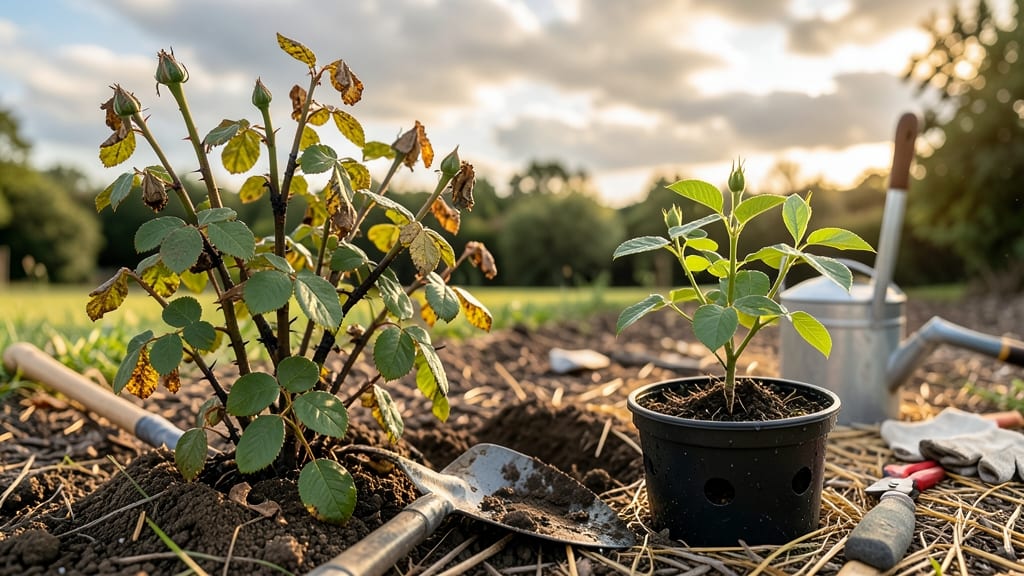
A rose bush dying after transplant isn’t a death sentence—it’s a wake-up call. 🌿 Root shock hits hard, but with the right moves, you can nurse it back to health in days. I’ve revived more than a dozen struggling roses using these same steps, and yours can be next.
The culprits are usually too much handling, wrong soil, or inconsistent watering. Roses are divas about their roots—they need gentle treatment, not rough moves. Even a well-loved bush can wilt if the roots dry out or get smothered in compacted soil.
You’ll see new growth within 2-3 weeks if you act fast: trim damaged roots, adjust watering, and shield it from stress. The key is patience—don’t give up after a week. Most roses bounce back stronger than before. This works for hybrid teas, floribundas, and even old garden roses.
Let’s turn that droopy bush into a comeback story.
Root Shock Rescue Explained
Transplanting a rose bush is like giving it a mini-survival challenge—its roots are exposed, its routine is disrupted, and stress levels spike. When a rose bush wilts or dies after moving, transplant shock is usually the silent villain.
But don’t panic! Understanding the why behind the struggle is the first step to revival. Let’s break down the science—and the solutions—behind what’s really harming your roses.
When you dig up a rose bush, its roots take a beating—even if you’re gentle. Physical trauma occurs when roots are severed, crushed, or left exposed too long. Healthy roots need a delicate balance of moisture, oxygen, and microbial life (like beneficial fungi and bacteria) to absorb water and nutrients.
Once uprooted: - Root tips die (they’re the most sensitive and absorb the most water). - Mycorrhizal fungi (natural root helpers) get disrupted, slowing nutrient uptake. - Osmotic imbalance happens—roots struggle to regulate water flow, leading to wilting or scorching.
Actionable fix: Trim only damaged or circling roots (not healthy ones) with sterilized shears, and soak roots in water for 1–2 hours before replanting to rehydrate.
Transplant shock often boils down to water mismanagement. Roses are thirsty but hate soggy roots—both extremes trigger stress.
| Problem | Why It Kills Roses | Signs to Watch For |
|---|---|---|
| Underwatering | Roots dry out, cells collapse from dehydration. | Wilting, crispy leaf edges, slow recovery. |
| Overwatering | Oxygen can’t reach roots; they suffocate. | Yellowing leaves, mushy stems, foul smell. |
| Improper soil moisture | Compacted or non-absorbent soil traps water. | Soil stays soggy for >24 hours. |
Actionable fix:
- First 7 days post-transplant: Water deeply every 2–3 days (check soil 2" down—it should be moist but not drenched).
- Use mulch (2–3" of shredded bark or straw) to retain moisture and regulate temperature.
- Avoid overhead watering—direct streams can dislodge soil and compact roots.
Roses are sun-lovers, but sudden exposure after transplanting can fry them.
Here’s how: - Too much sun too soon: New roots can’t keep up with water loss, leading to transpirational shock (leaves burn, stems wilt). - Cold drafts/wind: Dries out roots faster than they can recover. - Extreme temps: Heatwaves or frost can stall root regrowth.
Actionable fix:
- Shade cloth (30–50%) for the first 2 weeks if temps exceed 85°F (29°C).
- Windbreaks (burlap screens or nearby plants) reduce desiccation.
- Morning sun only if transplanting in peak summer—gradually introduce full sun over 10 days.
Even the hardiest roses need the right soil ecosystem. Problems arise when: - pH is off: Roses thrive in 6.0–6.5 pH.
Too acidic (low pH) locks out nutrients; too alkaline (high pH) causes iron/chlorosis (yellow leaves with green veins). - Poor drainage: Compacted or clay-heavy soil strangles roots, leading to root rot. - Lack of organic matter: Bare soil offers no food for microbes that feed roots.
Actionable fix:
- Test your soil (DIY kits or local extension services).
- Amend soil with:
- Compost (1 part to 2 parts native soil) for organic matter.
- Sulfur (for alkaline soil) or lime (for acidic soil) to adjust pH gradually.
- Perlite or sand (20%) to improve drainage if soil is clay-heavy.
Stressed roses are magnets for pests and pathogens.
Common culprits: - Japanese beetles or rose slugs (sawfly larvae) skeletonize leaves, weakening the plant. - Fungal infections (like black spot or powdery mildew) thrive on damp, stressed foliage. - Root rot (from Phytophthora fungi) sets in if soil stays waterlogged.
Actionable fix:
- Inspect leaves daily for holes, spots, or webbing. Treat with neem oil or insecticidal soap if needed.
- Remove fallen leaves/debris to prevent fungal spores from spreading.
- Avoid wetting foliage when watering—aim for the base of the plant.
Timing is everything. Transplanting at the wrong time forces roses to grow new roots while battling:
- Heat stress (summer transplants) → Roots can’t establish before drought hits.
- Cold shock (late fall/winter) → Dormant roots struggle to regrow in freezing temps.
- Spring rush (before last frost) → New growth gets fried by unexpected cold snaps.
Actionable fix:
- Best times to transplant roses:
- Early spring (after last frost, when soil is workable).
- Early fall (6–8 weeks before first frost, so roots can knit before winter).
- Avoid transplanting in peak summer or deep winter.
Roses typically take 2–4 weeks to show signs of recovery after transplant shock. Don’t give up too soon! Here’s how to track progress: - Week 1: Focus on hydration and shade.
New roots are forming but aren’t visible yet. - Week 2: Look for 1–2 new leaves or firm stems (signs roots are regrowing). - Week 3+: Gradually reintroduce sun and fertilizer (use a balanced 10-10-10 or rose-specific feed).
If your rose isn’t improving after 6 weeks, it may need deeper soil checks (for rot) or re-transplanting in a better spot.
Revive Your Rose Bush Fast
When your rose bush looks sad after transplanting, the good news is most cases can be turned around with quick action. Below are targeted fixes based on the most common causes—plus prevention tips to keep your roses thriving long-term.
If your rose bush is wilting, dropping leaves, or showing stunted growth within days of transplanting, it’s likely suffering from root shock. This happens when roots get damaged during uprooting or aren’t given time to adjust.
🔥 Step 1: Water Deeply (But Not Too Much)
- Why? Roots need moisture to recover, but soggy soil can suffocate them.
- How?
- Water slowly and deeply (1–2 inches per week) to encourage roots to spread.
- Use a soaker hose or drip irrigation to avoid disturbing the soil.
- Check soil moisture by sticking your finger 2 inches down—if dry, water again.
🍳 Step 2: Trim Damaged Foliage
- Why? Less leaves = less stress on the plant as it recovers.
- How?
- Snip off wilting or yellow leaves (but leave healthy green ones).
- Avoid heavy pruning—just remove no more than 20% of the foliage.
👨🍳 Step 3: Shield from Stressors
- Sun: Move to partial shade (50% sunlight) for 1–2 weeks to reduce transpiration.
- Wind: Use a small windbreak (like a bamboo stake with burlap) if gusts are strong.
- Heat: If temps are above 85°F (29°C), mist leaves lightly in the morning to cool them.
⏰ How Long Until Recovery?
Most roses bounce back in 2–4 weeks with proper care. If no improvement after a month, check for pests or disease (see next section).
If your rose bush has black spots, holes in leaves, or sticky residue, pests or fungal issues may be the culprit.
🔪 Treat Fungal Infections (Like Black Spot)
- Remove infected leaves immediately and sterilize pruners with rubbing alcohol.
- Apply neem oil (1 tsp per quart of water) or copper fungicide every 7–10 days until symptoms fade.
- Improve airflow by spacing plants 3–4 feet apart and pruning for better circulation.
🌡️ Combat Pests (Aphids, Spider Mites, Japanese Beetles)
| Pest | Signs | Fix |
|---|---|---|
| Aphids | Sticky leaves, curled growth | Spray with soapy water (1 tsp dish soap + 1 quart water) or ladybugs (natural predators). |
| Spider Mites | Tiny webs, speckled leaves | Blast off with water spray, then apply neem oil. |
| Japanese Beetles | Skeletons of leaves | Handpick bugs into soapy water or use milky spore (organic treatment). |
- 🌱 Choose the Right Time: Transplant roses in early spring or fall (avoid extreme heat or cold).
- 🥗 Prepare the Soil: Mix in compost or aged manure before planting to boost nutrients.
- 🎯 Prune Before Moving: Cut back 1/3 of the plant a few days before transplanting to reduce stress.
- ✨ Use Root Stimulator: Dip roots in mycorrhizal fungus or rooting hormone before replanting.
- 📊 Monitor Moisture: Mulch with 2–3 inches of organic mulch (like wood chips) to retain moisture.
Pro Tip: 💡 If your rose bush still struggles after 6 weeks, test the soil pH (roses prefer 6.0–6.5). Adjust with lime (to raise pH) or sulfur (to lower pH) if needed.
Frequently asked questions
How long does it take for a rose bush to recover from transplant shock?
Most rose bushes show signs of recovery within 2-4 weeks with proper care. Focus on consistent watering, shade protection, and avoiding stress during the first 2 weeks. If no improvement after 6 weeks, check for root rot or pests—these may require deeper intervention.
Can I save a rose bush that's completely wilted after transplanting?
Yes! Even completely wilted roses can recover if you act fast. Start by giving it a deep soak, trimming 20% of the foliage, and moving it to partial shade. Many gardeners revive roses that looked dead within 10-14 days using this approach—just don't give up after the first week.
What's the best time of day to water a newly transplanted rose?
Water in the early morning (before 9 AM) to give roots time to absorb moisture before heat stress sets in. Avoid evening watering—wet foliage overnight invites fungal diseases. If you must water later, do it by 6 PM and ensure leaves dry quickly.
Should I fertilize my rose bush right after transplanting?
Wait 4-6 weeks before fertilizing—new roots need time to establish without competition. Instead, focus on watering and mulching. Once recovered, use a balanced 10-10-10 fertilizer or rose-specific feed, but never more than 1/4 teaspoon per plant at first.
Why are my rose bush's leaves turning yellow after transplanting?
Yellow leaves usually signal overwatering, nutrient deficiency, or transplant shock. Check soil moisture—it should be damp but not soggy. If leaves have green veins, you may have iron chlorosis (common in alkaline soil). Test your soil pH and amend with compost or sulfur if needed.