
Diseases
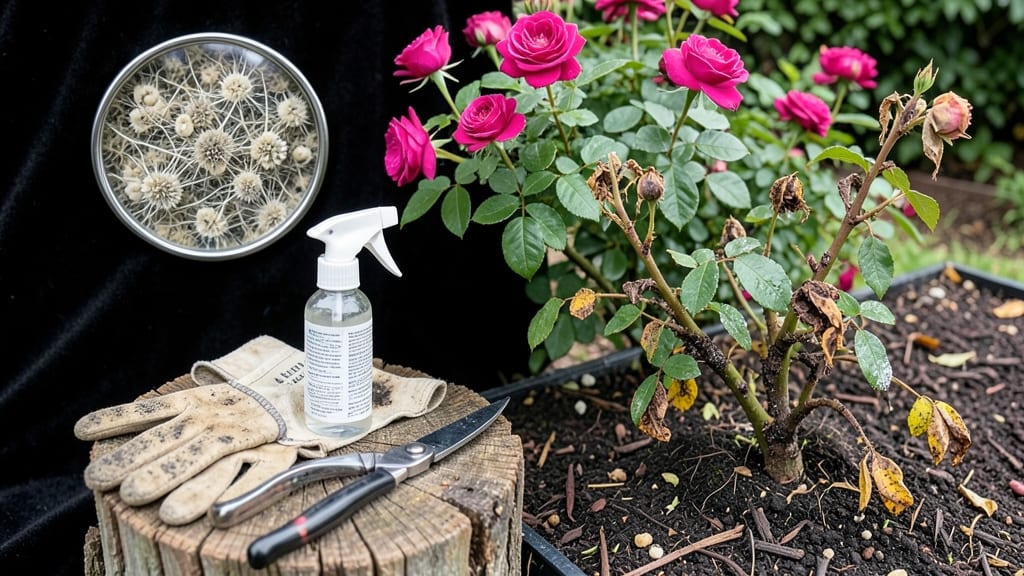
Your roses might look healthy now, but rose bush fungus infection could be silently stealing their strength—those dark spots or white powder aren’t just cosmetic. I’ve seen black spot turn lush bushes into skeletal shadows in just two weeks, and powdery mildew smother blooms before they even open.
The good news? You can stop it fast with the right organic fixes.
Fungus thrives when roses are stressed—too much shade, crowded stems, or overhead watering creates the perfect damp, dark conditions. My first mistake was ignoring the early signs (tiny yellow specks, fuzzy white patches) until the leaves were already dropping.
Now I check bushes weekly, especially after rain, and act at the first sign of trouble. The key is cutting off the infection before it spreads.
You’ll restore your roses in 3-4 weeks with a mix of neem oil sprays, baking soda solutions, and proper pruning—no harsh chemicals needed. The first spray stops new spores, the second cleans existing growth, and the third keeps it gone.
By summer’s end, your bushes will be as vibrant as they were last year, with fewer gaps in the foliage and more blooms.
This works for black spot, powdery mildew, and rust—just adjust the timing and frequency based on the infection. The secret? Consistency. Once you see the first signs of improvement (new green growth, fewer spots), keep the routine going.
Your roses will thank you with stronger stems and bigger blooms next season.
Root Causes Of Fungal Spread
Fungal infections in rose bushes don’t just appear out of nowhere—they thrive due to a mix of environmental stress, poor gardening habits, and the plant’s natural vulnerabilities.
Understanding these triggers is key to prevention and treatment. Below, we break down the most common reasons your roses might be falling prey to fungal invaders.
Fungi love moisture, and roses soaked in damp conditions create the perfect breeding ground. When soil stays soggy for too long—whether from overwatering, heavy clay, or poor drainage—fungal spores like Botrytis (gray mold) or Phytophthora (root rot) multiply rapidly.
- Why it happens: Excess water blocks oxygen flow to roots, weakening the plant’s defenses. Fungal hyphae (thread-like structures) spread aggressively in saturated soil, invading stems and leaves.
- Actionable fix:
- Water deeply but infrequently—aim for 1–2 inches per week, adjusting for rain.
- Amend heavy soil with compost or perlite to improve aeration.
- Use raised beds or containers if your garden has poor drainage.
Roses need airflow, but dense foliage or tight planting traps moisture against leaves, creating ideal fungal conditions. High humidity (especially in summer or greenhouses) accelerates spore germination, leading to diseases like powdery mildew or black spot.
- Why it happens: Stagnant air prevents water evaporation, keeping leaves damp for extended periods. Fungal spores land on wet surfaces and germinate within 4–6 hours.
- Actionable fix:
- Space bushes 3–4 feet apart for airflow.
- Prune overlapping branches to reduce humidity pockets.
- Water early in the day so foliage dries before nightfall.
Stressed roses—whether from nutrient deficiencies, pests, or environmental shocks—are far more susceptible to fungal attacks. Weakened plants can’t produce enough phytoalexins (natural antifungal compounds), leaving them vulnerable.
| Stress Factor | How It Affects Fungal Risk | Solution |
|---|---|---|
| Nitrogen deficiency | Leaves turn yellow; plant can’t support healthy cell walls. | Apply balanced fertilizer (10-10-10) or compost tea. |
| Pest damage (aphids, spider mites) | Open wounds allow fungal entry; pests spread spores. | Use neem oil or insecticidal soap proactively. |
| Extreme heat/cold | Shocks metabolic processes, reducing disease resistance. | Mulch with straw or wood chips to moderate soil temps. |
Fungal spores hitchhike on pruners, gloves, or even compost. If you’ve reused tools in infected areas or added contaminated amendments, you’re essentially seeding new infections.
- Why it happens: Spores can survive years in dormant soil or on metal tools. A single cut with a dirty blade can transfer hundreds of spores to healthy tissue.
- Actionable fix:
- Sterilize tools with 70% isopropyl alcohol or a 10-minute bleach soak (1 part bleach:9 parts water).
- Avoid fresh manure or untreated compost near roses—opt for aged compost (6+ months).
- Rotate planting locations every 3–4 years to break fungal cycles.
Pro Tip: 💡 Monitor humidity with a hygrometer (ideal range: 40–60%). If levels climb above 70%, increase airflow or use a fan on low settings near plants.
Quick Fixes for Fungal Woes
Fungal infections on rose bushes can feel like a losing battle, but with the right approach, you can nurse your plants back to health—without harsh chemicals. Below, we’ve mapped out practical, organic solutions tailored to the most common causes of rose bush fungus, from overwatering to poor airflow.
Follow these steps to stop the spread, treat the infection, and prevent future outbreaks—all while keeping your roses thriving naturally.
Cause: Diplocarpon rosae thrives in damp, shady conditions, turning leaves into a Swiss-cheese mess. Fix It:
- 🔥 Prune Like a Pro Remove all infected leaves (don’t compost them—bag and toss!) to stop spores from spreading. Use sterilized pruners (wipe with rubbing alcohol between cuts) to avoid cross-contamination. Pro Tip: 💡 Prune in dry, sunny weather—never when leaves are wet.
- 🍳 Baking Soda Spray (Yes, Really!) Mix 1 tbsp baking soda + 1 tsp horticultural oil + 1 quart water in a spray bottle. Add a drop of dish soap (like Dawn) as a surfactant.
Spray both sides of leaves every 7–10 days until new growth appears. Why It Works: Baking soda raises the leaf’s pH, making it inhospitable for fungus.
- 🌡️ Boost Airflow & Sunlight
- Thin out crowded canes to improve circulation.
- Move the bush to a sunnier spot (6+ hours of direct sun daily).
- Space plants 3–4 feet apart to reduce humidity pockets.
- 🎯 Copper Fungicide (Organic Shield) Use a copper-based spray (like Bonide Copper Fungicide) once a month as a preventative. Copper disrupts fungal cell walls without harming beneficial insects.
Cause: Erysiphe necator loves hot, humid days and low-light conditions, coating leaves in a chalky film. Fix It: 1. 👨🍳 Neem Oil Blast Combine 1 tbsp neem oil + 1 tsp soap + 1 quart water.
Spray early in the morning (avoid direct sun) every 5–7 days until mildew clears. Pro Tip: 🔥 Shake the bottle well—neem oil separates!
- 🥘 Milk Spray (The Grandma Hack) Mix 1 part milk (whole or skim) to 9 parts water in a sprayer. Apply weekly to leaves. The fatty acids in milk inhibit fungal growth. Bonus: Works great for powdery mildew on roses, squash, and cucumbers!
- ⏰ Adjust Watering Habits
- Water deeply at the base (avoid overhead sprinkling).
- Water in the morning so leaves dry by evening.
- Use drip irrigation or soaker hoses to keep foliage dry.
- 🔪 Preventative Mulching Apply 2–3 inches of organic mulch (straw, pine needles, or wood chips) around the base. This reduces soil splashing onto leaves and keeps roots cool.
Cause: Phragmidium spores create orange pustules on leaves, weakening the plant. Fix It: 1. 🍳 Garlic & Chili Pepper Spray (Fungal Repellent) Blend 1 crushed garlic bulb + 1 tbsp cayenne pepper + 1 quart water.
Strain, add 1 tsp soap, and spray every 10 days. The sulfur compounds in garlic and capsaicin in peppers stun fungal spores.
- 🌡️ Remove & Replace Infected Parts Snip off rusty leaves immediately (don’t leave them on the ground). For severe cases, prune entire branches back to healthy wood.
- 🎯 Introduce Fungal-Fighting Friends Plant companion plants like garlic, chives, or thyme near roses—their antifungal properties deter rust.
- 🔥 Solarize the Soil (For Stubborn Cases) If rust persists, cover the soil with clear plastic for 4–6 weeks in hot sun. The heat kills spores in the top 6 inches of soil.
Once your roses are healthy, lock in their defense with these low-effort habits:
- 💡 Rotate Sprays: Alternate between neem oil, baking soda, and milk sprays to prevent resistance.
- 🌡️ Monitor Humidity: Use a hygrometer to keep levels below 60%—fungi love dampness!
- 🎯 Clean Up Debris: Rake and remove fallen leaves weekly to eliminate spore hiding spots.
- 🔥 Strengthen Roses: Feed with compost tea or fish emulsion every 4–6 weeks—healthy plants resist fungus better.
- ✨ Copper Barrier: Wrap copper tape around the base of young rose bushes to block fungal entry.
Final Reminder: 🌿 Patience is key! Some treatments take 2–4 weeks to show results. Stick with it, and your roses will bounce back stronger than ever—naturally fungus-free.
Frequently asked questions
How do I know if my rose bush has a fungus infection?
Look for distinctive signs: dark brown/black spots with yellow halos (black spot), white powdery patches (powdery mildew), or orange pustules (rust). Check both leaf surfaces and stems. Early detection is key—act when you see just a few spots, not when half the bush is affected.
Can I still use my rose bush if it has fungus?
Yes, but treat it immediately—fungus spreads fast. Remove infected leaves (don’t compost them) and apply an organic spray like neem oil or baking soda solution. With treatment, most roses recover fully in 3-4 weeks, though severe cases may need pruning back to healthy growth.
Why does fungus keep coming back even after treatment?
Fungal spores often linger in soil or tools. Sterilize pruners with rubbing alcohol, avoid overhead watering, and improve airflow by spacing plants 3-4 feet apart. Rotate treatments (like alternating neem oil and milk sprays) to prevent resistance. Also check for hidden stress factors like poor drainage or nutrient deficiencies.
Is it safe to use chemical fungicides on roses?
Chemicals like copper fungicides or sulfur sprays are effective but can harm beneficial insects if overused. For organic gardening, start with baking soda or neem oil. If you choose chemicals, apply early in the morning and follow label instructions precisely to minimize environmental impact.
How can I prevent fungus in my roses next season?
Focus on proactive care: water at the base (never overhead), mulch with straw, and prune for airflow. Plant companion plants like garlic or thyme near roses—they naturally repel fungi. Start treatments preventatively in spring before spores activate, and clean up fallen leaves regularly to remove hiding spots.