
Diseases
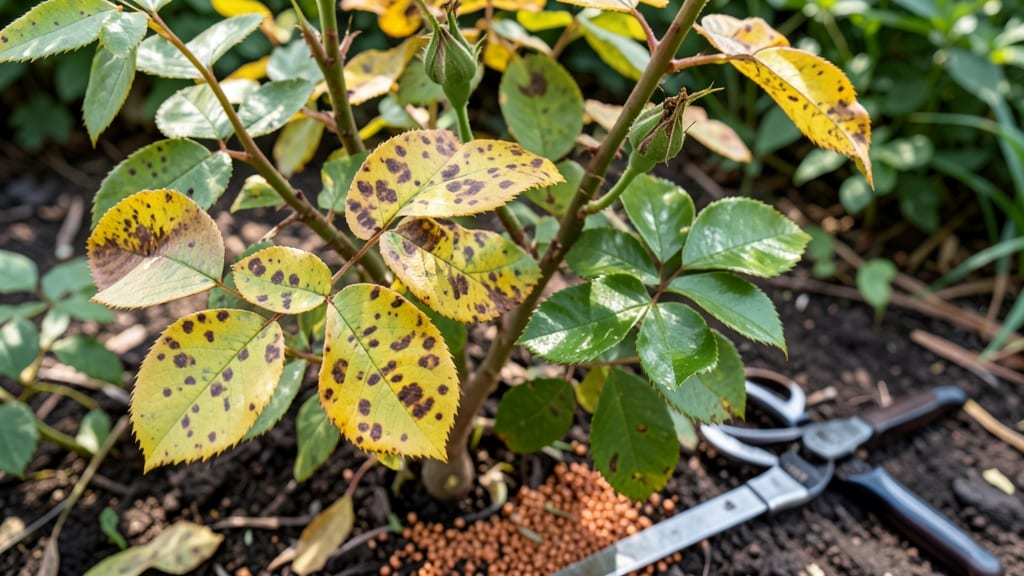
Yellow leaves and brown spots on your rose bushes mean one thing: fungal blight is already winning. 🌿 I’ve battled black spot and powdery mildew for years, and these three steps saved my bushes every time—no harsh chemicals needed. The culprits?
Too much water, poor airflow, or old mulch trapping moisture. Black spot shows up as dark spots with yellow halos, while powdery mildew looks like dusty white patches. Both spread fast when roses feel stressed.
By pruning infected leaves, applying neem oil or baking soda spray, and spacing plants for airflow, you’ll see new growth in 2-3 weeks. The key is acting fast—once the fungus takes hold, it’s harder to reverse. This works for all rose types, from hybrid teas to shrubs.
Let’s get those bushes back to vibrant red in no time.
Root Causes Behind Leaf Stress
Yellowing leaves paired with brown spots on your rose bush are rarely a coincidence—they’re your plant’s way of signaling distress. Understanding the why behind these symptoms is the first step to restoring your roses to their vibrant best.
Below, we break down the most common culprits, explained in clear, science-backed terms.
Fungi thrive in moist, warm conditions, making roses a prime target. Two of the most aggressive offenders are black spot (Diplocarpon rosae) and powdery mildew (Erysiphe spp.), both of which trigger yellowing and brown spots through a multi-step attack:
- Black Spot Fungus: - How it works: This fungus infects leaves via spores, which land on wet foliage and germinate within 24–48 hours.
It produces toxins that disrupt chlorophyll production (causing yellowing) while feeding on leaf tissue (creating dark, circular brown spots with feathery edges). - Key triggers: - Prolonged leaf wetness (e.g., overhead watering, morning dew). - Poor air circulation (dense foliage or overcrowded bushes). - High humidity (ideal for spore germination). - Tell-tale signs: Spots start purple-brown, turn black, and may develop yellow halos.
Severe cases lead to premature leaf drop.
- Powdery Mildew: - How it works: Unlike black spot, this fungus grows on the leaf surface, forming a white, powdery coating.
It blocks sunlight, weakening the leaf (yellowing) and eventually causing brown, dead patches. - Key triggers: - Dry leaf surfaces with high humidity (e.g., evenings with moist air). - Low light conditions (shady or overgrown roses). - Tell-tale signs: White, talcum-like powder on upper leaves; brown spots appear later as the leaf dies.
💡 Pro Tip: Fungal spores spread via wind and water. If you see these symptoms on one rose, inspect nearby plants—fungi don’t discriminate!
Bacterial leaf spot (Pseudomonas syringae or Xanthomonas campestris) is a stealthy invader that thrives in wet conditions. Unlike fungi, bacteria multiply rapidly, leading to water-soaked spots that turn brown and develop yellow margins.
- How it spreads: - Rain splash or overhead irrigation carries bacteria from infected leaves to healthy ones. - Wounded leaves (e.g., from pruning or hail) are entry points. - Symptom progression: 1. Initial phase: Tiny, greasy-looking spots (often with a watery center).
- Secondary phase: Spots expand, turn brown, and may ooze bacteria when wet.
- Advanced phase: Leaves yellow, crisp, and drop prematurely. - Key difference from fungi: Bacterial spots often have ragged, irregular edges and may appear on stems or buds.
⚠️ Warning: Bacteria can survive in plant debris for years. Never compost infected leaves—burn or dispose of them in sealed bags.
Not all leaf discoloration stems from pathogens. Environmental factors can mimic disease symptoms, often causing yellowing with brown, crispy edges (a sign of cell death).
- Overwatering or Poor Drainage: - Root suffocation: Compacted or waterlogged soil cuts off oxygen, leading to root rot.
The bush can’t absorb nutrients, causing interveinal chlorosis (yellowing between veins) and brown, dead patches. - How to spot it: Leaves yellow from the bottom up; soil feels soggy even days after watering.
- Underwatering or Heat Stress: - Water loss: Roses wilt, and leaves develop brown, papery edges (a classic sign of dehydration).
Yellowing occurs as the plant prioritizes water to stems and new growth. - Heat scorch: Intense sun (especially after watering) can cause brown, sunken spots on leaves, often on the upper surface.
- Nutrient Deficiencies:
- Iron or nitrogen shortages: Yellowing between veins (chlorosis) with brown spots can indicate iron deficiency (common in alkaline soils) or nitrogen starvation (pale yellow leaves overall).
- Magnesium deficiency: Older leaves develop interveinal yellowing with brown patches along edges.
🌡️ Quick Check: Stick your finger 2 inches into the soil. If it’s dry, water deeply. If it’s muddy, improve drainage with organic matter.
While not always obvious, pests like Japanese beetles, rose slugs (sawfly larvae), and aphids can cause yellowing and brown spotting by:
- Feeding damage: Beetles chew leaves, creating irregular brown holes; slugs skeletonize foliage, leaving a yellow, lace-like pattern.
- Honeydew buildup: Aphids excrete sticky honeydew, which attracts sooty mold (a black fungal growth that blocks sunlight, causing yellowing and brown patches).
- Virus transmission: Some pests (like aphids) spread rose rosette virus, which causes yellowing, brown streaks on stems, and distorted growth.
🔍 Scout for clues: Look for:
- Adult beetles (copper-green with white tufts).
- Sawfly larvae (green, slug-like caterpillars).
- Sticky residue (honeydew) on leaves or windows below.
Overzealous gardening can harm roses just as much as neglect. Here’s how:
- Fertilizer Burn:
- Too much salt (from synthetic fertilizers) disrupts water uptake, causing brown, crunchy leaf edges with yellowing.
- Improper application (e.g., granular fertilizer touching leaves) leads to chemical burns (brown, necrotic spots).
- Herbicide or Pesticide Drift:
- Systemic herbicides (e.g., glyphosate) can be absorbed through leaves, causing yellowing and brown patches within days.
- Fungicides/pesticides with copper or sulfur: Overuse can lead to leaf scorch (brown, dry edges).
✨ Solution: Always follow label rates and avoid spraying when rain is forecasted. Use a chelated iron supplement if you suspect nutrient burn.
Revive Your Roses Naturally
Now that you’ve identified the root cause of your rose bush’s yellowing leaves and brown spots—whether it’s black spot disease, powdery mildew, rust fungus, nutrient deficiencies, or environmental stress—it’s time to take action!
The good news? Most of these issues are reversible with the right care. Below, we’ve broken down practical, step-by-step solutions tailored to each problem, plus prevention tips to keep your roses thriving long-term.
Fungal infections like black spot, powdery mildew, and rust spread quickly but can be managed with consistent treatment and garden hygiene.
🔥 Remove Infected Foliage Immediately
- 👨🍳 Step 1: Snip off all yellow, spotted, or distorted leaves using sterilized pruners (wipe with rubbing alcohol between cuts).
- 🗑️ Step 2: Do not compost infected leaves—bag and discard them in the trash to prevent reinfection.
- ✨ Pro Tip: Prune in the early morning when humidity is lower to reduce fungal spores spreading.
🌡️ Improve Air Circulation Fungi thrive in shady, damp conditions.
Boost airflow to dry leaves faster: - 🌿 Trim nearby branches blocking sunlight or airflow. - 🌳 Space plants 3–4 feet apart if overcrowded. - 💡 Consider a small fan (on low) near the bush if your garden is particularly humid.
🛡️ Apply Fungicidal Treatments
Use organic or chemical fungicides based on your preference:
| Disease | Recommended Treatment | Frequency |
|---|---|---|
| Black Spot | Neem oil spray or copper fungicide | Every 7–10 days until cured |
| Powdery Mildew | Baking soda spray (1 tbsp baking soda + 1 tsp soap + 1 gallon water) | Weekly until gone |
| Rust Fungus | Sulfur-based fungicide or hydrogen peroxide spray (3% solution) | Every 2 weeks |
💡 Pro Tip: Rotate treatments to prevent fungal resistance. For example, alternate between neem oil and copper fungicide.
🌧️ Adjust Watering Habits
- 💧 Water at the base (avoid wetting leaves) early in the morning.
- 🌡️ Avoid overhead sprinklers—they spread spores like a fungal party invitation!
- 🌱 Mulch with 2–3 inches of organic mulch (like straw or wood chips) to keep soil moist and reduce splash-back.
Yellow leaves can also signal nutrient imbalances. Test your soil (a DIY kit or local extension service can help), then correct deficiencies with targeted fertilizers.
📊 Soil Test First
- 🔬 Grab a sample from 6 inches deep around the rose bush.
- 📊 Compare results to ideal rose soil pH (6.0–6.5) and nutrient levels.
💪 Fix Common Deficiencies
| Symptom | Likely Cause | Solution | Prevention |
|---|---|---|---|
| Yellow lower leaves | Nitrogen deficiency | Apply balanced rose fertilizer (10-10-10) or compost tea | Top-dress with compost every spring |
| Yellow between veins | Iron/chlorosis | Chelated iron supplement or Epsom salt spray (1 tbsp/gallon) | Use acidic mulch (pine needles) |
| Pale green leaves | Magnesium deficiency | Epsom salt soak (1 cup/gallon water, spray leaves) | Add dolomitic lime if soil is too acidic |
✨ Pro Tip: Avoid over-fertilizing—too much nitrogen causes soft, sappy growth that attracts pests and diseases.
If your rose bush is struggling due to heat, cold, or poor drainage, tweak its growing conditions for a swift recovery.
🌞 Too Much Sun? Provide Shade
- 🌳 Install shade cloth (30–50% coverage) if leaves are scorched or crispy.
- 🌿 Plant near taller shrubs (like hydrangeas) for natural shade in peak afternoon sun.
🥶 Cold or Wind Damage? Protect & Mulch
- 🛡️ Cover young roses with frost cloth in late fall/winter.
- 🌱 Add 4–6 inches of mulch to insulate roots and retain moisture.
💦 Poor Drainage? Fix the Soil
- 🏗️ Amend clay soil with sand or perlite to improve drainage.
- 🚰 Ensure pots have drainage holes—roses hate soggy roots!
Once your bush is back in shape, keep it thriving with these long-term strategies:
- 🌿 Prune regularly (remove dead or crossing branches in early spring).
- 🍄 Sterilize tools between cuts to prevent fungal spread.
- 💧 Water deeply but infrequently (1–2 inches per week).
- 🌱 Feed with slow-release fertilizer (like osmocote) in early spring.
- 🌡️ Monitor humidity—aim for morning watering to dry leaves by afternoon.
Final Thought: 🌹 Patience is key! Some fungal issues take 4–6 weeks to fully clear, but with consistent care, your roses will bounce back stronger than ever. Happy gardening!
Frequently asked questions about rose bush leaf issues
Why do my rose leaves turn yellow first, then develop brown spots?
This classic pattern usually signals a fungal infection like black spot or powdery mildew. Fungi first disrupt chlorophyll production (causing yellowing), then feed on leaf tissue, creating brown spots. Check for wet foliage or poor airflow—common triggers for these diseases.
Can I save my roses if the brown spots are already spreading?
Yes, but act fast! Prune infected leaves immediately (don't compost them) and apply neem oil or baking soda spray weekly. For severe cases, copper fungicide works too. With consistent treatment, new growth should appear in 2-4 weeks.
Is it safe to use store-bought fungicides on roses?
Most commercial fungicides are safe when used as directed, but organic options work just as well. Try a 1% hydrogen peroxide spray (3% diluted 1:10) or potassium bicarbonate for milder cases. Always test sprays on a small leaf first to check for sensitivity.
Could my rose bush have a nutrient deficiency instead of disease?
Possibly! Yellowing between veins often signals iron deficiency (chlorosis), while brown edges may indicate magnesium shortage. Try a chelated iron supplement or Epsom salt spray (1 tbsp/gallon). Test your soil pH—roses prefer 6.0-6.5.
How do I prevent these problems next year?
Focus on airflow and disease prevention: space plants 3-4 feet apart, water at the base in the morning, and mulch with 2-3 inches of straw. Prune regularly to remove dead growth, and sterilize tools between cuts with rubbing alcohol.