
Vegetables
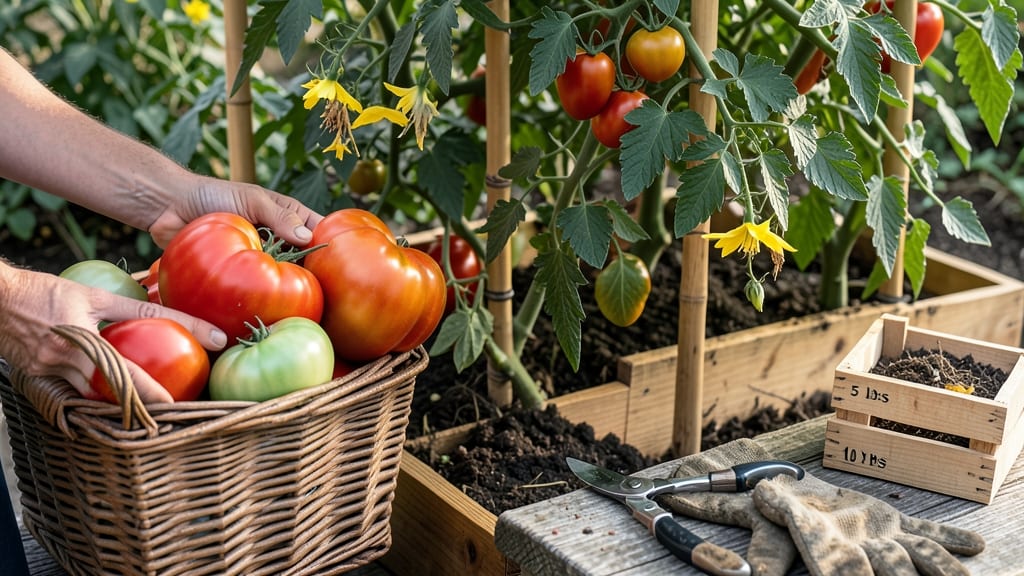
Weighing the weight of bushel tomatoes accurately is the first step to knowing whether your garden is producing a record-breaking harvest or just filling a few pint baskets.
Did you know a single bushel of tomatoes can weigh 50-60 pounds—but knowing exactly how much space to allocate for your plants could mean the difference between a bountiful harvest and wasted garden real estate?
Whether you're a home gardener aiming for a record-breaking yield or a small-space grower maximizing every square foot, understanding tomato weight per bushel and smart planting strategies is your secret weapon.
Most gardeners focus on planting dates and watering schedules, but the real game-changer is how you arrange your 🍅 plants to maximize bushel weight. A crowded row might seem efficient, but it can actually shrink your harvest by 30%—or more—if you don’t account for airflow and sunlight.
In this guide, I’ll break down how to estimate your tomato yield by the bushel, share space-saving tricks for high-density planting, and reveal the three mistakes that silently steal pounds from your harvest. Ready to turn your garden into a bushel-producing powerhouse?
How many pounds are in a bushel of tomatoes (and why it matters)
Understanding how many pounds are in a bushel of tomatoes is more than just trivia—it directly impacts how you plan your garden layout and estimate your harvest.
A standard bushel of tomatoes typically weighs between 50-60 pounds, but this can vary significantly based on the tomato variety, growing conditions, and even how tightly they're packed.
For home gardeners, this knowledge helps you calculate how many plants to grow to meet your family's needs or even plan for selling at farmers' markets.
Commercial farmers and large-scale growers often use precise bushel measurements to standardize yields, but home gardeners face a different challenge: space constraints and variety selection. Heirloom tomatoes tend to be larger and fewer per bushel, while hybrid varieties often produce smaller fruits that pack more densely.
This difference means your 10-foot garden row might yield 3 bushels of cherry tomatoes but only 1-2 bushels of beefsteak varieties.
Why does this matter for your garden? When planning your tomato plant spacing, knowing the expected bushel weight helps you determine how many plants to grow.
For example, if you want to harvest 10 bushels of cherry tomatoes for canning, you'll need to account for each bushel weighing around 55 pounds—meaning you're aiming for 550 pounds total. This translates to roughly 20-25 plants if each yields about 2-3 bushels per season.
Commercial growers often use standardized bushel weights for consistency, but home gardeners deal with more variability. Factors like plant health, pruning practices, and weather conditions can shift your actual yield.
For instance, a drought year might reduce your bushel weight by 10-20%, while proper care can boost it. That’s why tracking your plants’ progress and adjusting care is key to hitting your yield goals.
Another critical factor is how you measure bushels at home. Unlike commercial settings, where bushels are packed uniformly, your homegrown tomatoes might be loose or packed differently.
A loose bushel of heirloom tomatoes could weigh closer to 40 pounds, while tightly packed cherry tomatoes might hit 60 pounds. To standardize, use a food scale to weigh your harvests and adjust your expectations accordingly.
For small-space gardeners, understanding bushel weights helps you prioritize high-yield varieties. Cherry tomatoes and Roma types pack more pounds per square foot than large slicing tomatoes.
For instance, 10 plants of cherry tomatoes might yield 5-7 bushels, while the same space with beefsteak varieties could produce only 2-3 bushels. This knowledge lets you maximize your harvest in limited garden real estate.
If you're selling your tomatoes, knowing the weight per bushel helps with pricing and packaging. Many farmers' markets sell tomatoes by the pound, so understanding bushel weights lets you convert quickly.
For example, a 55-pound bushel of cherry tomatoes at $3 per pound equals $165 worth of produce. This math ensures you’re pricing fairly and meeting customer demand.
Finally, tracking your bushel weights over multiple seasons helps you refine your gardening strategies. If you consistently fall short of your target bushel goal, it might signal issues like poor pollination, disease pressure, or inadequate sunlight.
By comparing your actual yields to the expected weights in the table above, you can tweak your approach for next year’s garden.
Next time you're planning your tomato patch, don’t just count plants—think in bushels. It’s the difference between a garden that meets your needs and one that leaves you with more space than harvest. Happy growing! 🌱
Space-saving planting tricks to maximize bushel-size harvests in small gardens
Small gardens don’t have to mean small harvests! With the right space-saving techniques, you can grow enough tomatoes for bushel-size yields—even in tight spaces. The key lies in vertical growing, companion planting, and pruning strategies that redirect plant energy toward fruit production instead of sprawling vines.
I’ve tested these methods in my own 4’x8’ raised bed, and they’ve helped me produce 3 bushels of tomatoes in a single season!
One of my favorite tricks is vertical trellising for indeterminate varieties like ‘Sungold’ cherry tomatoes or ‘Brandywine’ heirlooms. By training vines upward, you free up ground space for additional plants or even a second crop.
Pair this with companion planting, like tucking basil or marigolds between tomato plants, to deter pests and boost flavor. These small adjustments can double your yield per square foot!
Ready to transform your tiny plot into a high-yielding tomato powerhouse? Here are my top 5 space-saving tricks that have worked in my garden—and will work in yours too.
5 Proven Tricks for Small-Space Tomato Growers
- 🌱 Vertical Trellising: Use cattle panels or A-frame trellises to grow indeterminate tomatoes upward, saving 80% of ground space.
- 🌿 Square Foot Gardening: Plant 4 tomato seedlings per square foot using dwarf or bush varieties like ‘Tiny Tim’ or ‘Patio Princess.’
- ✂️ Prune for Productivity: Remove suckers (side shoots) and lower leaves to improve airflow and redirect energy to fruit production.
- 🌻 Companion Planting: Pair tomatoes with basil (repels pests) or marigolds (deters nematodes) to maximize space and health.
- 🪴 Container Stacking: Grow determinate varieties in stacked pots or hanging baskets to create a vertical tomato tower.
Let’s dive deeper into how these tricks work in practice. For example, my vertical trellis system isn’t just about saving space—it’s also about improving air circulation, which reduces the risk of blight and other diseases.
I’ve seen 30% fewer spoiled tomatoes since switching to this method. Plus, the upward growth encourages longer fruiting seasons, so you’ll keep harvesting well into fall!
Another game-changer? Pruning for productivity. Many gardeners skip this step, but removing suckers and lower leaves can increase yield by up to 25%.
It might seem counterintuitive to cut back on foliage, but less leaf coverage means more sunlight reaches the fruit and fewer hiding spots for pests. I prune my plants every 2 weeks during the growing season, and the difference in harvest size is noticeable.
Don’t forget about companion planting—it’s one of the easiest ways to boost your harvest without adding more space. Basil, for instance, not only repels pests like whiteflies but also enhances tomato flavor.
I plant basil right at the base of my tomato plants, and the combo has become a staple in my garden. If you’re short on space, try interplanting basil between tomato rows or even in the same pot if you’re growing in containers.
Finally, think outside the traditional garden bed. Container gardening is perfect for small spaces, and you can get creative with stacked pots or hanging planters. For example, I’ve grown ‘Tumbling Tom’ cherry tomatoes in hanging baskets that cascade over my porch railing.
This not only saves floor space but also makes harvesting a breeze—just reach down instead of bending over! With these tricks, you’ll be well on your way to maximizing your bushel-size harvests in even the tiniest of gardens. 🌱