
Plants
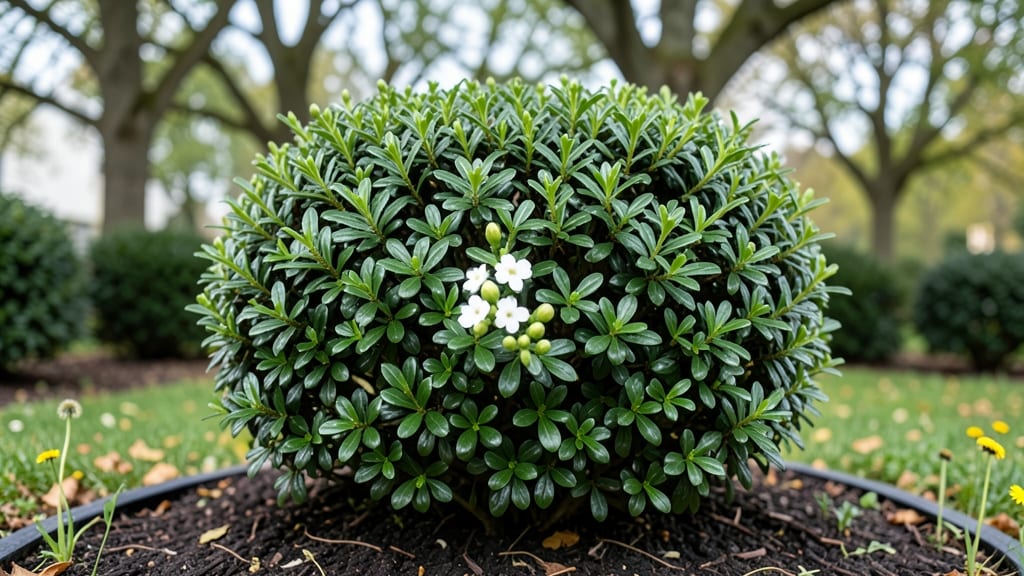
A boxwood bush looks like a neatly trimmed evergreen shrub with glossy, oval-shaped leaves that create a dense, rounded silhouette. These plants typically grow between 2 to 6 feet tall, depending on the variety, and maintain a compact, symmetrical form perfect for hedges or formal landscaping.
A boxwood bush's signature appearance comes from its leathery, dark green leaves that stay vibrant year-round, though some varieties develop golden or variegated edges in sunlight. 🌿 The branches grow densely, creating that classic manicured look gardeners love.
What makes them unique is how their growth habit stays controlled—even mature bushes rarely exceed 6 feet—while still offering enough foliage to create privacy screens or elegant borders.
These shrubs thrive when pruned regularly, which helps maintain their rounded, bushy shape. The leaves' glossy texture and uniform size give them a polished appearance that works well in both traditional and modern landscapes.
Whether you're looking for a low-maintenance hedge or a structured accent plant, boxwoods deliver that clean, refined look with minimal effort.
💡 In This Article
- Boxwood Leaf and Branch Characteristics Up Close
- Boxwood Growth Habit and Pruning Tips for Shaping
Boxwood leaf and branch characteristics up close
Boxwood leaves are one of their most striking features, with a leathery texture that feels slightly thick and firm to the touch—almost like the skin of a grapefruit.
Each leaf measures about 1 to 2.5 inches long and 0.5 to 1 inch wide, forming perfect ovals with smooth, slightly wavy edges.
The dark green color comes from high chlorophyll content, which gives them that rich, vibrant hue that stays consistent year-round, unlike deciduous plants that change with seasons.
The glossy finish on the leaves isn't just for show—it's a natural adaptation that helps repel water and pests.
Some varieties, like 'Green Velvet' or 'Winter Gem', maintain this deep green even in winter, while others, such as 'Golden Edge', develop striking yellow or golden edges when exposed to full sunlight.
Variegated types, like 'Argenteovariegata', feature creamy white or pale yellow stripes, adding visual contrast while keeping the same dense foliage structure. 🌿 The branches grow tightly packed, creating that signature boxwood density that makes them ideal for topiary or hedges.
What's fascinating about boxwood foliage is how the leaves grow in pairs along the stems, creating a layered effect that enhances the plant's fullness.
This arrangement, combined with their slow growth rate of just 6 to 12 inches per year, allows gardeners to shape them precisely without worrying about rapid overgrowth. The branches themselves are slender but sturdy, supporting the weight of the dense leaves while maintaining an upright yet mounding form.
When examining boxwoods up close, you'll notice how the leaves grow in opposite pairs, almost like a symmetrical book spine. This growth pattern contributes to their uniform appearance, which is why they're so popular in formal gardens.
The leaf edges are smooth but may show slight serrations under magnification—a subtle detail that adds to their refined look. Some cultivars, like 'Dwarf English', have even smaller leaves (0.75 inches long), making them perfect for miniature hedges or container gardening.
One often-overlooked characteristic is how boxwood leaves emit a faint, earthy aroma when crushed—a subtle scent that's more noticeable in warm weather. This fragrance, combined with their dense foliage, makes them an excellent choice for creating natural privacy screens or borders.
The leaves also have a self-cleaning property; rainwater beads up on their glossy surfaces and rolls off, keeping them looking fresh with minimal maintenance.
Consider these key leaf variations when selecting a boxwood:
- Standard green: Deep, uniform green (e.g., 'Common Boxwood')
- Variegated: Cream or yellow edges (e.g., 'Argenteovariegata')
- Golden: Bright yellow-green foliage (e.g., 'Golden Edge')
- Dwarf varieties: Smaller leaves (0.75 inches) for compact designs
The dense branching structure ensures these plants maintain their shape even in windy conditions, making them ideal for coastal gardens where other shrubs might struggle. 💫