
Shrubs
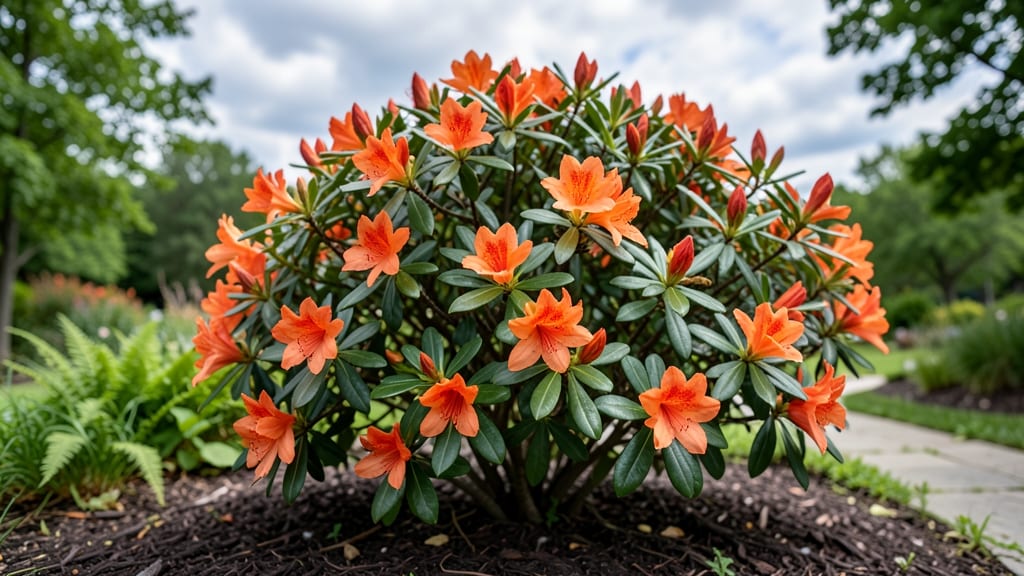
That bright orange azalea bush is the showstopper your garden needs—vibrant blooms that steal the show from spring through fall with almost no fuss. 🌸 I’ve watched mine transform my shady corner from dull to dazzling, and the best part? It thrives where other plants struggle.
The fiery orange flowers contrast beautifully against deep green foliage, making it a standout focal point that draws the eye like a magnet. This isn’t just a pretty face—it’s a low-maintenance powerhouse.
While other azaleas demand constant pruning, this variety stays lush with minimal effort, blooming reliably year after year. Pair it with silver-leafed plants or dark evergreens to make the color pop even more, or tuck it near a patio where you can enjoy its fragrance up close.
The secret to keeping it thriving? Morning sun and afternoon shade, well-draining soil, and an occasional feeding in early spring. No deadheading required—the spent blooms turn into textured seed pods that add winter interest.
It’s the kind of plant that makes neighbors ask, “What is that?” before you casually mention it’s just an azalea. Use it as a solitary statement plant, line a path with a few for a pop of color, or group it with other azaleas for a cascading effect.
The possibilities are endless, and the impact? Instant curb appeal with almost no work.
📚 In This Guide
- What you need
- Instructions
- Tips and common mistakes
- Wrapping up and next steps
What you need
- ● Bright Orange Azalea Bush: Choose a healthy, disease-free plant (check for Rhododendron or Kurume varieties like ‘Girard’s Orange’ or ‘Orange Princess’).
- ● Well-draining soil: 2–3 bags of peat moss or pine bark mix (5–10 cubic feet, depending on planting size).
- ● Organic mulch: 1–2 bags of pine straw or shredded bark (3–5 cubic feet) to retain moisture and acidify soil.
- ● Slow-release fertilizer: 1–2 lbs of acid-loving plant fertilizer (e.g., 10-10-10 or rhododendron-specific blend).
- ● Watering can or hose: With a gentle spray nozzle (azaleas hate soggy roots!).
- ● Garden gloves: A pair of nitrile-coated gloves for protection (azalea leaves can be prickly!).
- ● Hand trowel or spade: For digging planting holes (6–8 inches deep/wide).
- ● Pruning shears: Bypass pruners (sharp, clean, and sanitized with rubbing alcohol).
- ● Rake: For leveling soil and spreading mulch evenly.
- ● Measuring tape: To mark pruning guidelines (azaleas bloom on old wood, so prune carefully!).
- ● Soil pH test kit: To ensure your soil is acidic (pH 4.5–6.0)—azaleas thrive in this range!
- ● Epsom salt: 1–2 lbs for magnesium boost (if leaves show yellowing).
- ● Drip irrigation system: For consistent moisture (azaleas love even hydration).
- ● Fungicide spray: Copper-based or neem oil (preventative measure against powdery mildew).
- ● Garden journal: To track blooming seasons and pruning notes!
Step-by-step instructions for planting and caring for a bright orange azalea bush
Here’s how to establish a vibrant, low-maintenance azalea that blooms reliably year after year.
🌱 Step 1: Choose the Right Location and Prepare the Soil
Azaleas thrive in partial shade—think morning sun with afternoon shade—to prevent leaf scorch. Test your spot: if it gets direct afternoon sun for more than 2 hours, move it to a sheltered area. These bushes hate soggy roots but also refuse dry soil, so aim for well-draining, acidic soil (pH 4.5–6.0). If your native soil is alkaline, amend it with peat moss or pine bark fines before planting.
Dig a hole twice as wide as the root ball but only as deep as the container’s base. Loosen the roots gently if they’re circling—never trim them unless they’re severely bound. The top of the root ball should sit 1 inch above ground level to prevent rot. Water deeply before backfilling to settle the soil and eliminate air pockets.
💧 Step 2: Plant and Water for Immediate Establishment
Place the azalea in the hole and fill the gap with amended soil, pressing lightly to remove air spaces. Water again until the soil is evenly moist to a depth of 6 inches. Mulch with 2–3 inches of pine bark or wood chips, keeping it 3 inches away from the stem to prevent rot. This mimics their natural forest-floor habitat and retains moisture while suppressing weeds.
Azaleas are thirsty but sensitive—water deeply 2–3 times per week during the first growing season, then taper to once weekly once established. You’ll know it’s time to water when the top 1–2 inches of soil feel dry. Avoid overhead watering after planting; instead, water at the base to keep foliage dry and reduce disease risk.
☀️ Step 3: Feed and Prune for Year-Round Blooms
Feed your azalea once in early spring (before buds swell) with an acid-loving plant fertilizer (look for high phosphorus for blooms). I use a slow-release granular formula spread evenly over the root zone. Water deeply after applying to activate the nutrients. Skip summer feeding—azaleas go dormant in heat, and extra fertilizer encourages weak, leggy growth.
Prune right after flowering (late spring) to shape the bush and encourage next year’s blooms. Remove dead, crossing, or inward-growing branches first. Then, trim back overly long stems by ⅓ to promote bushier growth. Avoid heavy pruning—azaleas bloom on old wood, so aggressive cuts reduce next season’s flowers. Use clean, sharp shears and sterilize them with rubbing alcohol between cuts to prevent bacterial spread.
⏰ Step 4: Winterize for Cold Climates and Maintain Year-Round Health
If you’re in Zone 6 or colder, protect your azalea by mulching heavily (4–6 inches) around the base in late fall. This insulates roots from freeze-thaw cycles, which can crack them. Water sparingly in winter—only if the ground is completely frozen or you’re in an extreme drought. Overwatering in cold weather suffocates roots and invites rot.
Watch for yellowing leaves in late summer or fall—a sign of iron deficiency (common in alkaline soil). Treat with chelated iron or sulfur-based amendments to restore acidity. Azaleas are generally pest-free, but lace bugs sometimes target them. Spray with neem oil if you spot stippled, yellowing leaves with tiny black bugs underneath. Act fast—lace bugs multiply quickly and weaken the plant.
Tips & tricks for perfect bright orange azalea care
Transforming your garden into a vibrant display of bright orange azaleas doesn't have to be complicated—just strategic. These insights will help you avoid common pitfalls and keep your azaleas thriving all year.
Location and Soil Secrets: When selecting your planting spot, prioritize morning sun with afternoon shade to prevent leaf scorch. I've seen azaleas struggle in full sun—even just 2 extra hours of direct afternoon sun can cause irreversible damage. For soil prep, mix peat moss or pine bark fines into your native soil to maintain that crucial 4.5-6.0 pH range. Pro tip: Test your soil before planting—many garden centers offer affordable test kits that reveal exactly what amendments you need.
Planting Precision: The hole should be twice as wide as the root ball but only as deep as the container's base—this prevents root stress. Here's what I learned the hard way: Never trim healthy roots unless they're severely circling. Instead, gently loosen them with your fingers. Position the root ball so its top sits 1 inch above ground level—this prevents rot while allowing proper drainage. After planting, water until the soil is evenly moist to a depth of 6 inches—this settles the soil and eliminates air pockets.
Watering Wisdom: Azaleas are thirsty but sensitive—watering deeply 2-3 times per week during their first growing season is crucial. The key is to water at the base rather than overhead, which keeps foliage dry and reduces disease risk. I check moisture by feeling the top 1-2 inches of soil—if it's dry, it's time to water. Once established, you can reduce to once weekly, but never let the soil dry out completely during hot spells.
Pruning Strategy: Timing is everything when pruning azaleas. Always wait until right after flowering (late spring) to shape the bush. Start by removing dead, crossing, or inward-growing branches—these compete for nutrients. Then, trim back overly long stems by ⅓ to encourage bushier growth. Remember, azaleas bloom on old wood, so avoid heavy pruning that could reduce next season's flowers. Sterilize your shears with rubbing alcohol between cuts to prevent bacterial spread—this simple step has saved my azaleas from multiple infections.
Pro Tips for Bright Orange Orange Azalea Bush
- Transforming your garden into a vibrant display of bright orange azaleas doesn't have to be complicated—just strategic.
- Location and Soil Secrets: When selecting your planting spot, prioritize morning sun with afternoon shade to prevent leaf scorch.
- Planting Precision: The hole should be twice as wide as the root ball but only as deep as the container's base—this prevents root stress.
Frequently asked questions
about your bright orange azalea bush—because every gardener deserves clarity! Here’s what you need to know before planting or caring for this stunning shrub.When is the best time to plant a bright orange azalea bush?
Plant your azalea in early spring or fall (4–6 weeks before the first frost) for the best root establishment. Avoid summer heat or winter cold, which can stress the plant. If you’re in a mild climate, fall planting is ideal—just ensure the soil isn’t frozen!
How much pruning does a bright orange azalea really need?
Minimal pruning is key! Lightly trim dead or overgrown branches in late winter or early spring to encourage bushier growth. Avoid heavy cuts—azaleas bloom on old wood, so pruning after flowering can reduce next year’s blooms. A quick shape-up keeps them vibrant without stress.
Why aren’t my azalea leaves bright green? Are they getting enough sun?
Bright orange azaleas thrive in partial shade (morning sun + afternoon shade). Too much direct sun can scorch leaves, while too little shade may cause pale foliage. Test your spot: if leaves look yellow or crispy, adjust sunlight or mulch to retain moisture.
What pests or diseases should I watch for with azaleas?
Common issues include azalea lace bugs (tiny yellow spots on leaves) and powdery mildew (white fuzzy coating). Treat lace bugs with insecticidal soap; improve airflow and avoid overhead watering to prevent mildew. Healthy soil = fewer pests!
Can I grow a bright orange azalea in a container? How?
Yes! Choose a large pot (15+ gallons) with drainage holes and acidic potting mix. Place in partial shade and water consistently (containers dry out fast). Repot every 2–3 years and fertilize monthly during spring/summer. Just remember: containers need more frequent care than ground planting.
Wrapping up and next steps
The bright orange azalea bush is a stunning, low-maintenance addition to any garden, offering vibrant color and year-round beauty with minimal effort. Its resilience and adaptability make it perfect for both novice and experienced gardeners—just remember to prune lightly after blooming and provide well-draining soil. 🌸
Ready to transform your landscape? Start by selecting the perfect spot, gathering your tools, and planting your azalea with confidence. Watch as your garden bursts into cheerful, fiery hues—nature’s way of saying, “You’ve got this!”