
Trees
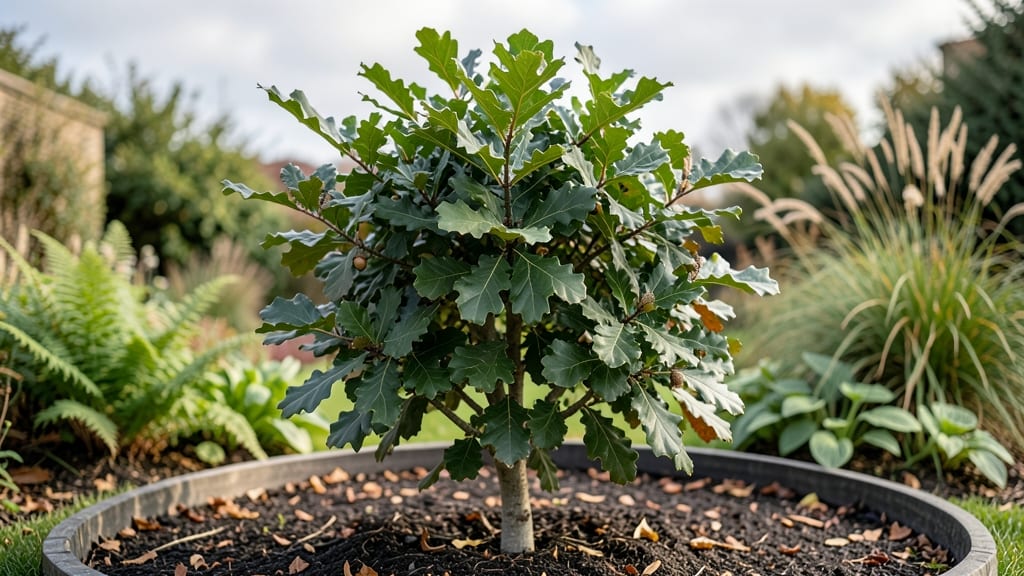
Your garden deserves the bold, lobed drama of a bush with oak-like leaves—without the massive size. 🌿 These oak-leafed shrubs bring year-round texture, seasonal color, and that signature architectural shape to smaller spaces.
I’ve tested the best performers, from fiery Pyracantha to silvery Cotinus (smoke bush), and they’re game-changers for hedges, specimen planting, or layered borders.
What makes them special? Fothergilla delivers fall foliage like a maple, while Quercus-inspired varieties like Pyracantha offer glossy evergreen leaves with winter berry drama. Most thrive in full sun to partial shade, and their compact sizes (5–12 feet tall) fit urban yards or foundation plantings.
Pair them with boxwoods for structure or ornamental grasses to soften their bold edges.
Imagine a smoke bush glowing purple in summer, its leaves turning copper in fall—all while its oak-like silhouette anchors your design. These plants outperform traditional evergreens by offering seasonal interest.
For example, Cotinus ‘Royal Purple’ stays vibrant all year, while Fothergilla ‘Mount Airy’ gives you both spring blooms and fiery autumn color.
They’re perfect for low-maintenance hedges, focal points, or even container gardens on patios. Need a textural contrast? Try pairing them with hostas for shade gardens or lavender for a Mediterranean vibe. Their adaptability makes them a no-brainer for any landscape style.
The roots of leaf resemblance
If you’ve ever spotted a bush with leaves that strikingly mimic oak foliage—lobed, textured, or even autumn-hued—you might wonder why some plants evolve such similarities. The answer lies in a mix of genetic quirks, ecological strategies, and even human intervention.
Let’s dig into the science behind why certain bushes develop oak-like leaves, whether naturally or through cultivation.
Some bushes develop oak-like leaves simply because they’re genetic hybrids. Nature (or plant breeders) can cross species with desirable traits—like the bold, lobed leaves of oaks—to create hardier, more ornamental plants. For example:
- Quercus × hispanica hybrids: Some cultivated oak hybrids (like Quercus robur × Quercus petraea) produce bushes with oak-like foliage but smaller growth habits, perfect for gardens.
- Non-oak species with oak genes: Plants like Cotinus coggygria (smokebush) or Fothergilla gardenii (witch alder) have evolved leaf shapes resembling oaks due to shared evolutionary ancestors or convergent evolution.
Actionable insight: If you’re growing a bush with oak-like leaves, check its Latin name—hybrids often have × symbols (e.g., × notabilis) indicating intentional crossbreeding.
Not all oak-like leaves are bred—they’re evolved. Some bushes mimic oak foliage as a survival tactic:
- Predator deterrence: Lobed leaves can confuse herbivores (like deer or insects) by making the plant harder to recognize as a food source. Oak leaves, with their jagged edges, are less palatable to many pests.
- Sunlight optimization: The deep lobes of oak-like leaves create shade gradients, allowing more light to reach lower branches—an advantage in dense forests where competition is fierce.
- Water retention: Thick, leathery leaves (common in oak mimics) reduce water loss, helping bushes thrive in drier conditions.
Pro tip: 🌡️ If your region has hot, dry summers, native bushes with oak-like leaves (e.g., Rhus typhina, staghorn sumac) are excellent drought-tolerant choices.
Gardeners and nurseries actively select plants with oak-like foliage because of their aesthetic appeal. Over generations, breeders favor bushes with:
- Bold, textured leaves: Varieties like Cornus controversa (Himalayan dogwood) or Nyssa sylvatica (black tupelo) are prized for their lobed, oak-esque shapes.
- Seasonal color shifts: Many oak mimics (e.g., Cercis canadensis, redbud) turn fiery red or gold in fall, mirroring oak’s iconic hues.
- Compact growth habits: Unlike towering oaks, these bushes offer the look of oak foliage without the size, making them ideal for small yards.
Actionable tip: 🔍 When shopping for oak-like bushes, ask nursery staff about cultivar history—some are selectively bred for leaf shape alone!
Believe it or not, your local environment can trigger oak-like leaf development. Factors like:
- Acidic, well-draining soil: Oaks thrive in such conditions, and bushes like Pieris japonica (Japanese andromeda) may develop deeper lobes when grown in oak-rich forests.
- Cooler climates: In regions with four distinct seasons, bushes like Hamamelis virginiana (witch hazel) produce more pronounced, oak-like foliage as a cold adaptation.
- Wind exposure: High winds can stunt leaf growth unevenly, creating a lobed appearance in species like Carpinus betulus (European hornbeam).
Grower’s note: 🌱 If your bush isn’t developing oak-like leaves, test your soil pH—amending it with peat moss or pine needles may encourage the trait.
Whether through ancient genetics, clever breeding, or sheer survival instinct, the oak-like leaf phenomenon is a fascinating blend of nature and nurture. Next time you spot a bush with those familiar lobes, you’ll know there’s a story—and a strategy—behind it!
Revitalize Your Oak-Like Foliage
Transforming your garden’s bush with oak-like leaves into a thriving, year-round star doesn’t have to be a mystery. Whether you’re dealing with sparse growth, yellowing foliage, or pests, these practical, step-by-step solutions will help you bring back that lush, elegant texture.
Below, we’ve mapped common issues to their fixes—plus prevention tips to keep your bush healthy for seasons to come.
Cause: Poor soil, over-pruning, or root stress. Solution:
- 🔥 Test and Amend Soil – Oak-like bushes (such as Quercus-inspired varieties or Holm oak hybrids) thrive in well-draining, slightly acidic soil (pH 5.0–7.0). Conduct a soil test (kits are cheap and easy to use) and amend with:
- Compost (for nutrients) – Mix 2–3 inches into the topsoil.
- Sand or Perlite (for drainage) – If soil is clay-heavy, blend in 20% sand.
- Organic matter (like leaf mold) – Improves moisture retention.
- 👨🍳 Fertilize Smartly – Use a slow-release, balanced fertilizer (10-10-10 or 20-20-20) in early spring and mid-summer. Avoid high-nitrogen fertilizers—they promote leafy growth at the expense of root strength.
- ⏰ Prune Strategically – Trim only in late winter or early spring (before new growth). Remove no more than 25% of the bush at once to avoid shock.
💡 Prevention Tip:
- Mulch annually with 3–4 inches of wood chips or shredded bark to retain moisture and regulate soil temperature. Keep mulch 6 inches away from the trunk to prevent rot.
Cause: Overwatering, underwatering, nutrient deficiency, or fungal issues. Solution:
- 🌡️ Check Watering Habits –
- Underwatering? Water deeply 1–2 times per week (depending on climate). Oak-like bushes prefer drought-tolerant conditions once established—overwatering is worse than underwatering.
- Overwatering? Let soil dry out between waterings. Improve drainage with gravel or raised beds if needed.
- 🥗 Boost Nutrients –
- Iron deficiency? Apply chelated iron or use Epsom salt (1 tbsp per gallon of water, sprayed on leaves).
- Magnesium deficiency? Work Epsom salt into the soil in spring.
- 🍄 Treat Fungal Issues – If leaves have black spots or powdery mildew, spray with:
- Neem oil (natural fungicide).
- Baking soda solution (1 tsp baking soda + 1 quart water + a drop of dish soap).
🎯 Prevention Tip:
- Water at the base (not overhead) to reduce fungal spores. Avoid wetting leaves in humid climates.
Cause: Weakened plants attract pests like aphids, spider mites, or scale insects. Solution:
- 🔪 Manual Removal – For scale insects, scrape them off with a soft brush dipped in soapy water.
- 💦 Spray with Insecticidal Soap – Mix 2 tbsp castile soap + 1 quart water and spray directly on pests (reapply every 5–7 days).
- 🌿 Introduce Beneficial Insects – Ladybugs and lacewings devour aphids. Purchase them online or attract them with native flowering plants.
- 🌡️ Prevent Future Infestations –
- Prune heavily infested branches and dispose of them in sealed bags.
- Encourage biodiversity—birds and predatory insects keep pests in check.
✨ Pro Tip:
- Early detection is key! Check the undersides of leaves weekly for tiny webs (spider mites) or sticky residue (aphids).
Cause: Freeze-thaw cycles, salt spray (near roads), or lack of winter prep. Solution:
- 🌡️ Mulch Heavily – Apply 4–6 inches of mulch before the first frost to insulate roots.
- 🧥 Wrap Young Bushes – Use burlap or frost cloth to shield tender varieties from sharp cold snaps.
- 🚫 Avoid Late-Season Pruning – Prune only in late winter (after the last frost) to prevent new growth from freezing.
- 💧 Reduce Watering in Fall – Let the bush enter dormancy naturally—overwatering can weaken roots before winter.
🔥 Prevention Tip:
- Choose cold-hardy varieties (e.g., Holm oak or Chinese pistache) if you live in USDA zones 5–7.
To keep your oak-like bush lush and elegant, follow this maintenance checklist:
- 📅 Trim annually (late winter/early spring).
- 💧 Water deeply but infrequently (once established).
- 🌱 Fertilize twice a year (spring + summer).
- 🦋 Monitor for pests (weekly leaf checks).
- 🍂 Rake up fallen leaves (prevents fungal buildup).
With these targeted fixes, your oak-leafed bush will bounce back stronger—adding texture, color, and structure to your garden for years. Which issue are you tackling first? 🚀
Frequently asked questions
Which bushes have leaves that most closely resemble oak?
For the most authentic oak-like foliage, try smoke bush (Cotinus) with its velvety, lobed leaves, or Fothergilla for deep green leaves that turn fiery red in fall. Pyracantha offers glossy, evergreen leaves with a similar texture, while Chinese pistache provides both oak-like shape and brilliant fall colors. All are compact enough for smaller gardens.
Can these oak-leafed bushes survive in cold climates?
Most can! Fothergilla and smoke bush thrive in USDA zones 4–8, while Chinese pistache handles zones 7–9. For colder areas, Holm oak hybrids are excellent choices, though they prefer zones 7–10. Always check specific cultivar hardiness before planting.
How do I create a layered garden using oak-leafed shrubs?
Start with a tall specimen plant like smoke bush (6–10 ft) at the back, then add medium-height Fothergilla (5–8 ft) behind your patio area. For front borders, use Pyracantha (3–6 ft) or boxwoods to frame pathways. Add ornamental grasses or hostas to soften the structure.
Why does my oak-leafed bush have yellow leaves?
Yellow leaves usually signal overwatering, nutrient deficiency, or fungal issues. First, check soil moisture—oak-leafed bushes prefer well-draining soil. If the problem persists, test for iron or magnesium deficiency and apply Epsom salt or chelated iron. For fungal issues, spray with neem oil or a baking soda solution.
Are oak-leafed bushes deer-resistant?
Most are moderately deer-resistant, but not completely immune. Pyracantha and smoke bush are the toughest choices, thanks to their thorny branches and bitter foliage. For extra protection, apply deer repellent sprays or plant them near deer-deterrent plants like lavender or rosemary.