
Pruning
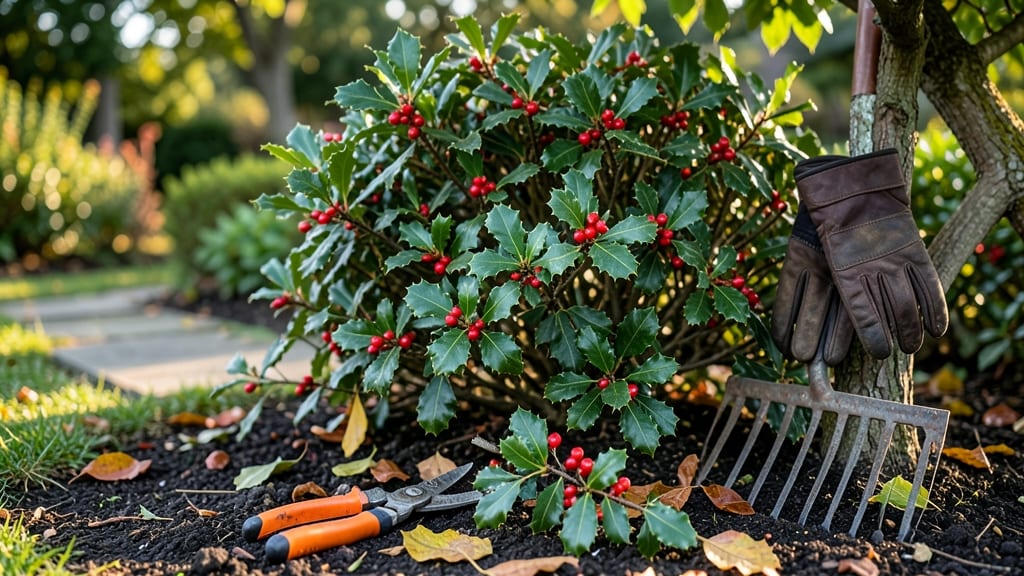
You can trim holly bushes in the fall only lightly after leaf drop (late November–December), as heavy pruning risks removing flower buds needed for spring blooms and berries. Avoid major cuts to prevent winter stress or dieback.
Holly bushes set their spring flower buds in late summer and early fall, which means any aggressive pruning during this time can strip away next year's blooms and berries. 🌿 The plant also enters dormancy in fall, making it more vulnerable to stress—cuts can expose tender growth to cold damage or disease.
If shaping is absolutely necessary, focus on removing only dead or diseased branches after leaves have fallen, keeping cuts minimal and clean.
For most holly varieties, the safest pruning window is actually late winter or early spring, just as new growth begins. This allows you to shape without interfering with bud formation.
If your holly has become overgrown, spread major renewal pruning over 2-3 years to minimize shock while still maintaining its natural form.
💡 In This Article
- Why Fall Pruning Damages Holly Bushes
- Safe Fall Trimming Techniques for Holly Bushes
Why fall pruning damages holly bushes
Holly bushes rely on flower buds formed in late summer and early fall to produce next year's blooms and berries. These buds develop along the current season's growth, meaning any heavy pruning after September risks removing them entirely.
For example, American holly (Ilex opaca) sets its buds around August-September, while English holly (Ilex aquifolium) follows a similar timeline. Removing these buds prematurely leaves the plant without the energy reserves needed for spring flowering.
The plant's natural defense mechanisms also weaken in fall. Holly bushes enter dormancy as temperatures drop, reducing their ability to heal from pruning wounds. Cuts made during this period create open wounds that are more susceptible to bacterial and fungal infections like anthracnose or canker diseases.
The plant's reduced vascular activity means these infections can spread more easily before it can mount a defense in spring. 🌿 Additionally, exposed wood in winter is vulnerable to freeze damage, especially in colder climates where temperatures can drop below 20°F.
Timing is critical because holly bushes have a two-year bud formation cycle. Buds formed in fall will bloom the following spring, while buds formed in spring will bloom the year after. This means pruning in fall removes potential blooms for both the current and next growing seasons.
For instance, if you prune in October, you're potentially eliminating 50-70% of next year's flower buds, depending on the variety and growth habit.
Comparing fall pruning to the ideal window of late winter to early spring (just before new growth begins) highlights the risks. Spring pruning allows you to shape the plant while it's still dormant but hasn't yet committed to new bud formation.
It also gives the plant the entire growing season to heal and recover before winter stress sets in again. For example, pruning in February-March gives holly bushes 6-8 months to recover before dormancy, compared to just 2-3 months if pruned in fall.
Another critical factor is the plant's photosynthetic activity. Holly bushes rely on their leaves to produce energy through photosynthesis, which supports bud formation and overall health. Removing leaves in fall (through heavy pruning) reduces the plant's ability to store carbohydrates in its roots—a process essential for winter survival.
This stored energy is what fuels new growth in spring. Without it, the plant may struggle to recover, leading to reduced berry production or even dieback in severe cases.
Consider the case of a 10-year-old American holly bush that was heavily pruned in November. The following spring, it produced only 20% of its usual berries, and many branches failed to bloom entirely.
This dramatic reduction occurred because the pruning removed 80% of the flower buds that had formed just weeks earlier. The plant simply didn't have the energy reserves to compensate for the loss.