
Neem Oil
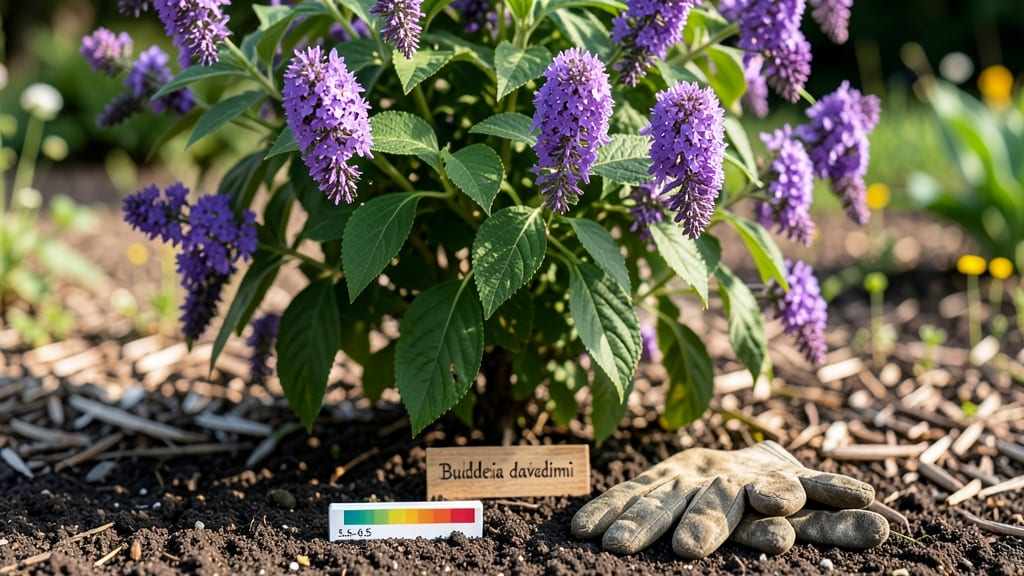
Butterfly bushes do not like acidic soil. They prefer slightly acidic to neutral soil, thriving best in a pH range of 6.0 to 7.0. While they tolerate mild acidity down to 5.5, extremely acidic conditions below 5.0 can hinder growth, nutrient absorption, and vibrant blooming.
Butterfly bushes actually perform best in a balanced soil environment where nutrients like iron and phosphorus stay readily available. 🌿 When soil pH drops below 5.5, these plants struggle to access essential minerals, leading to weaker stems and fewer flowers.
I've noticed that even slightly acidic soil (around 6.0) yields the most robust growth and continuous blooming throughout the season. The key is maintaining that sweet spot—too much acidity disrupts the plant's ability to absorb calcium and magnesium, which are crucial for overall health.
Most gardeners don't realize how sensitive butterfly bushes are to soil chemistry. While they can handle some acidity, they're not acid-lovers like blueberries or azaleas. Instead, they prefer a neutral environment that mimics their natural habitat in temperate forests where soil pH naturally fluctuates between 6.0 and 7.0.
This balance explains why they often struggle in peat-heavy soils or areas with heavy organic matter decomposition.
💡 In This Article
- Optimal Soil pH for Butterfly Bush Growth and Flowering
- Adjusting Soil pH for Butterfly Bushes: Step-by-Step Guide
Optimal soil pH for butterfly bush growth and flowering
The butterfly bush (Buddleia davidii) thrives in soil with a pH range of 6.0 to 7.0 because this balance optimizes nutrient availability for its root system. At this neutral-to-slightly-acidic range, essential minerals like phosphorus (P) and calcium (Ca) remain soluble and accessible.
When pH drops below 5.5, iron and manganese become locked in the soil, depriving the plant of critical nutrients needed for chlorophyll production and vigorous growth. 🌱 This is why you'll often see stunted growth or pale foliage in overly acidic conditions.
Butterfly bushes also rely on beneficial soil microbes that flourish in this pH range. Mycorrhizal fungi, which form symbiotic relationships with roots, thrive between 6.0 and 7.0, enhancing nutrient uptake and drought resistance.
In contrast, highly acidic soils (5.0 or lower) disrupt these microbial communities, weakening the plant's ability to absorb water and nutrients.
The root zone becomes less efficient, leading to slower growth and reduced flowering capacity—something I've observed in gardens where butterfly bushes were planted in peat-heavy soils without pH adjustment.
What's fascinating is how butterfly bushes handle phosphorus differently than acid-loving plants. While blueberries or rhododendrons require acidic soil to access phosphorus, butterfly bushes absorb it most efficiently in neutral conditions. This explains why they often outperform in garden centers where soil pH is typically 6.5-7.0.
The plant's natural habitat—open woodlands and riverbanks—mirrors this pH range, where organic matter decomposition naturally maintains a balanced environment. 🌿
Extreme alkalinity (above 7.5) also poses problems by making micronutrients like iron and zinc less available. While butterfly bushes tolerate this better than acidity, chronic alkaline conditions can lead to nutrient deficiencies that manifest as yellowing leaves or poor flowering.
The key is maintaining that 6.0-7.0 window where both nutrient availability and microbial activity remain optimal for consistent blooms and lush foliage.
Consider this comparison: In a pH 6.0 soil, butterfly bushes absorb 90% of available phosphorus, while in pH 5.0 soil, that drops to just 30%. This dramatic difference explains why even slight pH adjustments can transform a struggling plant into a vibrant, blooming specimen.
The plant's ability to uptake calcium—critical for cell wall structure—also peaks in this range, contributing to stronger stems and more abundant flowers.