
Shrubs
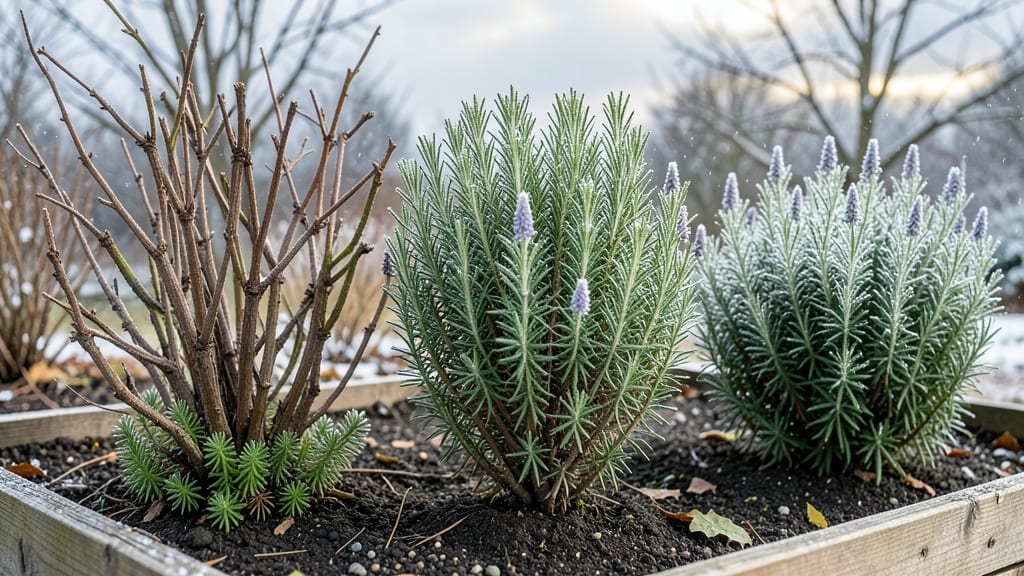
Rosemary bushes don't die in winter but can sustain damage when temperatures drop below 20°F (-6°C), though cold-hardy varieties with proper protection like mulching or container relocation often survive.
Cold hardiness in rosemary depends heavily on the variety and growing conditions. 🌿 Mediterranean rosemary types struggle below 15°F (-9°C), while cold-resistant cultivars like 'Arp' or 'Hill Hardy' can tolerate down to 0°F (-18°C) with the right care.
The key to survival lies in protecting the roots—dry soil insulates better than wet, which is why mulching with straw or pine needles is so effective during deep freezes.
For potted rosemary, moving plants to a sheltered spot like a garage or against a south-facing wall can make all the difference. Pruning back by one-third before winter reduces frost damage by minimizing exposed foliage, and a thick layer of mulch (at least 3 inches) acts as a thermal blanket.
Even damaged bushes often bounce back in spring with proper post-winter care, like removing dead growth and fertilizing lightly.
💡 In This Article
- How Cold Tolerance Varies in Rosemary Types
- Winter Protection Strategies for Rosemary Bushes
How cold tolerance varies in rosemary types
Rosemary's cold hardiness hinges on its genetic origin and adaptation. Mediterranean varieties, like the classic Rosmarinus officinalis, evolved in mild climates with winter highs around 50°F (10°C) and rarely experience frost.
These types typically succumb when temperatures drop below 15°F (-9°C), as their cellular structure lacks the protective adaptations found in cold-hardy plants. The damage occurs when ice crystals form in plant cells, rupturing membranes and causing irreversible harm.
Cold-resistant cultivars, such as 'Arp' or 'Hill Hardy', have been selectively bred to withstand 0°F (-18°C) or lower. These varieties develop thicker, waxier leaves that reduce water loss and contain higher levels of natural antifreeze compounds like proline, an amino acid that protects cell membranes during freezing.
The difference in survival rates between Mediterranean and cold-hardy rosemary can be as stark as 90% mortality versus 10-20% damage in identical conditions.
Soil moisture plays a critical role in frost resistance. Dry soil insulates roots better than saturated soil, which conducts cold more efficiently. When soil freezes, the ice expands and can damage root systems, even in cold-hardy varieties.
This is why mulching with organic materials like straw or pine needles—rather than synthetic options—creates an insulating barrier that maintains a 5-10°F (3-5°C) warmer microclimate around the roots. The texture of organic mulch also traps air, which is a poor conductor of heat.
Another key factor is the plant's growth habit. Rosemary with a more compact, bushy form (like 'Hill Hardy') recovers better from frost damage than tall, leggy varieties because the dense foliage retains heat more effectively.
The science behind this lies in the plant's ability to maintain a higher internal temperature through metabolic activity, even in freezing conditions. This is why pruning before winter isn't just about aesthetics—it's about reducing the surface area exposed to cold air and improving the plant's overall resilience.
For gardeners in transitional climates (zones 7-9), the choice of rosemary variety can mean the difference between a thriving herb garden and a winter casualty.
Cold-hardy types may show signs of stress, like brown leaf tips, but their root systems often remain intact, allowing for a full recovery once temperatures rise. The key is selecting varieties that match your local climate and providing the right growing conditions to maximize their natural cold tolerance.
Understanding these variations helps explain why some rosemary bushes survive harsh winters while others perish. It's not just about the temperature—it's about the plant's genetic makeup, soil conditions, and the care provided before and during the coldest months. 🌟