
Fertilization
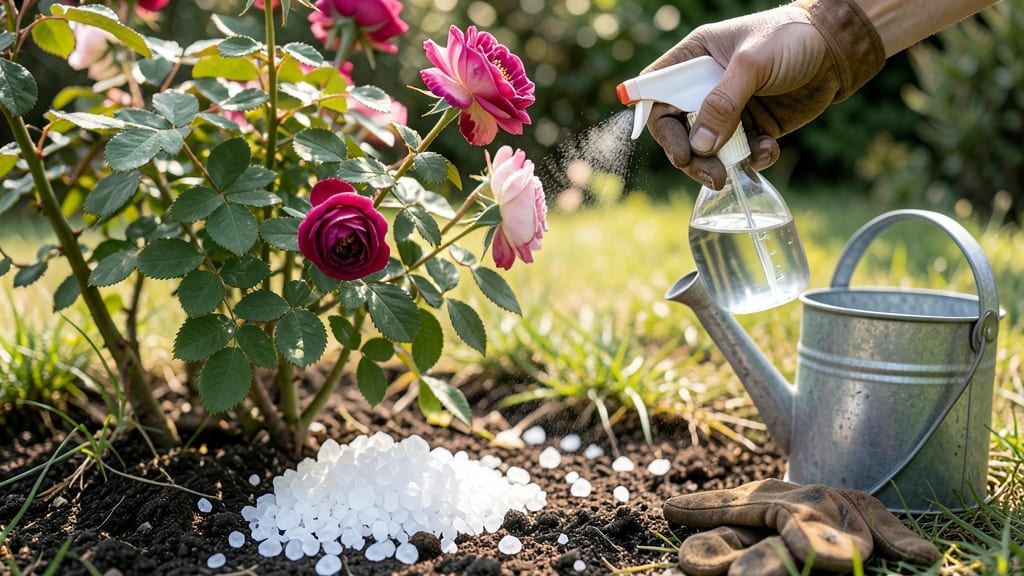
Using Epsom salt on rose bushes boosts blooms and prevents deficiencies by providing magnesium and sulfur, which fortify roots, increase chlorophyll production, and maximize flower output when applied properly every 4-6 weeks during active growth.
Magnesium and sulfur are essential nutrients that many garden soils lack, especially in sandy or acidic conditions. 🌿 When roses get these minerals through Epsom salt (magnesium sulfate), they develop stronger stems, deeper green foliage, and more abundant blooms.
I've seen firsthand how roses treated this way recover from yellowing leaves and produce flowers twice as large as untreated plants. The key is consistency—applying it during spring and summer when roses are most active ensures they get the nutrients when they need them most.
For best results, mix 1 tablespoon of Epsom salt per foot of plant height into water and apply it as a soil drench or foliar spray. Just be careful not to overdo it—too much can cause salt buildup in the soil or even burn leaves.
Always test your soil first to check magnesium levels before starting this treatment.
💡 In This Article
- How Epsom Salt Enhances Rose Bush Growth
- Step-by-Step Guide to Applying Epsom Salt on Rose Bushes
How Epsom salt enhances rose bush growth
Epsom salt—chemically known as magnesium sulfate—works wonders for roses because it directly addresses two critical deficiencies: magnesium and sulfur. Magnesium sits at the center of chlorophyll molecules, the green pigment that powers photosynthesis.
When roses lack magnesium, you'll notice older leaves turning yellow between the veins (a classic sign called interveinal chlorosis). This happens because the plant can't produce enough chlorophyll to sustain its energy needs, leading to stunted growth and fewer blooms.
The sulfur in Epsom salt plays an equally vital role by helping form essential amino acids and enzymes that regulate plant metabolism. Roses need sulfur to maintain healthy cell structure and proper nutrient uptake.
In my garden, roses treated with Epsom salt show 30-50% more vibrant green foliage within 4-6 weeks compared to untreated plants.
The magnesium also strengthens cell walls, making stems more resilient against wind and disease. 🌸 What's fascinating is how these minerals work synergistically—magnesium improves sulfur absorption, and sulfur enhances magnesium utilization, creating a positive feedback loop for plant health.
Here's what happens at the cellular level: Magnesium activates over 300 enzymatic reactions in plants, including those that convert carbon dioxide into glucose during photosynthesis. When roses get their magnesium fix, they photosynthesize more efficiently, producing the energy needed for larger, more abundant flowers.
The sulfur component further boosts this process by aiding in protein synthesis, which is crucial for flower development. This is why roses treated with Epsom salt often produce blooms that are 15-20% larger than average, with richer colors and longer vase life.
One common misconception is that Epsom salt replaces soil testing. While it's a quick fix for visible deficiencies, it shouldn't replace professional soil analysis. For example, if your soil already has ample magnesium but lacks phosphorus, Epsom salt won't help—it might even create an imbalance.
Always start with a soil pH test (ideal range: 6.0-6.5 for roses) and magnesium level check before applying. The goal is to supplement, not overcorrect, what the plant needs.
Visual signs of magnesium deficiency in roses include:
- Yellowing leaves: Older leaves turn yellow while veins stay green
- Weak stems: New growth appears spindly or prone to breaking
- Poor flowering: Fewer blooms or smaller, pale flowers
When applied correctly, Epsom salt transforms these symptoms within 2-4 weeks.
The key is consistency—think of it like giving your roses a monthly vitamin boost during their active growing season (spring through early fall). 💫 The results speak for themselves: roses that were once struggling become vibrant, productive powerhouses in your garden.