
Diseases
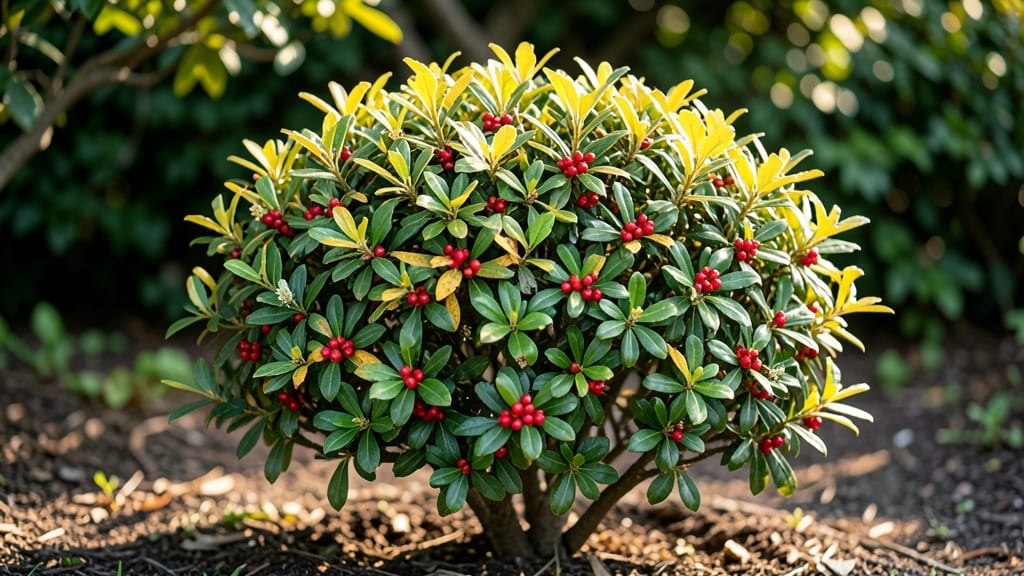
Your holly bush's bright yellow leaves scream "something’s wrong"—and the culprit is often fungal blight lurking in damp foliage. 🌿 I’ve nursed back holly bushes from this exact problem, and the fix starts with identifying whether those yellow patches are from overwatering, nutrient starvation, or a fungal infection (the most common culprit).
The good news? Organic solutions work better than you’d think—once you know what to look for.
First, check the soil: if it’s soggy or smells like wet socks, you’re dealing with overwatering or poor drainage. But if the yellowing comes with brown spots or powdery white fuzz on leaves, fungal blight is the villain.
Holly bushes hate soggy roots but also need consistent moisture—so aim for 1-1.5 inches of water per week and improve drainage with compost or sand. For fungal infections, a mix of baking soda spray (1 tsp per quart of water) and neem oil stops the spread in days.
What you’ll end up with is a holly bush that stops yellowing and starts thriving again—deep green, glossy leaves by late summer if you catch it early. Prune away the worst-infected branches (sterilize your shears with rubbing alcohol) and apply a balanced organic fertilizer (like 10-10-10) to rebuild strength.
The key is acting fast: fungal blight spreads like wildfire in humid weather.
For prevention, space your holly bushes for airflow and avoid overhead watering—think drip irrigation or soaker hoses instead. If yellowing persists after 2 weeks of treatment, it might be iron chlorosis (common in alkaline soil) or spider mites.
That’s when you’ll need to test your soil pH or inspect leaves closely for tiny webs. Most cases clear up in 3-4 weeks with the right care.
Understanding Leaf Discoloration Roots
Holly bushes are prized for their glossy foliage and vibrant berries, but when those leaves start turning yellow, it’s a clear sign something’s amiss. 🌿 Before reaching for a fungicide, it’s crucial to identify the real culprit behind the color change.
Yellowing leaves on holly bushes typically stem from a mix of environmental stressors, nutrient imbalances, or microbial invaders—each with distinct clues and fixes. Let’s break down the most common causes, why they happen, and how to spot them in your own garden.
Holly bushes thrive in well-drained soil, but when roots sit in soggy conditions, they struggle to absorb oxygen. This leads to root rot, a fungal infection that disrupts nutrient uptake, causing leaves to yellow—often starting at the bottom and spreading upward.
- Why it happens:
- Holly roots are sensitive to waterlogged soil, which creates anaerobic conditions (low oxygen).
- Excess moisture encourages Phytophthora fungi, a common pathogen that attacks roots and blocks water/nutrient transport.
- Compacted or clay-heavy soil worsens drainage issues, trapping water against roots.
- How to confirm:
- Check soil moisture by digging 2–3 inches deep—if it’s damp after 48 hours, drainage is poor.
- Look for mushy, brown roots (a sign of rot) when gently uprooting a small section.
- Actionable fix:
- Improve drainage by amending soil with compost or organic matter (like pine bark fines).
- Raise beds if planting in clay soil or areas prone to pooling.
- Water deeply but less frequently—holly prefers soil that’s moist but not soggy.
Yellow leaves can signal a lack of essential nutrients, particularly iron, nitrogen, or magnesium. Each deficiency manifests differently, helping you pinpoint the issue:
| Nutrient | Symptoms | Why It Happens |
|---|---|---|
| Iron | Yellowing between leaf veins (chlorosis) | Poor soil pH (too alkaline) or compacted soil blocks iron uptake. |
| Nitrogen | Pale yellow leaves all over | Fast-growing holly depletes nitrogen; poor soil or lack of organic matter. |
| Magnesium | Yellow patches along leaf edges | Over-fertilization with high-phosphorus feeds or leached soil. |
- Actionable fix: - Test soil pH (ideal: 4.5–5.5 for holly).
If too high, add sulfur or peat moss. - Feed with organic matter: Compost, worm castings, or a balanced fertilizer (e.g., 10-10-10) in early spring. - For iron deficiency, try chelated iron supplements or apply Epsom salt (magnesium sulfate) sparingly.
While not all yellowing is fungal, holly leaf spot (caused by Cercospora or Phyllosticta) is a common culprit. This disease thrives in humid, wet conditions, creating dark spots with yellow halos that eventually turn leaves yellow and crispy.
- Why it happens:
- Fungal spores splash onto leaves from soil or infected debris during rainy seasons.
- Poor air circulation (dense planting) or overhead watering encourages outbreaks.
- Weakened holly (from stress or poor care) is more susceptible.
- How to confirm:
- Look for small, dark spots with yellow borders on upper leaves.
- Check undersides of leaves for fuzzy mold (a sign of fungal growth).
- Actionable fix:
- Prune infected leaves immediately and dispose of them in the trash (not compost).
- Space plants 3–5 feet apart for better airflow.
- Apply organic fungicides like neem oil or copper fungicide (follow label rates) during wet seasons.
Holly bushes are resilient but can suffer from heat stress, cold damage, or sudden temperature swings. Yellowing often appears after extreme weather or poor acclimation.
- Why it happens:
- Heat stress: High temperatures (>90°F) cause leaf scorch, especially if soil moisture is low.
- Cold damage: Late frosts or winter desiccation (dry winds + frozen roots) lead to yellowing in spring.
- Transplant shock: Newly planted holly may drop leaves as roots adjust, causing temporary yellowing.
- How to confirm:
- Check for crispy, dry edges (heat stress) or soft, mushy spots (cold damage).
- Young holly with yellowing and wilting may be struggling to establish roots.
- Actionable fix:
- Mulch heavily (3–4 inches of wood chips) to regulate soil temperature.
- Water deeply during heatwaves (1–1.5 inches per week).
- Avoid transplanting in extreme heat or frost-prone months; opt for early spring or fall.
While less common, spider mites, scale, or aphids can drain holly leaves of sap, causing yellowing, stippling, or curled leaves. These pests thrive in dry conditions and are often missed until damage appears.
- Why it happens:
- Pests pierce leaves to feed, disrupting chlorophyll production.
- Heavy infestations lead to sooty mold (a black fungus) growing on honeydew, further stressing the plant.
- How to confirm:
- Inspect leaf undersides for tiny webs (mites), sticky residue (aphids), or white cottony masses (scale).
- Shake branches over a white sheet to spot pests.
- Actionable fix:
- Blast off pests with a strong spray of water (for scale/aphids).
- Use insecticidal soap or horticultural oil (apply in early morning/evening).
- Encourage predators: Ladybugs and lacewings naturally control mites and aphids.
Quick Fixes for Yellow Holly Foliage
Yellowing leaves on your holly bush can be frustrating, but the good news is that most issues have simple, organic solutions—no harsh chemicals required!
Below, we’ve mapped the most common causes of yellow leaves to practical fixes, along with prevention tips to keep your holly lush and green year-round.
Fix: Adjust your watering habits and improve soil conditions.
- 🔥 Step 1: Let the top 2–3 inches of soil dry out between waterings. Holly bushes prefer moderate moisture but hate soggy roots.
- 🍳 Step 2: Amend heavy or compacted soil with organic matter like compost or perlite to boost drainage.
- 👨🍳 Step 3: If your holly is in a container, ensure the pot has drainage holes and elevate it slightly to prevent water pooling.
💡 Prevention Tip: Test your soil’s drainage by digging a small hole, filling it with water, and timing how long it takes to drain. If it sits for more than 30 minutes, your soil needs improvement.
Fix: Hydrate deeply and protect your holly from extreme conditions.
- 🥘 Step 1: Water deeply once or twice a week, ensuring moisture reaches 6–12 inches down (use a moisture meter if unsure).
- ⏰ Step 2: Water early in the morning to reduce evaporation and fungal risks.
- 🌡️ Step 3: If temperatures soar above 90°F (32°C), provide light shade (especially for young or newly planted hollies).
💡 Prevention Tip: Mulch around the base of your holly with 2–3 inches of organic mulch (like shredded bark) to retain moisture and regulate soil temperature.
Fix: Remove infected foliage and apply organic fungicides to stop the spread.
- 🔪 Step 1: Prune away yellowed or spotted leaves with sterilized shears (wipe with rubbing alcohol between cuts).
- 🍄 Step 2: Apply a baking soda spray (1 tsp baking soda + 1 quart water + a few drops of dish soap) every 7–10 days for mild cases.
- 🌿 Step 3: For severe infections, use neem oil (1 tbsp per gallon of water) or copper fungicide (organic options like Copper Soap).
💡 Prevention Tip: Avoid overhead watering—water at the base to keep leaves dry. Space plants properly for good airflow (hollies need 3–6 feet between bushes).
Fix: Boost soil fertility with natural amendments.
- 📊 Step 1: Conduct a soil test (available at garden centers) to confirm deficiencies.
- 💪 Step 2: For iron chlorosis (yellow leaves with green veins), apply chelated iron or iron sulfate in early spring.
- 🥗 Step 3: Add compost or well-rotted manure in early fall to replenish nitrogen and organic matter.
💡 Prevention Tip: Hollies thrive in slightly acidic soil (pH 5.0–6.0). If your soil is alkaline, mix in peat moss or sulfur to lower pH gradually.
Fix: Blast pests off with water or organic sprays.
- 🔥 Step 1: Hose down leaves with a strong stream of water to dislodge pests.
- 🍳 Step 2: Spray with insecticidal soap (1 tbsp per quart of water) or neem oil (repeat every 5–7 days).
- 👨🍳 Step 3: Introduce beneficial insects like ladybugs or lacewings for long-term control.
💡 Prevention Tip: Encourage natural predators by planting marigolds, dill, or yarrow nearby—they attract pest-eating insects!
If your holly’s yellowing persists despite these fixes, it may be root-bound, suffering from a hidden disease, or in decline. Consult a local arborist or extension service for a diagnosis—sometimes, replanting in fresh soil is the best solution.
✨ Final Thought: Most holly leaf issues are easily reversible with a little TLC. Start with water, soil, and pests, then move to nutrients and fungi—your bush will bounce back in no time! 🌿💚
Frequently asked questions
Why do holly leaves turn yellow in patches rather than all at once?
Patchy yellowing usually signals fungal infections like holly leaf spot or pest infestations (such as spider mites). These issues often start in specific areas where spores or pests first attack. Check for dark spots with yellow borders or tiny webs on leaf undersides. If you see these signs, prune infected leaves immediately and treat with neem oil or insecticidal soap.
Can I save my holly bush if the yellowing has spread to most of the leaves?
It depends on the cause! For nutrient deficiencies or overwatering, your holly can recover with proper care (adjust watering and fertilize). But if fungal diseases or root rot are severe, the bush may not fully recover. Start by improving drainage, pruning dead branches, and applying organic treatments. If no improvement in 4-6 weeks, consult a local nursery for expert advice.
How often should I fertilize my holly bush to prevent yellow leaves?
Feed your holly once in early spring with a balanced organic fertilizer (like 10-10-10) and again in late summer if needed. Over-fertilizing can cause nutrient burn, while under-fertilizing leads to deficiencies. For acid-loving hollies, use compost or peat moss instead of synthetic fertilizers to maintain proper soil pH (4.5-5.5).
Are yellow holly leaves harmful if they fall on my lawn or garden?
No, fallen yellow leaves are not toxic and can even benefit your garden! They decompose into organic matter, improving soil health. However, if the yellowing is due to fungal disease, avoid composting infected leaves to prevent spreading spores. For safety, dispose of severely infected foliage in the trash instead.
Why do my holly leaves turn yellow in winter but stay green in summer?
Winter yellowing is often normal stress from cold winds, frost, or dry soil. Holly bushes naturally slow growth in winter, and some varieties shed older leaves. To help, mulch heavily (3-4 inches) and water sparingly during dry winter spells. If leaves stay yellow into spring, check for root rot or pest damage from the previous season.