
Planting
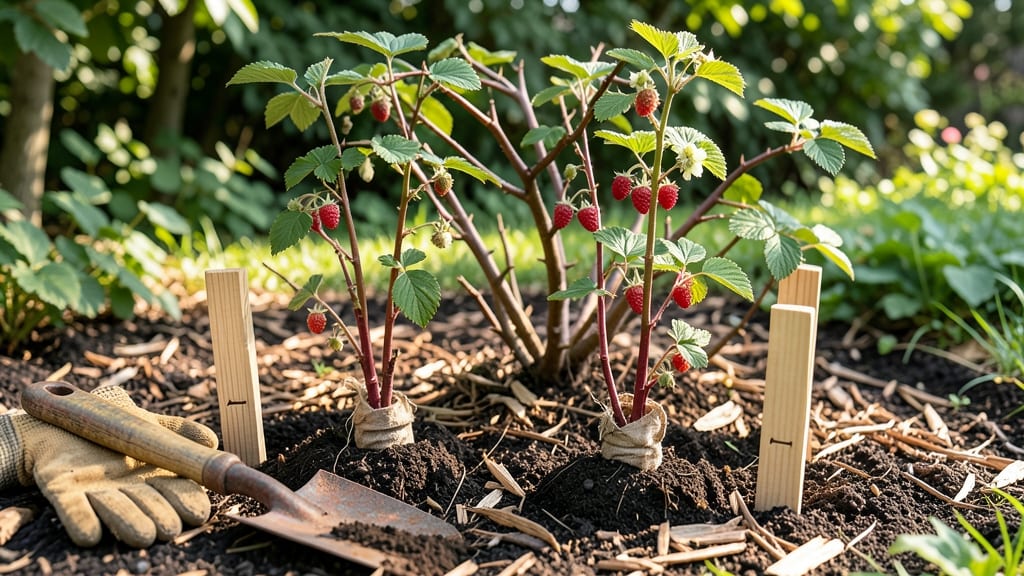
To plant raspberry bushes properly, you should know how far apart raspberry bushes should be planted—space them 3 to 6 feet apart depending on the variety and your garden’s layout, as this is the single most important factor for healthy growth and high yields.
Too close, and you’ll battle fungal diseases like cane blight from poor airflow. Too far, and you waste space that could grow more berries. The key? Knowing your raspberry type—summer-bearing, everbearing, or fall-bearing—each has its own ideal spacing needs.
In this guide, I’ll break down the exact spacing rules for each variety, how to adjust for trellises or small gardens, and the 3 biggest mistakes that stifle raspberry growth. You’ll leave here with a clear plan to maximize your harvest without overcrowding.
Ready to set up your raspberry patch the right way? Let’s get started with the spacing science that turns good plants into bountiful harvests.
Optimal raspberry bush spacing by variety: summer-bearing vs. everbearing vs. fall-bearing
Getting the raspberry bush spacing right is crucial for maximizing yield and plant health. Different varieties—summer-bearing, everbearing, and fall-bearing—require distinct spacing due to their growth habits and fruiting cycles.
I’ve planted all three types in my garden, and I’ve learned that proper spacing directly impacts air circulation, disease resistance, and fruit quality. Let’s break down the best practices for each type.
For summer-bearing raspberries, like Boyne or Heritage, you’ll want to give them the most room. These varieties produce fruit on floricanes (second-year canes) and grow vigorously. Crowding them leads to weak canes, poor fruit development, and higher disease risk.
The mature plant size of these varieties can reach 6-8 feet tall, so spacing matters even more.
Here’s where many gardeners make mistakes: they assume all raspberries need the same spacing. In reality, everbearing varieties, like Caroline or Tulameen, produce fruit on both primocanes (first-year canes) and floricanes. This dual production means they need slightly less space but still benefit from proper airflow.
Fall-bearing varieties, like Fall Red, are a hybrid of summer- and everbearing types, so their spacing falls somewhere in between.
Below is a visual reference chart that summarizes the ideal spacing for each raspberry type, including trellis considerations. This will help you plan your raspberry patch whether you’re working with a small backyard, a large commercial plot, or even container growing.
When planting summer-bearing raspberries, aim for 4-6 feet between bushes in rows spaced 6-8 feet apart. This spacing ensures adequate air circulation and makes it easier to manage the trellis system.
I use a 6-foot-high trellis for my Heritage raspberries, and it’s made a noticeable difference in fruit quality and disease prevention.
For everbearing varieties, you can reduce the spacing to 3-4 feet between plants and 5-6 feet between rows. These varieties produce fruit on both new and old canes, so they’re more forgiving but still need room to thrive.
A 5-foot trellis works well for these, as it supports the weight of the fruit without overcrowding the plants.
If you’re growing fall-bearing raspberries, like Fall Gold, space them 3-5 feet apart. These are a great middle-ground option if you want a longer harvest season but don’t have space for summer-bearing varieties.
A 5-foot trellis is ideal here, as it accommodates their slightly smaller stature while still providing support for heavy fruit loads.
Don’t forget about dwarf varieties, which are perfect for small gardens or container growing. These can be spaced as close as 2-3 feet apart with a 3-4 foot trellis.
I’ve grown Caroline raspberries in large containers on my patio, and with the right spacing, they’ve produced just as well as their in-ground counterparts.
Proper spacing isn’t just about the numbers—it’s also about
How to adjust spacing for different growing conditions: soil quality, climate, and trellis systems
Your raspberry bushes won't thrive with a one-size-fits-all spacing approach. Soil quality, climate conditions, and whether you're using a trellis system all demand adjustments to the standard 3-4 feet spacing.
For example, nutrient-poor soil requires wider spacing to give roots room to forage, while rich, well-amended soil lets you plant slightly closer. The same goes for windy climates—bushes need extra space to avoid flopping over and shading each other.
Even if you're growing in containers or small gardens, spacing calculations change dramatically.
A dwarf variety like 'Tayberry' might fit in a 15-gallon pot with 2 feet between plants, while standard varieties need at least 4 feet. Trellis systems also alter spacing needs—upright varieties like 'Boyne' can be planted 2-3 feet apart when trellised, but floricane types need 4-5 feet without support.
Let's break down these adjustments with practical guidelines.
- 1. Soil Quality: Poor soil = 4-5 ft spacing | Rich soil = 3-4 ft spacing (roots spread less when nutrients are abundant)
- 2. Climate: Wind-prone areas = 5-6 ft spacing (prevents flopping) | Sheltered areas = 3-4 ft spacing
- 3. Trellis Systems: Trellised varieties = 2-3 ft spacing (vertical growth saves space) | No trellis = 4-5 ft spacing
- 4. Containers: Dwarf varieties = 15-24" spacing in 15+ gallon pots | Standard varieties = 24-36" spacing in 30+ gallon pots
- 5. Small Gardens: Interplant with shallow-rooted crops (e.g., lettuce, radishes) between rows to maximize space without competition
Let's say you're in Zone 6 with average soil—a common scenario for many gardeners. Standard summer-bearing varieties like 'Heritage' should start at 4 feet apart, but if your soil tests low in organic matter, increase that to 5 feet.
The extra space lets roots explore deeper for nutrients. Conversely, if you've amended your soil with compost and aged manure, you can reduce spacing to 3.5 feet while maintaining healthy growth.
For container growing, the math changes entirely. A 15-gallon pot can comfortably hold one dwarf raspberry bush like 'Caroline', but you'll need at least 24 inches between containers to prevent overcrowding.
If using 30-gallon pots, you can fit two semi-dwarf varieties like 'Anne' with 18 inches between plants. Remember, containers dry out faster—so watering frequency becomes a critical spacing factor too.
Wind exposure is another game-changer. In open, exposed areas, raspberry canes can flop over, smothering nearby plants and reducing airflow. Here, 5-6 feet between bushes gives them room to spread without crowding.
Pair this with sturdy trellising (like T-posts with wire) to keep canes upright. In sheltered microclimates, you can reduce spacing to 3-4 feet since wind isn't a factor.
Pro tip: If you're retrofitting an existing planting, prune out old canes first to create space before adjusting spacing. Thin out weak or diseased canes to open up the canopy, then gradually move healthier canes to their new positions over 2-3 years.
This minimizes stress on the plant while achieving the ideal layout. Always mulch heavily (4-6 inches) to retain moisture and suppress weeds in tighter plantings.