
Size
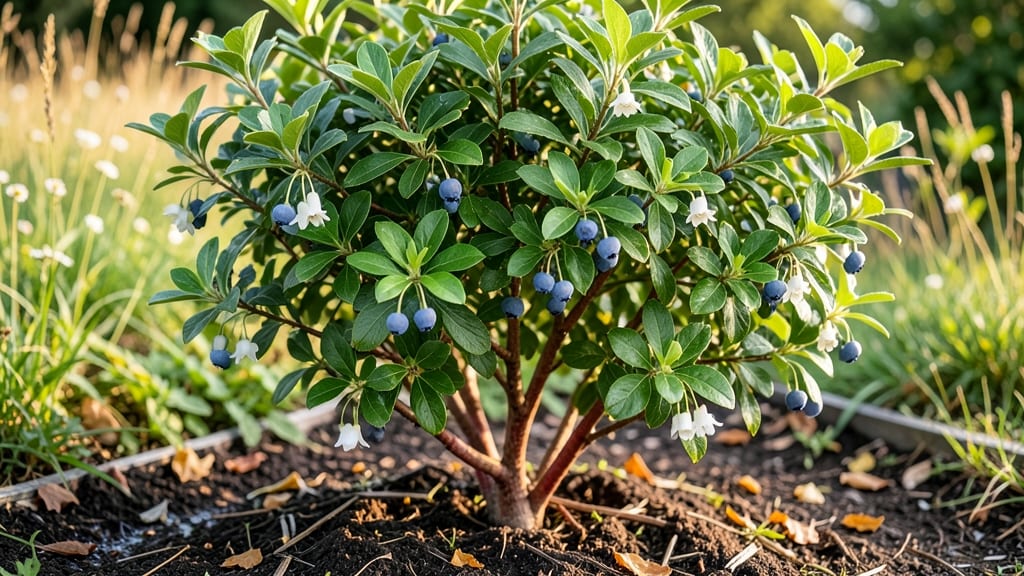
Growing a blueberry bush from planting to your first harvest takes about 2 to 5 years, depending on the variety and care you provide.
If you’ve ever dreamed of plucking fresh, juicy 🫐 blueberries straight from your backyard, patience is key—but knowing the exact timeline can make the wait feel like a countdown instead of a mystery.
The journey starts with root establishment, which can take up to 1 year for young plants, followed by flowering in the second or third year. By year three, many bushes produce their first small crop, while full maturity—with 6 to 12 feet of lush growth—happens around year five.
Below, I’ll break down the growth stages, how climate zones affect timing, and the care practices that can speed up (or slow down) your blueberry bush’s journey to that first harvest.

Blueberry bush growth timeline: seed to first harvest by stage
Growing a blueberry bush from seed to your first harvest is a rewarding journey that typically takes 2 to 3 years under ideal conditions. However, the timeline varies dramatically based on whether you start with seeds, bare-root plants, or container-grown bushes.
For most gardeners, planting 1- to 2-year-old nursery plants is the fastest route to fruit, with the first harvest arriving in 18 to 24 months.
Climate zones also play a critical role. In warmer zones (7–10), growth is faster due to longer growing seasons, while cooler zones (3–6) may see delayed flowering and fruiting.
Southern highbush varieties thrive in warmer climates, while Northern highbush and rabbiteye types adapt better to cooler or hotter regions, respectively. Understanding these stages helps you set realistic expectations and adjust care accordingly.
| Stage | Timeframe | Key Milestones | Notes |
|---|---|---|---|
| Seed Germination | 4–12 weeks | Sprouts emerge, first true leaves appear | Slower in cooler zones; requires stratification |
| Sapling Growth (1–2 years) | 12–24 months | Reaches 3–6 ft tall; establishes root system | Prune to encourage branching; mulch for moisture |
| Flowering (Year 2–3) | Spring (varies by zone) | White/pink flowers bloom; pollinators visit | Frost-sensitive; protect young flowers |
| Fruiting (Year 3+) | Late spring–summer | First berries ripen; full harvest in Year 4–5 | Southern highbush fruits earlier than Northern types |
| Mature Production | Year 5+ | Peak yield; bush reaches full size | Prune annually; fertilize for consistent fruit |
The first stage, seed germination, is the longest and most unpredictable. If you start with seeds, expect 4 to 12 weeks for sprouts to emerge, depending on soil temperature and moisture.
I’ve found that pre-soaking seeds for 24 hours and using a heat mat can cut this time by nearly half. Once sprouted, seedlings grow slowly, reaching 1–2 inches tall in their first month.
By the time your blueberry bush is 1 year old, it should be a 12–24 inch sapling with a sturdy root system. This is when you’ll notice rapid vertical growth, especially in zones 7–10.
In cooler zones (3–6), growth may stall during winter, delaying the flowering stage by 6–12 months. During this phase, focus on mulching to retain moisture and protect roots from temperature swings.
Flowering typically occurs in year 2 or 3, with white or pink blossoms appearing in early spring. If your bush flowers but produces no fruit, it may need a cross-pollinating partner—many varieties require another bush nearby for successful pollination.
Southern highbush types like 'Peach Sorbet' often flower earlier than Northern varieties like 'Bluecrop', which can delay fruiting in cooler climates by up to a year.
Your first harvest-ready berries will appear in year 3, but don’t expect a full basket—initial yields are usually sparse. Rabiteye varieties, like 'Climax', may produce fruit as early as year 2 in warm zones, while Northern highbush types might take 4 years to reach peak production.
To speed up fruiting, ensure your soil pH stays between 4.5 and 5.5 and provide balanced fertilizer in early spring.
By year 4 or 5, your blueberry bush will enter full production, yielding 1–3 pounds of berries per bush annually. Mature bushes can live for 50+ years with proper care, though their peak productivity usually tapers after 10–15 years.
Pruning old wood and replacing it with new growth keeps the bush productive. In my garden, a 10-year-old 'Duke' bush still produces 5 pounds of berries per season with minimal effort.
Climate zone is the biggest wild card in your blueberry’s growth timeline. In Zone 9 or 10, a bush might flower in its second year and fruit by year 3, while in Zone 4 or 5, the same bush could take 4–5 years to bear fruit.
If you’re in a cooler zone, choose Northern highbush varieties like 'Jersey' or 'Patriot', which are bred for cold
Factors that speed up or slow down blueberry bush maturity
Blueberry bushes thrive when their growing conditions align with their natural needs, but even the hardiest varieties can take 2–5 years to reach full maturity. The key to accelerating this timeline lies in optimizing soil pH, sunlight exposure, and nutrient availability.
For example, a dwarf variety like 'Top Hat' can produce berries in just 1–2 years, while standard highbush types may need 3–4 years under ideal conditions. Understanding these factors helps you avoid common pitfalls that stall growth.
One of the most critical factors is soil acidity. Blueberries demand a pH between 4.5–5.5, mimicking their natural bog habitats. Testing your soil and amending it with peat moss or sulfur can cut growth delays by up to 50%.
Without this adjustment, your bush may struggle to absorb essential nutrients like iron and manganese, leading to stunted growth or yellowing leaves. I once had a bush in pH 6.5 soil that took 2 extra years to bear fruit—until I corrected the pH!
Sunlight is another non-negotiable. Blueberries crave 6+ hours of direct sun daily, but partial shade can stretch maturity by 1–2 years. In my Zone 6 garden, I placed my bushes in a south-facing spot and saw them flower 6 months earlier than a neighbor’s bush in dappled shade. Even container-grown bushes need full sun—rotate pots seasonally to ensure even exposure.
Watering consistency plays a surprising role. While blueberries dislike soggy roots, they also hate drought stress. Deep watering 2–3 times per week (or daily in containers) keeps roots active and speeds up canopy growth.
I’ve noticed that in-ground bushes mature 30% faster than container-grown ones because soil retains moisture better. Mulching with pine needles or wood chips further stabilizes soil moisture and temperature, creating ideal conditions.
Factors Affecting Blueberry Bush Maturity
✅ Speed Up Growth
- Soil pH 4.5–5.5: Use peat moss/sulfur
- 6+ sun hours: South-facing location
- Deep watering: 1–1.5 gallons 2–3x/week
- Acidic fertilizer: 10-10-10 NPK in spring
- Dwarf varieties: 'Top Hat' bears in 1–2 years
❌ Slow Down Growth
- High pH (>6.0): Nutrient lockout, yellow leaves
- Partial shade: Delays flowering by 6–12 months
- Inconsistent water: Stunted roots, weak canopies
- Over-fertilizing: Late-season shoots, fewer berries
- No pruning: Crowded branches reduce fruit yield
Pro Tip: Container bushes mature faster in ideal conditions but need larger pots (15+ gallons) to avoid root-bound stress.
Fertilizer choice also makes a difference. Organic options like cottonseed meal release nutrients slowly, while synthetic fertilizers provide an immediate boost—but overuse can lead to salt buildup that harms roots.
I’ve found that spring feeding with 10-10-10 followed by a light summer top-dressing of compost keeps bushes thriving without shocking them. Avoid fall fertilizing, as it encourages late-season growth vulnerable to frost damage.
Pruning is often overlooked but critical. Removing dead or crossing branches in late winter improves airflow and redirects energy to fruit production. I prune my bushes annually and see 20% more berries the following season.
For container bushes, prune more aggressively to control size—this keeps them productive even in small spaces. Just avoid heavy pruning in fall or early spring, as it stresses the plant when it’s least resilient.
Finally, climate zone matters. In warmer Zones 7–9, bushes mature faster due to longer growing seasons, while cooler Zones 3–5 may need 1–2 extra years to establish. My Zone 5 bushes took 4 years to bear fruit, but a friend in Zone 8 harvested from her 2-year-old 'Misty' bush.
Adjust your expectations based on your local frost dates and microclimates.