
Container Gardens
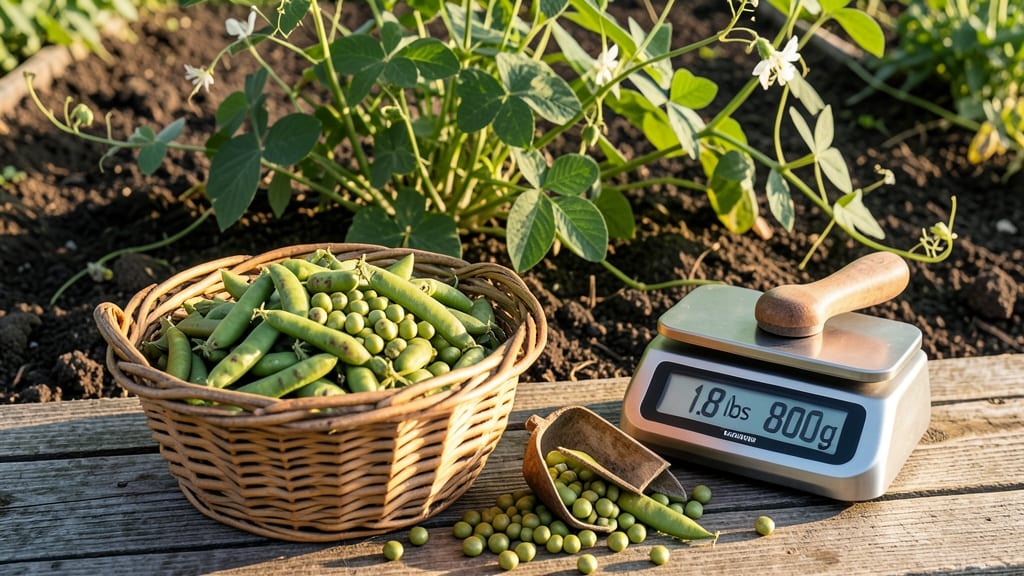
To determine how many pounds are in a bushel of field peas, you'll find the standard weight ranges from 60 to 65 pounds, depending on the specific variety—smaller-seeded types like black-eyed peas typically weigh closer to 60 lbs, while larger varieties can reach up to 65 lbs or more. Always cross-check with USDA guidelines for accurate measurements in agricultural settings.
Understanding field pea weight isn't just about the numbers—it's about the seed size, shell thickness, and moisture levels that affect the final bushel weight. 🌱 For example, freshly harvested peas can weigh significantly more than properly dried ones, sometimes by 10-15%.
This variation is why farmers and gardeners often rely on USDA-approved scales for precise measurements, especially when selling produce at markets or processing for storage.
What's fascinating is how these weight differences impact storage and yield calculations. Larger-seeded varieties like cowpeas pack more weight per bushel due to their bulkier structure, while smaller peas like black-eyed peas may require more volume to reach the same weight standard.
This is why moisture content testing becomes crucial—even a slight difference can throw off your entire harvest assessment.
💡 In This Article
- Why Field Pea Weight Varies by Variety and Moisture Content
- Field Pea Bushel Weight Charts for Common Varieties
Why field pea weight varies by variety and moisture content
Field pea weight per bushel isn't fixed because it depends on two key factors: seed size and shell thickness.
Larger varieties like cowpeas have thicker shells and bigger seeds, packing more mass into each bushel (closer to 65 lbs), while smaller types like black-eyed peas weigh less (60 lbs) due to their compact structure.
This difference is measurable—cowpea seeds average 0.25-0.35 grams each, while black-eyed peas are 0.15-0.20 grams. 🔥
The moisture content plays an equally critical role. Freshly harvested peas can contain 15-20% moisture, adding 10-15 lbs to a bushel's weight compared to dried peas (which stabilize at 10-12% moisture).
USDA standards require drying peas to 12% moisture before weighing, as higher humidity creates an illusion of heavier yields. For example, a 60-lb bushel of black-eyed peas at 18% moisture could actually contain only 50 lbs of dry peas—this is why farmers use moisture meters before storage.
USDA grading standards further refine these weights. Peas are classified by size (e.g., No. 1, No. 2 grades), with higher grades having fewer damaged or shriveled seeds.
A No. 1 black-eyed pea bushel meets stricter size and moisture criteria, ensuring consistent 60-lb weights, while No. 2 grades may dip to 58-59 lbs due to more variability. This precision matters for market sales, where buyers expect uniform weights for pricing.
Drying methods also affect weight accuracy. Air-drying under 85-95°F temperatures preserves weight better than mechanical dryers, which can cause seed shrinkage. The USDA recommends slow, even drying to prevent weight loss from respiration loss (seeds "breathing" moisture out).
For home gardeners, spreading peas in single layers on screens under shade achieves this balance, maintaining closer-to-standard bushel weights.
Consider this real-world example: A farmer harvesting 100 bushels of cowpeas at 65 lbs each would expect 6,500 lbs total. But if moisture levels exceed 14% during harvest, the actual dry weight could drop to 5,800 lbs—a 11% loss that impacts profits.
This is why commercial operations invest in grain scales and moisture testers to adjust for these variables before storage.
For gardeners, this means weighing peas at 12% moisture (the USDA standard) for accurate bushel calculations. Use a kitchen scale to measure 1 gallon of peas (≈10-12 lbs for black-eyed peas) and multiply by 4 (since 1 bushel = 4 gallons) to estimate weight.
This method works for small batches but may vary by ±2 lbs due to seed density differences.