
Watering
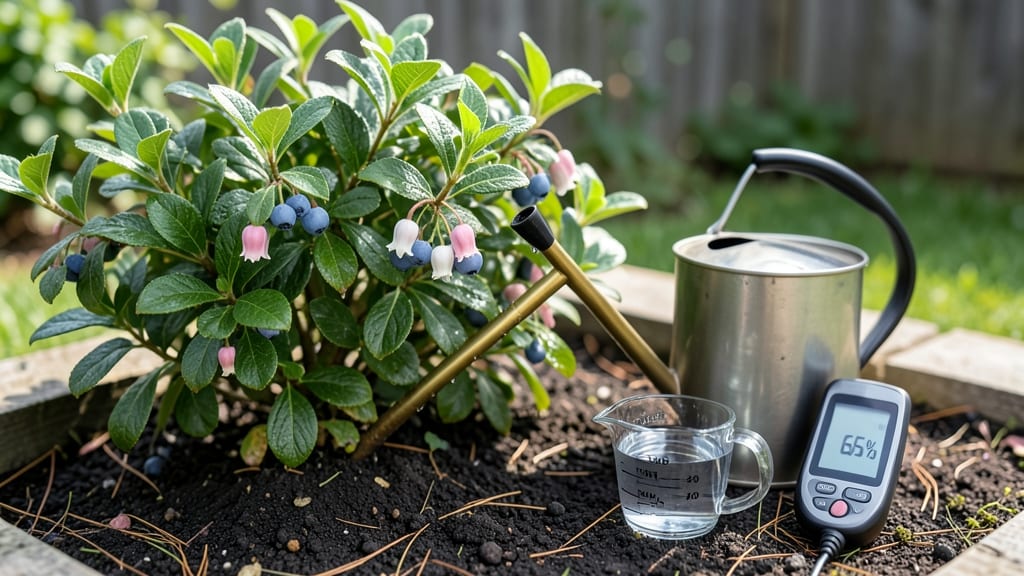
To keep a blueberry bush thriving, you’ll need to know how much water a blueberry bush needs—about 1-2 gallons per plant every 3-5 days during the growing season, with adjustments for soil and weather.
Picture this: you’ve spent months planting and nurturing your 🫐 blueberry bush, only to watch it struggle because you’re either drowning the roots or leaving it parched.
The truth is, watering blueberries is more science than guesswork, and getting it right means the difference between a bush bursting with berries and one that barely survives.
Your blueberry bush’s thirst changes with the seasons—more in summer when fruit is forming, less in winter when it’s dormant. Soil type plays a huge role too: sandy soil drains fast, while clay holds moisture longer.
Below, I’ll break down exactly how much water your bush needs each month, how to tell if you’re overdoing or underdoing it, and the simple tricks to keep those roots happy without inviting root rot.
By the end, you’ll know not just how much to water, but when and how—so your blueberry bush stays lush, productive, and ready to reward you with a bumper crop every season.
Blueberry bush watering requirements by season: monthly breakdown for healthy growth
Watering your blueberry bush correctly is the secret to juicy berries and a thriving plant. Unlike many fruits, blueberries hate soggy soil but also wilts under drought. The key? Consistent moisture without waterlogging.
Your blueberry bush's water needs shift dramatically by season, with critical differences between spring planting, summer fruiting, and winter dormancy. Let's break down the exact schedule you need to follow month-by-month.
First, understand that young blueberry bushes (first 2 years) need more frequent watering than mature plants because their root systems are still developing. Mature bushes (3+ years) can handle slightly drier conditions once established, but they still require deep watering to encourage strong root growth.
The ideal soil moisture is like a damp sponge - never bone dry, but never waterlogged. Here's how to adjust your watering routine each month:
| Month | Watering Frequency | Amount per Watering | Critical Notes |
|---|---|---|---|
| January-February | Bi-weekly | 1 gallon (3.8L) | Minimal water; focus on preventing soil from freezing |
| March | Weekly | 1.5 gallons (5.7L) | Increase as soil thaws; watch for signs of spring growth |
| April-May | Every 3-4 days | 2 gallons (7.6L) | Critical for root establishment; water deeply at base |
| June-July | Daily or every 2 days | 2-3 gallons (7.6-11.4L) | Peak fruiting season; mulch to retain moisture |
| August-September | Every 4-5 days | 1.5-2 gallons (5.7-7.6L) | Reduce gradually as berries ripen; prepare for dormancy |
| October-December | Bi-weekly | 1 gallon (3.8L) | Winter prep; avoid watering if ground is frozen |
Let's start with spring, when your blueberry bush is waking up from dormancy. In March and April, your focus should be on replenishing moisture lost over winter while encouraging new root growth. Water deeply every 3-4 days, applying 2 gallons per plant each time.
This is especially critical if you planted your bush last fall - young roots need consistent moisture to establish. Morning watering is ideal to prevent fungal diseases that thrive in damp evening conditions.
As you move into summer (June-August), your blueberry bush enters its peak fruiting phase, which demands the most attention. During these months, water daily or every other day, increasing your volume to 2-3 gallons per watering.
The key is to keep the soil evenly moist but never waterlogged. I recommend using a soaker hose or drip irrigation system to deliver water directly to the root zone without wetting the leaves. This reduces the risk of berry splitting and fungal infections like botrytis.
Don't forget about mulching during summer - apply 3-4 inches of organic mulch (like pine straw or wood chips) around your blueberry bush. This helps retain moisture, regulates soil temperature, and suppresses weeds. Just keep the mulch 2-3 inches away from the stem to prevent rot.
In August and September, you'll gradually reduce watering as the plant prepares for dormancy, but maintain consistent moisture until the first frost.
When fall arrives, your watering routine should shift dramatically. By October, reduce watering to every 5-7 days with only 1-1.5 gallons per plant. This helps the bush harden off for winter.
In November and December, water only when the ground isn't frozen, using minimal amounts to prevent soil from becoming waterlogged during cold snaps. The goal is to keep the roots
How soil type affects blueberry bush water needs: sandy vs clay vs loamy soil guide
Your blueberry bush might be thirsty, but how much water it truly needs depends entirely on your soil type. Sandy soil drains like a sieve, while clay holds moisture like a sponge—both extremes can stress your plants if you don’t adjust your watering routine.
Understanding your soil’s composition helps you avoid root rot in heavy soils or drought stress in sandy ones, ensuring your bushes thrive year-round.
Before diving into watering schedules, test your soil’s texture with a simple squeeze-and-observe test. Grab a handful of damp soil and press it gently—if it crumbles easily, you’ve got sandy soil; if it forms a tight ball that cracks when dropped, it’s clay.
Loamy soil, the gold standard, will hold its shape loosely and feel rich like a gardener’s dream. Knowing your soil type lets you tailor watering to your plant’s needs, not guesswork.
Soil Type & Blueberry Bush Water Needs
- ✅ Drains too quickly—water evaporates fast
- ✅ Needs frequent, deep watering (every 2-3 days)
- ✅ 1-2 gallons per plant to reach roots
- ✅ Mulch heavily to retain moisture
- ❌ Holds too much moisture—risk of root rot
- ❌ Water less often (every 5-7 days)
- ❌ 1 gallon per plant max to avoid sogginess
- ❌ Avoid mulching (traps excess water)
- ✅ Balanced drainage—ideal for blueberries
- ✅ Water every 3-5 days (adjust for heat)
- ✅ 1.5 gallons per plant for optimal moisture
- ✅ Light mulch (1-2 inches) to conserve water
If your soil is sandy, you’ll need to water your blueberry bushes more often—think of it like giving them a daily drink in summer. Use a soaker hose or drip irrigation to deliver water directly to the roots, reducing evaporation.
For clay soil, the opposite is true: water deeply but infrequently to prevent waterlogging. A moisture meter ($15 at garden centers) is your best friend here—stick it 2 inches deep before watering to avoid overdoing it.
For loamy soil, the happy medium, aim for consistent moisture without drowning the roots. A simple trick? Push your finger 2 inches into the soil—if it feels dry, it’s time to water.
This soil type holds nutrients and moisture perfectly, making it the easiest to manage for blueberry cultivation. If your soil isn’t loamy, consider amending it with compost or peat moss to improve its structure over time.
Watch for yellowing leaves or wilting stems, which often signal watering issues tied to soil type. In sandy soil, leaves may curl or crisp at the edges from thirst, while clay soil can cause roots to suffocate, leading to a mushy stem base.
Adjust your watering schedule based on these signs, and don’t forget to mulch annually—it’s the secret weapon for stabilizing soil moisture year-round.
Pro tip: Group your blueberry bushes by soil type in your garden. This way, you can create custom watering zones using timers or smart sprinklers. For example, sandy areas might need a separate zone with shorter, more frequent cycles, while clay zones benefit from longer, less frequent waterings.
With a little soil savvy, you’ll turn watering from a guess into a science—and watch your bushes reward you with bountiful harvests.