
Shrubs
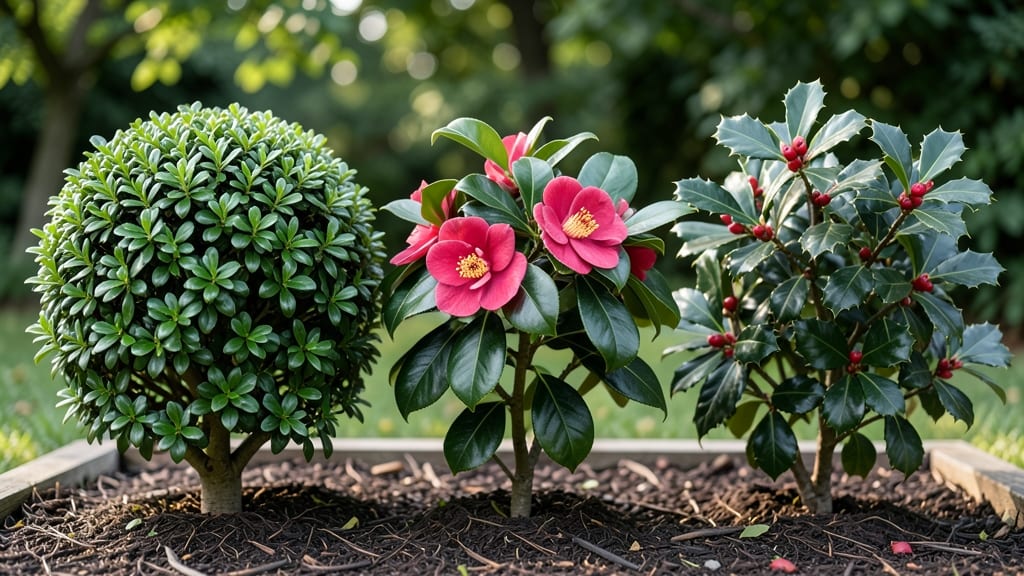
To identify evergreen bushes, start by realizing yours might not be what you thought at first glance. 🌲 The first step to proper care is nailing the ID, and I’ve learned the hard way that leaf shape, bark texture, and growth habit are your best clues.
Most gardeners confuse boxwoods, hollies, and junipers, but these three have distinct features: boxwoods have tiny rounded leaves, hollies sport spiny edges, and junipers grow in dense, scale-like clusters. A quick look at the leaf arrangement—alternate, opposite, or whorled—can cut confusion in half.
Once you know the species, pruning and transplanting become straightforward. Boxwoods handle shearing, hollies need careful timing to avoid stress, and junipers thrive with minimal intervention. Your next bush purchase will be a confident one.
Regional hardiness matters too—some evergreens thrive in Zone 3, while others need Zone 7’s milder winters. Matching the plant to your climate ensures it stays lush year-round without unexpected dieback.
Why it happens
Evergreen bushes may seem straightforward—after all, they’re called "evergreen" because they retain their foliage year-round! 🌲🍃 But misidentifying them happens more often than you’d think. The confusion stems from several key factors, often tied to plant biology, environmental conditions, or even human error.
Let’s break down the real reasons why distinguishing evergreen shrubs can be tricky, so you can spot them like a pro.
Not all plants that look green in summer are evergreens. Some shrubs enter dormancy in winter, shedding leaves to conserve energy, only to regrow them in spring. This behavior is common in semi-evergreen or deciduous plants, which can mimic evergreens during warmer months.
- Why it happens: Plants in USDA Hardiness Zones 4-7 often experience cold snaps that trigger leaf drop, even in species like Pieris japonica (Japanese andromeda) or Rhododendron hybrids. These may appear evergreen in mild winters but lose foliage in harsh conditions.
- Actionable clue: Check for bud scales (protective coverings on stems) in winter—if present, the plant is likely dormant, not truly evergreen.
- Pro tip: 💡 Observe the plant over two full seasons. If it sheds leaves in winter but regrows them by spring, it’s not a true evergreen.
Evergreens aren’t just pine trees! They come in two main leaf types: needleleaf (conifers like junipers or spruces) and broadleaf (e.g., boxwood or holly). Mixing these up is a common pitfall, especially for beginners.
- Why it happens:
- Needleleaf evergreens have thin, needle-like or scale-like leaves (e.g., Pinus or Thuja). Their waxy coating helps retain moisture in dry climates.
- Broadleaf evergreens have wide, flat leaves (e.g., Ilex or Buxus) that may drop sporadically but never all at once.
- Actionable clue: Run your fingers along a branch. Needles will feel prickly or smooth with a central vein, while broad leaves will have a distinct edge and texture.
- Pro tip: 🌡️ In Zones 8-10, broadleaf evergreens like Camellia may drop leaves in drought—don’t assume they’re deciduous!
An evergreen in Zone 9 might not survive a Zone 4 winter—and vice versa. Many shrubs are marginally hardy, meaning they push their limits in certain zones, leading to leaf drop or dieback.
- Why it happens:
- Cold sensitivity: Plants like Olearia (daisy bush) thrive in Zones 7-10 but may lose leaves in Zone 6 winters.
- Heat stress: In Zones 10-11, evergreens like Photinia may scorch or drop leaves if not watered properly.
- Actionable clue: Cross-reference the shrub’s USDA Hardiness Zone range with your local zone. If it’s on the edge, expect seasonal changes.
- Pro tip: ✨ Microclimates matter! A south-facing wall can add 1-2 zones of protection for heat-loving evergreens.
Brown, crispy, or missing leaves aren’t always natural—they could signal insect infestations (e.g., spider mites, scale) or fungal diseases (e.g., root rot, needle blight). These issues can make healthy evergreens look like they’re dying.
- Why it happens:
- Pests: Bagworms or aphids suck sap, causing yellowing or leaf drop, especially in Juniperus or Picea.
- Diseases: Phytophthora root rot (common in Zones 6-9) causes sudden defoliation, often mistaken for winter dormancy.
- Actionable clue: Inspect the underside of leaves for webs, eggs, or fungal spores. Scrape bark to check for sooty mold (a sign of sap-sucking insects).
- Pro tip: 🔥 Preventative care wins! Apply neem oil in early spring to deter pests before they strike.
Even the hardiest evergreens can struggle if their basic needs aren’t met. Poor soil, extreme wind, or prolonged drought can cause premature leaf drop, making identification harder.
- Why it happens:
- Drought stress: Evergreens like Arbutus (madrona) may drop leaves in Zone 7 summers if not watered deeply.
- Soil pH/salinity: Rhododendrons need acidic soil (pH 4.5-6.0)—alkaline conditions cause chlorosis (yellowing) and leaf drop.
- Windburn: Exposed shrubs (e.g., Chamaecyparis) lose moisture quickly, leading to brown, papery leaves.
- Actionable clue: Check the soil moisture 2 inches below the surface. If dry, the plant is thirsty. Test soil pH with a $5 kit from a garden center.
- Pro tip: 🎯 Mulch matters! Apply 3 inches of organic mulch (pine straw or bark) to retain moisture and regulate soil temp.
Quick Fixes for Common Evergreen ID Confusions
Evergreen bushes can be tricky to identify, especially when their foliage, growth habits, or seasonal changes throw you off. Whether you’re dealing with misidentified varieties, seasonal disguises, or overlapping traits, these practical solutions will help you pinpoint the right plant with confidence.
Below, we’ve mapped common challenges to clear, actionable fixes—plus prevention tips to avoid future mix-ups.
Problem: Needle-like leaves on one bush resemble broadleaf evergreens (or vice versa), making it hard to distinguish between pines, junipers, or boxwoods.
How to Fix It:
- 🔍 Examine Leaf Structure:
- Needle vs. Scale: Roll a needle between your fingers—if it’s stiff and sharp (like a pine), it’s a soft-needled evergreen. If the "needles" are tiny, overlapping scales (like on junipers or arborvitae), it’s a scale-leaved evergreen.
- Arrangement: Needles in bundles (e.g., 2–5 per fascicle) = pines. Needles single or in flat sprays = spruces or firs.
- 🌡️ Check Texture & Color:
- Dark green and leathery? Likely a broadleaf evergreen (e.g., holly, rhododendron).
- Blue-green or silvery? Often a juniper or arborvitae.
- Gray-green or fuzzy? Could be a magnolia or leucothoe.
- 📏 Measure Leaf Size:
- Use a ruler or compare to a coin. Needles under ½ inch = likely juniper or cypress. Leaves 1–3 inches long = boxwood, camellia, or pieris.
💡 Prevention Tip: Take close-up photos of leaves, bark, and growth patterns in morning light (shadows reveal texture better). Label them by location in your garden to track changes seasonally.
Problem: Evergreens shed old needles, drop leaves, or bloom unexpectedly, making them look like deciduous plants.
How to Fix It:
- 🌟 Look for New Growth:
- Evergreens often sprout fresh, bright green needles in spring (even if old foliage fades). Check the tips of branches for vibrant new growth.
- Deciduous imposters? True evergreens never fully lose leaves—only shed individual ones over time.
- 🍂 Check for "Winter Burn":
- Brown, crispy tips in winter? That’s environmental stress (not a sign the plant is deciduous). Scratch the bark—if it’s green underneath, it’s still alive.
- 🌸 Watch for Flowers/Fruit:
- Spring blooms? Camellias, pieris, or rhododendrons are broadleaf evergreens.
- Berries or cones? Junipers (berries), pines (cones), or hemlocks (flat cones) are needle-bearing evergreens.
🔥 Pro Tip: Use a magnifying glass to inspect buds in late winter. Evergreens have woody, resinous buds, while deciduous plants have soft, scaly buds.
Problem: You’re focusing on leaves but missing bark texture, branch patterns, or growth shape—key identifiers.
How to Fix It:
- 🔪 Scratch the Bark:
- Reddish-brown, shreddy? = Pine (e.g., white pine).
- Gray, peeling in strips? = Bald cypress or arborvitae.
- Smooth, greenish? = Young boxwood or camellia.
- 🌿 Observe Branch Patterns:
- Flat sprays? = Spruce (needles radiate from branches).
- Whorled branches? = Pine (needles grow in clusters around the stem).
- Upright, layered? = Juniper or cedar.
- 📏 Note Growth Habit:
- Mounded and dense? = Boxwood, yew, or inkberry holly.
- Weeping or cascading? = Weeping willow (deciduous, but some evergreens like weeping alberta spruce mimic this).
✨ Prevention Tip: Take year-round notes on your plants. Snap photos in winter (no leaves), spring (new growth), and summer (full foliage) to compare.
Problem: Some evergreens (like juniper vs. cypress or boxwood vs. pieris) share traits, making ID a guessing game.
How to Fix It:
| Trait | Juniper 🌲 | Cypress 🌳 | Boxwood 🌿 | Pieris 🌸 |
|---|---|---|---|---|
| Leaf Type | Scale-like or needle-like | Flat, scale-like | Broad, oval | Lance-shaped, leathery |
| Bark | Fibrous, peeling | Reddish-brown, stringy | Smooth, gray | Smooth, gray-brown |
| Berries/Cones | Blue-black berries | Brown, woody cones | None | Pink spring flowers |
| Growth Shape | Upright or sprawling | Columnar or weeping | Rounded, dense | Pyramidal when young |
🎯 Quick ID Trick:
- Juniper: Crush a leaf—citrusy scent = juniper.
- Boxwood: Square stems when young.
- Pieris: Pink flower buds in winter (before leaves sprout).
Problem: You’re unsure if a plant will survive your USDA Hardiness Zone (e.g., Zone 5 vs. Zone 8).
How to Fix It:
- 📊 Check the Plant Tag: Nurseries list minimum hardiness zones (e.g., "Zone 6–9").
- 🌍 Research Native Alternatives:
- Zone 7–9? Opt for camellia, gardenia, or boxwood.
- Plant a
💡 Prevention Tip: Group evergreens by hardiness needs in your garden. For example, Zone 5 gardens should avoid tropical-looking evergreens like oleander (Zone 10+).
Before you conclude, run through this 5-step verification:
- Leaf type (needle, scale, or broad)?
- Bark texture (smooth, peeling, fibrous)?
- Growth habit (upright, mounded, weeping)?
- Seasonal clues (flowers, berries, winter color)?
- Hardiness match (does it fit your zone)?
With these fixes, you’ll eliminate guesswork and master evergreen ID—even for the trickiest look-alikes! 🌿🔍
Frequently asked questions
How can I tell if my evergreen bush is healthy or struggling?
Look for bright green leaves without brown edges or yellow patches. Healthy evergreens also have firm, flexible branches that don't snap easily. If you see crispy brown tips (common in winter), it's likely environmental stress rather than disease. Check for pests like spider mites on leaf undersides.
What’s the easiest way to distinguish between junipers and arborvitae?
Junipers have scale-like or needle leaves that grow in overlapping layers, while arborvitae have flat, fan-shaped sprays of scale leaves. Crush a leaf—junipers smell citrusy, while arborvitae have a piney scent. Also, junipers often produce blue-black berries, while arborvitae don’t.
Can I identify evergreen bushes in winter when they’ve lost leaves?
Yes! Examine the bark texture and buds. Evergreens have woody, resinous buds that stay on the stems, while deciduous plants have soft, scaly buds. Look for last year’s needles still clinging to branches—this confirms it’s an evergreen. Also, check for berries or cones from the previous season.
Why does my evergreen bush have some brown leaves but still looks alive?
This is often winter burn, caused by cold, dry winds or salt spray. Scratch the bark—if it’s green underneath, the plant is still alive. Water deeply in late fall to prepare for winter, and apply 3 inches of mulch to protect roots. Avoid fertilizing in late summer, as new growth is more vulnerable to frost damage.
How do I know if my evergreen is a broadleaf or needleleaf type?
Run your fingers along a branch: needleleaf evergreens (like pines or spruces) have thin, sharp leaves that feel prickly, while broadleaf evergreens (like boxwood or holly) have flat, wide leaves with distinct edges. Needles often grow in bundles, while broad leaves grow alternately or opposite along the stem.