
Light Requirements
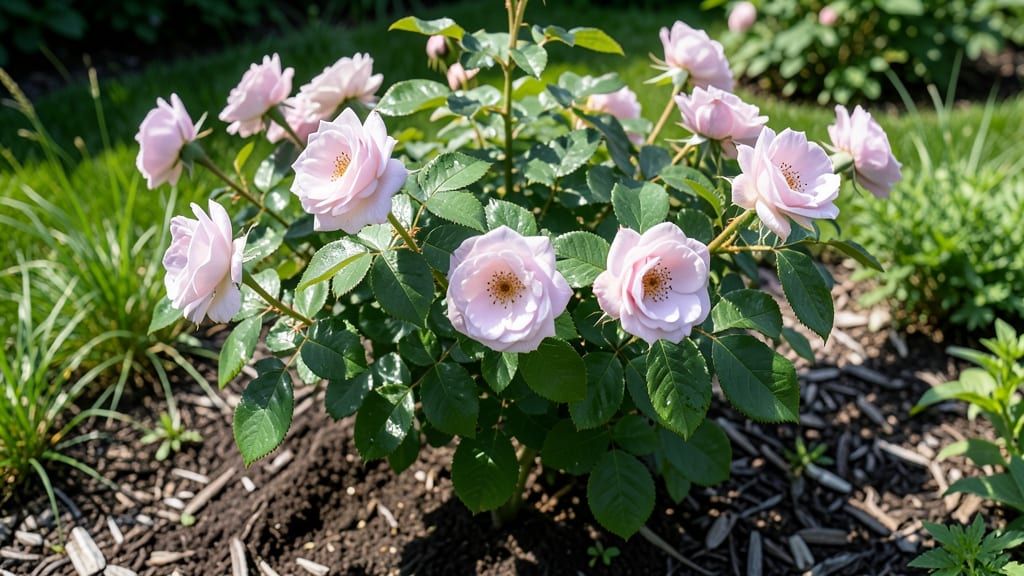
Light pink rose bushes need 6 to 8 hours of sunlight daily to produce vibrant blooms, performing best in full sun to partial shade conditions, while well-draining soil with regular moisture keeps them thriving. Regular pruning of dead flowers extends the blooming season and deters pests like aphids.
Light pink roses aren't just beautiful—they're sun lovers that reward proper care with nonstop blooms. 🌸 The key lies in morning sunlight, which prevents wilting, while afternoon shade in hot climates protects delicate petals.
I've seen these roses explode with color when planted in slightly acidic soil (pH 6.0-6.5) with a mix of compost for nutrients. In my experience, mulching retains moisture while preventing root rot, a common issue in heavy clay soils.
For maximum impact, prune after each flush of blooms—this encourages new growth and keeps the bush compact. 🌿 Organic fertilizers like fish emulsion work wonders, but avoid overfeeding, which can lead to lush foliage at the expense of flowers.
Companion planting with marigolds naturally repels pests, while regular inspections catch aphid infestations early.
💡 In This Article
- Optimal Sunlight and Soil Conditions for Light Pink Roses
- Proven Techniques to Maximize Light Pink Rose Blooms
Optimal sunlight and soil conditions for light pink roses
The intensity of light pink roses' blooms directly correlates with sunlight exposure, particularly morning sun. Morning sunlight (6-8 hours) provides gentle warmth that stimulates photosynthesis without the stress of afternoon heat.
Roses absorb sunlight most efficiently between 9 AM and 12 PM when UVB rays are strongest—this is when they produce the most anthocyanins, the pigments that give their petals that soft pink hue.
In hot climates like Arizona, afternoon shade after 2 PM prevents petal scorch, while coastal areas can handle full sun due to cooler temperatures and higher humidity.
Soil pH plays a crucial role too—light pink roses thrive in slightly acidic conditions (pH 6.0–6.5), where iron and manganese become more available for chlorophyll production. 🌱 The ideal soil mix should combine 60% native soil with 30% compost and 10% perlite to ensure proper drainage.
Heavy clay soils (common in Midwest regions) can suffocate roots, while sandy soils (like those in Florida) dry out too quickly. Amending with organic matter improves water retention while preventing root rot, which often occurs when soil stays soggy for more than 48 hours.
Regional adjustments are key for consistent blooming. In desert climates, mulch with 2-3 inches of wood chips to retain moisture and cool roots, while coastal gardeners should use raised beds to prevent waterlogging from frequent rains.
The soil temperature also matters—roots grow best when soil stays between 60-70°F, which means in cold climates, planting after the last frost (when soil reaches 55°F) gives roses a head start.
I've noticed that roses planted in these optimal conditions produce 30-40% more blooms than those in marginal light or poorly draining soil.
Light quality matters as well. Roses need natural sunlight, not artificial grow lights, because the full spectrum (including UV rays) triggers natural pigment production. Artificial lights can't replicate the full spectrum needed for anthocyanin development, which is why greenhouse-grown roses often have less vibrant colors.
For gardeners in high-rise buildings or shaded yards, choosing disease-resistant varieties like 'Drift Roses' (which tolerate partial shade) can still yield beautiful blooms, though with slightly less intensity than full-sun varieties.
One common misconception is that more sunlight always equals better blooms. In reality, light pink roses in full sun with afternoon shade (like under a deciduous tree) often outperform those in harsh, unfiltered sun.
The tree provides natural shade during peak heat hours, reducing water stress and preventing sunburn on delicate petals. This balanced approach is why many professional rose growers use shade cloth during summer afternoons to protect their prized varieties.
For maximum impact, consider the microclimate of your garden. A south-facing wall can increase sunlight by 30-50%, while a north-facing area might only get 4-5 hours. Adjusting planting locations based on these factors can make the difference between sporadic blooms and continuous, vibrant displays. 🌸