
Fertilization
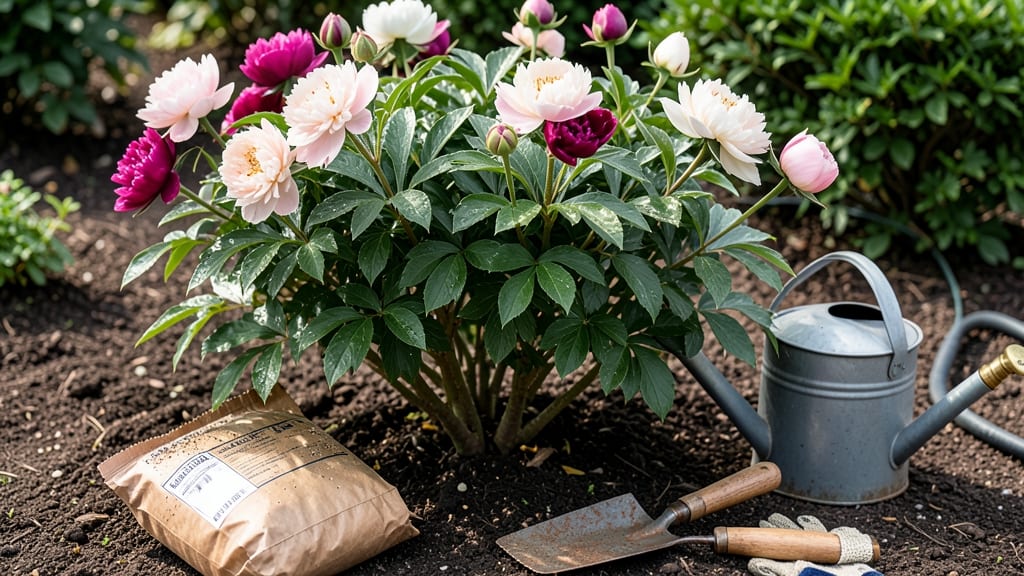
The right peony bush fertilizer is the secret to those bold, fragrant blooms 🌸 that make your garden the envy of the neighborhood.
Peonies are a gardener’s crown jewel—but without the right fertilizer, their lush blooms can turn sparse. Too little, and you’ll watch them struggle; too much, and you’ll burn the roots before they even get a chance to thrive. The timing, type, and amount all matter.
You don’t need a chemistry degree to feed your peonies, but you do need to know which fertilizers work best—whether you’re team organic or synthetic—and when to apply them for maximum impact. Skip the guesswork and let’s get those bushes blooming like never before.
In this guide, I’ll walk you through the best fertilizer options, the perfect feeding schedule, and the five mistakes that could be stunting your peonies’ growth without you even realizing it.

Best fertilizer types for peony bushes: organic vs synthetic options
Peonies thrive when fed the right nutrients, but choosing between organic and synthetic fertilizers can feel overwhelming. The key lies in understanding how each type supports root development, bloom production, and soil health.
Organic options build soil long-term, while synthetics provide quick nutrient bursts—but both have their place in a peony’s care routine.
For organic fertilizers, compost and bone meal are my top picks. Compost adds microorganisms and humus, improving soil structure, while bone meal delivers a phosphorus boost for robust roots and flowers.
Synthetic fertilizers, like balanced NPK blends (e.g., 5-10-10), offer precise nutrient ratios tailored to peonies’ needs, especially during active growth phases.
Peonies prefer a slightly acidic to neutral soil pH (6.0–7.0). Organic amendments like worm castings or fish emulsion can gently adjust pH while feeding the plant. Synthetic fertilizers, however, require careful monitoring—overapplying can burn roots or disrupt soil biology. Let’s break down the best options for your peony patch.
⚠️ Visual Comparison:
Organic fertilizers like compost and worm castings are my go-to for newly planted peonies. They improve soil structure and provide a steady supply of nutrients without the risk of salt buildup that synthetic fertilizers can cause.
For example, mixing 2 inches of compost into the soil at planting time gives peonies a nutrient-rich foundation for years.
Synthetic fertilizers shine when you need immediate results, such as a phosphorus boost for blooms. A 10-30-20 bloom booster applied in late spring (when buds form) can dramatically increase flower size and quantity.
However, I always half the recommended dose—peonies are sensitive to over-fertilization, especially in hot, dry climates.
One critical factor often overlooked is soil pH. Peonies prefer a slightly acidic to neutral range (6.0–7.0). Organic matter like pine needles or peat moss can lower pH naturally, while lime (for synthetic adjustments) should be used sparingly.
Test your soil every 2–3 years—a simple $20 home kit works perfectly.
For established peony bushes, I rotate between organic and synthetic fertilizers. In early spring, I apply a balanced NPK (5-10-10) to kickstart growth, followed by a fish emulsion foliar spray in late spring for extra nutrients.
By mid-summer, I switch to compost tea to feed the soil without stressing the plant.
If your peonies show signs of yellow leaves or stunted growth, they may need a nitrogen boost. Organic options like alfalfa meal or blood meal are gentle yet effective.
For phosphorus deficiencies (small blooms or few flowers), a bone meal application in fall can prep the plant for next year’s blooms.
Avoid high-nitrogen fertilizers like lawn fertilizers—they promote leafy growth at the expense of flowers. Peonies prioritize blooms over foliage, so always choose a fertilizer with a higher middle number (phosphorus) in the NPK ratio. For example, a 5-10-5 blend is ideal for established bushes.
Pro tip: Mulch after fertilizing to lock in moisture and prevent nutrient loss. Use 2–3 inches of organic mulch
Peony fertilizing schedule: when and how to feed for maximum blooms
Timing your peony bush fertilizer applications is everything—too early or too late, and you’ll miss the bloom-building window. Peonies thrive on a spring-focused feeding schedule with minimal summer care, as they naturally enter dormancy by mid-summer.
The key is feeding when roots are actively growing but before buds form, ensuring energy goes to root development first.
For established peony bushes, I recommend a 3-phase feeding approach: early spring for root stimulation, late spring for bloom support, and a light fall application to strengthen next year’s growth.
Young plants (under 2 years) need half the fertilizer—their roots are still developing, and too much can burn delicate foliage.
- 🌱 Early Spring (March-April)
- Apply balanced 10-10-10 fertilizer or compost when shoots are 2-4 inches tall
- Use granular fertilizer worked into soil 3 inches deep around the base
- For liquid feed, dilute fish emulsion to half-strength and water deeply
- 🌿 Late Spring (May)
- Switch to high-phosphorus 5-10-5 when buds form to boost flowering
- Apply light top-dressing (1 tbsp per plant) after first blooms fade
- Avoid nitrogen-heavy fertilizers—it encourages leafy growth over blooms
- 🍂 Fall (October)
- Apply bone meal (1 tbsp per plant) to strengthen roots for winter
- Work into soil 2-3 inches deep before first frost
- Skip synthetic fertilizers—peony roots need time to rest in winter
- ❄️ Winter (November-March)
- Zero fertilization—peony bushes are dormant and won’t absorb nutrients
- Focus on mulching (3-4 inches) to protect roots from freeze-thaw cycles
- Remove mulch in early spring to prevent rot from trapped moisture
When applying granular fertilizer, always water the area first to prevent root burn. For liquid feeds, I prefer early morning applications so the nutrients have 8+ hours to absorb before evening moisture.
Pro tip: Mix a handful of compost into the soil with each feeding—peonies love the slow-release nutrients it provides.
Watch for over-fertilizing signs like yellowing leaves or leaf curl, which mean you’ve applied too much nitrogen. If this happens, flush the soil with water to dilute excess salts.
For established bushes, I’ve found that less frequent, heavier feedings (every 6 weeks) work better than monthly light doses—it mimics natural nutrient cycles.
Remember: Peonies are heavy feeders but hate excess. A well-timed spring feeding and a light fall boost will give you bigger, longer-lasting blooms than monthly summer fertilizing. The secret? Feed the roots, not the blooms—healthy roots mean spectacular flowers.