
Pruning
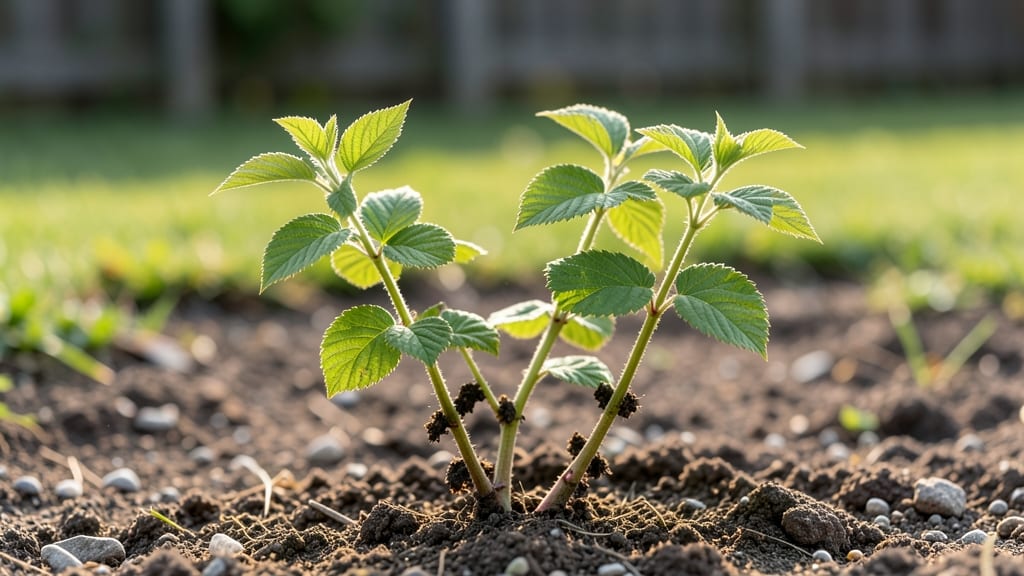
Your raspberry bush sprouts hold the key to next summer's harvest. ✨ The first few weeks after planting determine whether you'll have a thriving cane system or a tangled mess—here's how to set them up for success from day one.
Start with well-draining soil mixed with compost, and plant canes 2 feet apart in full sun. Water deeply twice a week until roots establish, then taper to once a week. The secret to strong growth is consistent moisture without soggy soil—raspberries hate wet feet.
By mid-summer, you'll see thick, green canes shooting up 6 feet tall, each with buds that will become next year's fruit. Prune out weak shoots early to focus energy on the strongest canes, and install trellises now to prevent flopping later.
This method works for both summer-bearing and fall-bearing varieties, and the same principles apply whether you're planting bare-root canes or container-grown starts.
📚 In This Guide
- What you need
- Instructions
- Tips and common mistakes
- Wrapping up and next steps
What you need
- ● Gearing up to prune your raspberry bushes for those juicy, year-round sprouts? Here’s everything you’ll need—from essential tools to handy extras—to tackle the job like a pro! 🌱✂️
How to prune raspberry bushes for maximum sprout growth
Here's the straightforward method I use to keep my raspberry bushes thriving and producing year after year.
✂️ Step 1: Identify and Remove Dead or Weak Canes
Start by examining your raspberry bushes in late winter or early spring, before new growth begins. Look for canes that are completely blackened, brittle, or hollow—these are dead and need removal. I grab each cane near the base and give it a gentle tug. If it comes out easily, it's dead. Healthy canes will resist slightly.
Don't skip this step—removing dead canes prevents disease from spreading to healthy growth. Use clean, sharp pruners to cut dead canes at ground level. I always disinfect my tools with rubbing alcohol between cuts to avoid cross-contamination. You'll see about 20-30% of your canes may need removal, depending on winter conditions.
✂️ Step 2: Prune Overcrowded Canes for Better Airflow
Raspberry bushes produce two types of canes: primocanes (current year's growth) and floricanes (last year's growth that fruited). Aim to keep 6-8 of the strongest, healthiest canes per plant—this ensures proper airflow and sunlight penetration. Thin out any canes that are too close together or rubbing against each other.
Cut overcrowded canes at the base using clean pruners. I like to make my cuts at a 45-degree angle just above a bud to encourage faster healing. Watch for canes that grow in odd directions or lean heavily—these often produce smaller berries and should be removed. After pruning, you'll notice more space between canes, which reduces humidity and fungal issues.
☀️ Step 3: Trim Primocanes to Encourage Bushier Growth
In early summer, focus on the primocanes—the current year's growth that will fruit next year. These canes grow quickly and may need pruning to encourage branching. Look for canes that are taller than 5-6 feet and have few side shoots. Use your pruners to cut the top 6-12 inches off these leggy canes, just above a leaf node.
This pruning trick forces the cane to produce more side shoots, which will bear more fruit next season. I also remove any suckers growing from the base of the plant—they drain energy from the main canes. After trimming, water the base of the plant deeply to help it recover. You'll see new side shoots emerge within 2-3 weeks, signaling successful pruning.
✂️ Step 4: Harvest and Prune After the First Fruit Flush
Once your raspberry bushes produce their first fruit in late summer, harvest the berries promptly to encourage a second flush. After harvesting, inspect the floricanes (last year's canes) that fruited. These canes have served their purpose and should be removed at ground level to make room for new growth.
Use your pruners to cut these spent canes, then dispose of them away from the garden to prevent disease. I always wear gloves for this step—raspberry canes can be prickly! Removing these old canes prevents overcrowding and allows sunlight to reach the new primocanes. You'll notice the bush looks more open and airy, which sets it up for a stronger second harvest.
⏰ Step 5: Light Winter Pruning for Next Year's Growth
In late fall or early winter, do a final light pruning to prepare the bush for dormancy. Remove any remaining dead or diseased canes, and trim back any primocanes that grew too tall during the season. Cut them back to about 4-5 feet to prevent winter damage from heavy snow or ice.
This light pruning helps the plant conserve energy over winter. I also add a 2-3 inch layer of mulch around the base to insulate the roots. Avoid heavy pruning in winter—raspberry bushes need their canes to protect the crown from freezing temperatures. By spring, you'll have a well-structured bush ready to produce another abundant harvest.
Tips & tricks for perfect raspberry bush pruning
Here's what I've learned after years of trial and error—these tricks will help you prune like a pro and keep your raspberry bushes thriving.
Tool Prep Matters: Before you even touch a cane, clean and sharpen your pruners. Dull blades crush stems instead of cutting cleanly, which stresses the plant. I use a small file to sharpen mine annually and wipe them down with rubbing alcohol between cuts in Step 1. This prevents disease transmission and makes your cuts heal faster.
The 45-Degree Angle Secret: When you make those cuts in Step 2, that 45-degree angle isn't just aesthetic—it's functional. The slanted cut prevents water from pooling on the stem, which reduces rot. Make sure you're cutting just above a bud (about 1/4 inch above) to encourage new growth from that exact spot. I always run my finger down the cane first to locate the nearest bud.
Seasonal Timing is Everything: The timing in Steps 1, 3, and 5 is crucial. For Step 1, do it when the bush is still dormant but before buds swell—typically late winter to early spring. In Step 3, wait until you see new growth on primocanes (usually May-June). For Step 5, prune after the first frost but before heavy snowfall. I mark my calendar each year because these windows are short.
Sucker Control Strategy: Those suckers growing from the base in Step 3 are sneaky energy thieves. Remove them completely at the root—don't just cut them back. I use a small trowel to dig down about 2 inches to get the whole root system. This might seem drastic, but it prevents them from coming back stronger. Think of it as giving your main canes a fighting chance for next year's harvest.
Pro Tips for Raspberry Bush Sprouts
- Here's what I've learned after years of trial and error—these tricks will help you prune like a pro and keep your raspberry bushes thriving.
- Tool Prep Matters: Before you even touch a cane, clean and sharpen your pruners.
- The 45-Degree Angle Secret: When you make those cuts in Step 2, that 45-degree angle isn't just aesthetic—it's functional.
Frequently asked questions
Got questions about raspberry bush sprouts?
You’re not alone—pruning can feel tricky, but don’t worry! Here are answers to the most common questions to help you keep your raspberries thriving.
When is the best time to prune raspberry bush sprouts?
For summer-bearing varieties, prune immediately after harvest (late summer) to remove old canes. For fall-bearing types, prune in late winter or early spring before new growth starts. Always aim to cut just above a bud for healthy regrowth.
How do I tell the difference between old and new raspberry canes?
Old canes are wooden, brown, and hollow—they’ve already fruited and should be removed. New canes are green, flexible, and solid (tap them—they’ll sound hollow if old). Keep 5-7 of the healthiest new canes per bush for next year’s harvest.
What if my raspberry bush sprouts aren’t growing after pruning?
Check for these issues: poor soil (amend with compost), overcrowding (thin canes), or pests/disease (inspect leaves for spots or chewed edges). If sprouts still refuse to grow, try fertilizing lightly in spring with a balanced 10-10-10 formula.
Can I use raspberry bush sprouts for anything other than pruning?
Young, tender sprouts
(before they harden) can be eaten raw like asparagus—peel if needed. Older canes can be chopped for mulch or used in compost. Just avoid eating woody, mature canes—they’re tough and bitter!
What’s the ideal temperature for pruning raspberry bushes?
Prune on dry, mild days (50–70°F). Avoid pruning in freezing temps or extreme heat, as stress can invite disease. If you must prune in winter, do it on a warm, sunny day to reduce shock to the plant.
Wrapping up and next steps
Growing a thriving raspberry bush is all about timing, technique, and a little TLC—and you’ve got the tools to make it happen! 🌱 By mastering pruning cycles, removing old canes, and keeping your plants healthy, you’ll unlock year-round harvests of juicy, delicious berries.
Whether you’re a seasoned gardener or just starting, these tips will set you up for success.
Ready to take the next step? Mark your calendar for your first pruning session—spring is the perfect time to get started! Grab your tools, roll up your sleeves, and watch your raspberry bushes thrive like never before. Happy gardening! 🌿✨