
Container Gardens
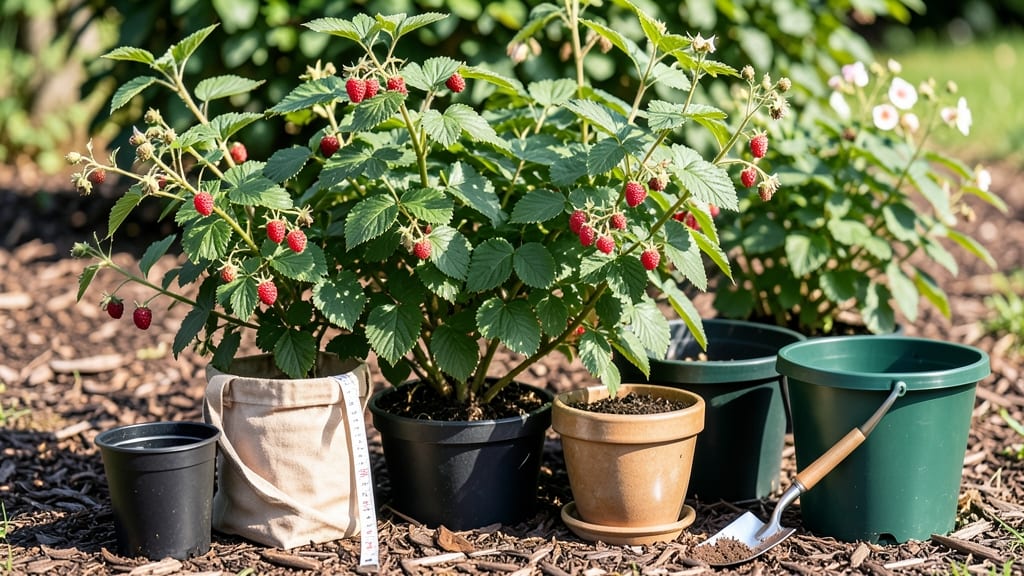
The size pot for your raspberry bush 🍓 determines whether your plant thrives or struggles—root space is everything for those towering canes and juicy berries.
Picture this: You’ve just planted your new raspberry bush, excited for summer harvests, only to watch it wilt by mid-July because the pot was too shallow. That’s a common mistake, and one that’s easy to avoid with the right dimensions.
Raspberry bushes need depth—at least 18 inches for standard varieties—to support their deep root systems, while dwarf types can manage in 12-inch containers. But it’s not just about height: width matters too, because crowded roots mean stunted growth.
In this guide, I’ll break down the exact pot sizes by variety, warn you about the 5 biggest mistakes gardeners make, and show you how to transition your raspberry bush from container to ground planting when the time comes.

Ideal pot size for raspberry bushes by variety (depth & width rules)
Raspberry bushes need the right pot size to grow strong roots and produce abundant fruit. The depth and width of your container directly impact how well your plant thrives—especially since raspberries have extensive root systems.
Standard varieties like Heritage need more space than dwarf types, and summer-bearing vs. fall-bearing types also have different needs.
For most raspberry varieties, the minimum pot size is 18 inches in diameter and 12-18 inches deep. However, larger pots (up to 24 inches wide) give your plant room to grow without becoming root-bound.
Dwarf varieties, like Boyne Gold, can thrive in 12-inch pots but still need depth for root expansion.
Below is a breakdown of ideal pot sizes by variety, including root ball space requirements and how to choose the right container material for your climate.
When selecting a pot, prioritize depth over width—raspberry roots grow downward, not outward. A pot that’s too shallow will strangle root growth and limit your harvest. For example, a Heritage raspberry in a 12-inch-deep pot will struggle, while the same variety in a 20-inch-deep pot thrives.
For dwarf varieties, like Boyne Gold, a 12-inch pot works, but add 3-4 inches of compost at the bottom to mimic deeper soil. This extra organic matter helps roots spread downward naturally. Avoid pots smaller than 10 inches—they’ll cause root-bound stress within a year.
Material matters too. Plastic or fabric pots retain moisture better for hot climates, while terracotta keeps roots cooler in summer. If you’re in a dry climate, opt for self-watering containers to prevent wilting. Always include drainage holes—waterlogged roots rot quickly.
Repotting is key for long-term success. If your raspberry outgrows its pot, upgrade by 2-4 inches in diameter every 2-3 years. Spring is the best time to repot—your plant will establish new roots before summer heat sets in.
Use a well-draining potting mix with 20% perlite or vermiculite to prevent compaction.
Pro tip: Add mycorrhizal fungi to your potting mix to boost root health. These beneficial microbes help raspberries absorb water and nutrients more efficiently, especially in containers. Mix a teaspoon per gallon of soil for best results.
Finally, rotate your pots quarter-turn every 2 weeks to ensure even sunlight exposure. Raspberries grow toward the light, and uneven growth can lead to weak canes or poor fruiting. With the right pot size and care, your raspberry bush will reward you with juicy berries for years.
5 Critical mistakes to avoid when choosing raspberry bush pots
Choosing the wrong pot for your raspberry bush can turn your container garden dreams into a root-bound nightmare. I’ve seen raspberry canes struggle in pots that are too shallow or made from the wrong material, leading to poor fruit production and stressed plants.
The key is understanding how root systems grow and what your bush actually needs to thrive.
First, many gardeners underestimate the depth requirements for raspberry roots. These plants develop extensive root systems that need room to spread—at least 18-24 inches deep for standard varieties. Without enough depth, roots become root-bound, circling the pot and starving the plant of nutrients.
This mistake is especially common with dwarf varieties, which still need proper depth despite their smaller stature.
⚠️ callout warning
Shallow pots (<12" deep) cause root stress—look for roots circling or yellowing leaves as warning signs. Plastic pots dry out faster than fabric grow bags, while terracotta cracks in freezing temps. Always choose pots 20% wider than the root ball and at least 18" deep for mature plants.
Another frequent error is ignoring drainage holes. Raspberry roots rot quickly in soggy conditions, and without proper drainage, your plant will suffer from fungal diseases like phytophthora. I recommend using pots with multiple drainage holes and adding a 1-inch layer of gravel at the bottom to prevent clogging.
If your pot lacks drainage, consider using a self-watering container with a reservoir instead.
Material matters just as much as size. Terracotta pots dry out faster and can crack in freezing weather, while plastic pots retain too much moisture and may not provide enough airflow. My go-to? Fabric grow bags—they breathe well, prevent root circling, and are lightweight for moving.
For cold climates, opt for insulated plastic pots with a protective outer layer to shield roots from temperature swings.
Don’t forget about width requirements. A pot that’s too narrow forces roots to compete for space, leading to stunted growth and fewer berries. For a single raspberry bush, aim for a pot that’s at least 18-24 inches wide.
If you’re growing multiple plants together, increase the width by 12 inches per additional bush to prevent overcrowding. Pro tip: Use a 5-gallon pot for dwarf varieties and 10+ gallons for standard types.
Finally, many gardeners skip the repotting schedule. Raspberry bushes outgrow their pots quickly—you’ll need to repot every 2-3 years to give roots fresh space. Watch for roots growing through drainage holes or soil drying out in hours as signs it’s time to upgrade.
Spring is the best time to repot, giving your plant the growing season to establish before winter. Use a well-draining potting mix with compost to support root health during the transition.