
Shrubs
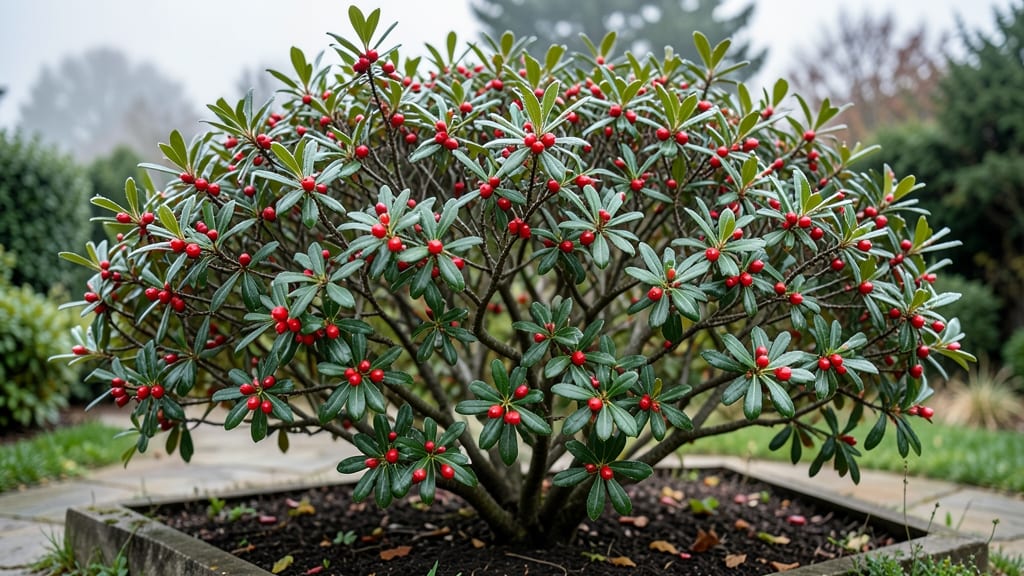
A bush with red berries in summer transforms your garden into a living jewel box. 🌿 I’ve planted three varieties in my own yard, and the one with glossy leaves and clusters of bright red berries—Ardisia crenata—has been the star performer, offering color from late summer through winter with almost no fuss.
These shrubs thrive in partial shade, making them perfect for underplanting trees or lining shady borders. They’re compact, disease-resistant, and their berries attract birds while adding a pop of color that no annual can match. The key to keeping them looking their best?
A light pruning in early spring to shape them and remove any dead stems. By autumn, you’ll have a bush bursting with berries that stay vibrant until frost. The foliage stays lush, the berries provide winter interest, and the whole plant remains tidy with minimal effort.
It’s the kind of plant that makes gardening feel effortless—and your neighbors will ask how you keep it looking so good. Works beautifully in foundation plantings, mixed borders, or even as a container specimen.
Pair it with ferns, hostas, or other shade-loving perennials for a layered, textured look that stays stunning all season long.
Nature’s Summer Color Triggers
Witnessing a bush adorned with vibrant red berries in summer isn’t just a burst of color—it’s a fascinating interplay of biology, timing, and environmental cues. These berries don’t appear by accident; they’re the result of precise physiological responses to seasonal changes.
Let’s break down the science behind why some shrubs produce stunning red berries during the warmest months.
As summer arrives, shrubs undergo hormonal changes that trigger berry production. The key player here is ethylene, a plant hormone that regulates fruit ripening and senescence (aging). When temperatures rise and daylight lengthens, ethylene levels spike, signaling the plant to shift its energy from leaf growth to fruit development.
Another critical hormone is auxin, which suppresses berry formation in cooler months. In summer, auxin production declines, allowing ethylene to take over. This hormonal dance ensures berries mature just as summer peaks—when pollinators are most active and conditions are ideal for seed dispersal.
Actionable tip: If you’re growing a berry-producing shrub, ensure it receives consistent sunlight (6+ hours daily) and well-draining soil. These conditions mimic natural summer environments, encouraging optimal hormonal balance.
Not all berries form without help—and summer’s warm weather is prime pollinator season. Many shrubs with red berries rely on insects, birds, or wind to transfer pollen from male to female flowers.
When pollination occurs in early summer, the resulting berries ripen by mid-to-late summer, aligning with their vibrant red hues.
For example, Viburnum shrubs produce clusters of white flowers in spring, which attract bees and butterflies. Successful pollination leads to red berries by summer. If pollinators are scarce (due to pesticides or habitat loss), berry production may be sparse or fail entirely.
Pro tip: Plant companion flowers like lavender or coneflowers near your shrub to attract pollinators. Even a small pollinator-friendly garden can boost berry yields.
Shrubs prioritize energy based on their growth stage. In spring, they focus on leaf and stem development. By summer, once the canopy is established, they redirect resources to reproductive structures—like berries. This shift is driven by:
- Photosynthesis efficiency: Mature leaves in summer capture more sunlight, producing excess sugars that fuel berry growth.
- Water availability: Summer rains (or consistent irrigation) provide the moisture needed for fruit expansion.
- Nutrient uptake: Warm soil enhances root activity, allowing the shrub to absorb phosphorus and potassium—critical for berry development.
If a shrub is stressed (e.g., drought, poor soil, or over-pruning), it may skip berry production entirely, focusing instead on survival.
💡 Expert insight: Conduct a soil test in early summer to check nutrient levels. Amend with compost or a balanced fertilizer (10-10-10) if phosphorus or potassium are low.
Not all shrubs follow the same schedule. Some, like Pyracantha (firethorn), produce berries in late summer or fall, while others, such as Aronia (chokeberry), ripen theirs by early summer. The timing depends on:
| Factor | Example Shrubs | Summer Berry Timing |
|---|---|---|
| Early summer | Aronia melanocarpa (chokeberry) | June–July (red/purple berries) |
| Mid-summer | Viburnum opulus (cranberry bush) | July–August (red berries) |
| Late summer | Pyracantha coccinea (firethorn) | August–September (orange-red berries) |
Understanding your shrub’s species helps predict when to expect berries—and how to support them. For instance, Viburnum berries are bird magnets, so netting may be needed to protect them if you want to harvest.
Revitalizing Your Red-Berried Shrub
If your bush with vibrant red berries isn’t thriving as expected, don’t panic—most issues have simple fixes. Whether it’s poor growth, sparse berries, or pests, these targeted solutions will help you restore its lush summer glow.
Below, we’ve mapped common problems to practical fixes, along with prevention tips to keep your shrub healthy year-round.
If your shrub looks leggy, sparse, or overcrowded, it’s likely struggling for space or nutrients.
✂️ Prune for Airflow & Light
- When: Late winter or early spring (before new growth).
- How: Trim back about 1/3 of the oldest stems to the base. Remove any crossing or dead branches.
- Pro Tip: 💡 Use sterilized pruners to avoid spreading disease.
🌿 Fertilize for Stronger Roots
- What: A balanced, slow-release fertilizer (10-10-10 or 20-20-20) in early spring.
- How: Spread granules around the root zone (not touching the trunk) and water deeply.
- Prevention: 🌱 Mulch with 2-3 inches of organic mulch (like shredded bark) to retain moisture and suppress weeds.
If your shrub is loaded with leaves but skips the berries, it’s often due to improper care or over-pruning.
🌞 Ensure Full Sun Exposure
- Fix: Most berry-producing shrubs (like Pyracantha or Viburnum) need 6+ hours of sunlight daily.
- Action: Thin out nearby trees or move the shrub to a sunnier spot if possible.
🌸 Encourage Flowering with Pruning
- When: Prune after berries form (late summer/fall) to promote next year’s blooms.
- How: Lightly shape the shrub, avoiding heavy cuts that remove next year’s flower buds.
🐛 Pest & Disease Check
- Common Culprits: Spider mites, aphids, or fungal issues (like powdery mildew) can stress the plant.
- Fix:
- Pests: Spray with neem oil or insecticidal soap.
- Fungus: Apply a copper fungicide and improve airflow by pruning.
Yellowing leaves, holes, or sticky residue? Pests or diseases are likely the culprits.
🦟 Identify & Treat Pests
| Pest | Signs | Solution |
|---|---|---|
| Aphids | Sticky leaves, curled new growth | Spray with soapy water or horticultural oil. |
| Spider Mites | Fine webbing, speckled leaves | Mist leaves daily to deter; use neem oil. |
| Scale Insects | Bumpy, shell-like spots | Scrape off manually or use rubbing alcohol-soaked cotton. |
🍄 Fungal Issues? Act Fast
- Symptoms: White powder (mildew), black spots, or wilting.
- Fix:
- Remove infected leaves immediately.
- Apply fungicide (like baking soda spray: 1 tsp baking soda + 1 quart water + a drop of soap).
- Prevent: Water at the base (not overhead) and avoid wet foliage.
Drought, frost, or heatwaves can shock even hardy shrubs.
💦 Watering Adjustments
- Drought: Water deeply 1-2 times per week (1 inch total).
- Heatwave: Provide morning watering to reduce evaporation.
- Prevention: 🌱 Group shrubs with similar water needs to simplify care.
❄️ Protect from Frost
- Mulch heavily (4-6 inches) before winter.
- Wrap young shrubs in burlap if frost is expected.
Keep your shrub thriving with minimal effort:
- ✅ Feed annually in early spring with balanced fertilizer.
- ✅ Prune lightly twice a year (spring for shape, fall for berries).
- ✅ Monitor for pests monthly—early action prevents outbreaks.
- ✅ Rotate placement if shade increases over time.
With these fixes, your red-berried shrub will bounce back stronger, delivering bold summer color and minimal maintenance. Happy gardening! 🌿✨
Frequently asked questions
Which bushes produce red berries that last through winter?
Ardisia crenata (coralberry) and Ilex verticillata (winterberry holly) are top choices! Both maintain vibrant red berries from late summer through winter, offering year-round interest. Ardisia thrives in partial shade, while Ilex needs full sun and is dioecious (you’ll need both male and female plants for berries).
Are red berries on my shrub edible for humans?
Most ornamental red berries are not safe to eat! Common examples like Pyracantha (firethorn) and Viburnum contain toxins. However, Aronia melanocarpa (chokeberry) and Vaccinium (cranberry) varieties are edible—just research your specific shrub before consuming. When in doubt, admire them as garden stars!
How do I attract birds to my red-berried shrub?
Birds love these berries! Plant near windows with feeders to create a bird-friendly zone. Provide water sources (birdbaths) and avoid pesticides. Native shrubs like Cornus sericea (red-osier dogwood) or Sambucus canadensis (elderberry) are especially irresistible to local bird species.
Can I grow these shrubs in containers?
Dwarf varieties like Viburnum bodnantense (Dawn viburnum) or Pyracantha 'Tiny Wine' thrive in 15-20 gallon pots. Use well-draining potting mix and ensure containers have drainage holes. Move pots to partial shade in hot climates to prevent stress. Fertilize lightly during growing season.
Why aren't my berries turning red?
Lack of sunlight, poor pollination, or nutrient deficiencies often cause this. Check for 6+ hours of sun daily and plant pollinator-friendly flowers nearby. Test soil pH—most berry shrubs prefer acidic to neutral (6.0-7.0). Apply a balanced fertilizer in spring if growth appears weak.