
Shrubs
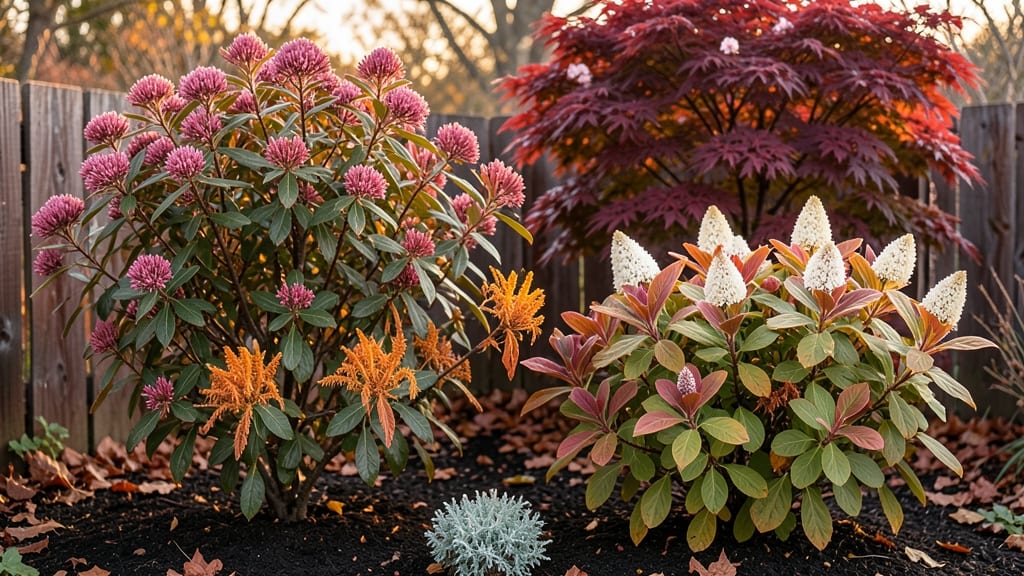
Fall flowering bushes turn your yard into a late-season showstopper with minimal work from you. 🌿 I’ve relied on abelia, hydrangeas, and viburnum to keep color going long after summer’s over—some even bloom into frost.
The secret isn’t just picking the right plants, but knowing when to prune, how to protect them from early cold snaps, and which varieties play well together.
These bushes thrive with one late-winter pruning instead of the constant trimming other shrubs demand. My abelia, for example, blooms on new wood, so I cut it back in February and watch purple flowers appear by September.
Hydrangeas? They reward patience—feed them in early fall, and they’ll reward you with bold blooms until Thanksgiving. Even my first-year viburnum surprised me with clusters of berries and flowers.
By next spring, you’ll have a landscape that stays vibrant while others go dormant. The key is fall soil prep—add compost now, and roots will soak up nutrients for next year’s blooms.
Plus, these bushes handle winter better than most, so you skip the fuss of wrapping or mulching like you would with tender perennials.
Works for small yards, large borders, or even containers—just pick varieties that match your zone. Here’s how to choose, plant, and keep them flowering year after year with almost no effort.
📚 In This Guide
- What you need
- Instructions
- Tips and common mistakes
- Wrapping up and next steps
What you need
- ● Fall flowering bushes: Choose from varieties like Hydrangea paniculata, Abelia, Weigela, or Smoke bush (Cotinus). Buy 3–5 mature plants (3–5 ft tall) for a full, layered look.
- ● High-quality potting soil or garden loam: 2–3 cubic yards (for in-ground planting) or 1–2 bags (for containers). Opt for well-draining, slightly acidic soil (pH 5.5–6.5) to encourage vibrant blooms.
- ● Organic compost or slow-release fertilizer: 5–10 lbs (10-10-10 or 5-10-5 NPK ratio) to boost root growth and flower production.
- ● Mulch (pine bark or shredded leaves): 2–3 inches to retain moisture and regulate soil temperature.
- ● Garden trowel or spade: For digging holes 2–3 times wider than the root ball.
- ● Pruning shears or loppers: Bypass-style (for clean cuts) with sharp, sterilized blades to reduce disease risk.
- ● Garden hose or watering can: With a spray nozzle for gentle watering.
- ● Gloves (heavy-duty): To protect hands from thorns (e.g., Abelia) and sharp tools.
- ● Measuring tape: To ensure proper spacing (3–6 ft apart, depending on bush maturity).
- ● Soil amendment: Perlite or sand (1 part) mixed into clay-heavy soil for better drainage.
- ● Slow-release fertilizer spikes: 2–4 per bush for seasonal nutrient boosts.
- ● Container or planter: 15–20 gallon (for patio planting) with drainage holes.
- ● Plant support stakes: 3–4 ft tall (for tall varieties like Hydrangea to prevent flopping).
- ● Disease-resistant spray: (e.g., neem oil) to preempt fungal issues in humid climates.
How to select and plant fall flowering bushes for season-long beauty
Here's my go-to method for choosing and planting bushes that burst with color in autumn while requiring almost no pruning.
🌿 Step 1: Choose the Right Varieties for Your Climate
Pick bushes that thrive in your hardiness zone and bloom specifically in fall. My top recommendations are Oakleaf Hydrangea (zone 4-9), Smoke Bush (zone 4-8), and Coral Bells (zone 3-9). These varieties deliver vibrant foliage and flowers from September through November without demanding constant attention.
Check the mature height and spread—most fall bloomers grow 6-10 feet tall and 4-8 feet wide, so plan spacing accordingly. I always plant them where they won't be crowded by other shrubs or trees. The key is giving them room to grow without competing for sunlight or nutrients.
☀️ Step 2: Select the Perfect Planting Location
Fall flowering bushes need full sun to partial shade—typically 4-6 hours of direct sunlight daily. A spot with morning sun and afternoon shade works best for most varieties, especially in hotter climates. If planting in a windy area, choose a sheltered location to protect the delicate fall blooms.
Test the soil pH before planting. Hydrangeas, for example, need acidic soil (pH 5.5-6.2) for their signature blue or pink flowers, while Smoke Bush thrives in neutral to slightly alkaline soil (pH 6.5-7.5). I always adjust the soil with amendments if needed—just mix in 2-3 inches of compost or sulfur for acid-loving plants before planting.
🪴 Step 3: Dig the Hole and Plant Properly
Dig a hole twice as wide as the root ball but no deeper—this encourages roots to spread outward rather than settling too low. Gently remove the bush from its container and loosen any circling roots with your fingers. You want the roots to grow outward naturally, not stay compacted in a ball.
Place the bush in the hole so the top of the root ball sits level with the surrounding soil. Fill the hole with native soil mixed with 1-2 inches of compost, tamping lightly as you go to remove air pockets. Water deeply to settle the soil and eliminate gaps. The soil should feel moist but not soggy—you’ll know it’s right when water drains away within a few minutes.
💧 Step 4: Water and Mulch for Long-Term Health
Water the newly planted bush once a week for the first month, providing 1-2 gallons of water per plant each time. After that, water every 10-14 days unless you experience a dry spell. The goal is to keep the soil consistently moist but not waterlogged—fall bloomers hate soggy roots.
Spread 2-3 inches of mulch around the base, keeping it 2-3 inches away from the trunk to prevent rot. I use wood chips or shredded bark because they break down slowly and improve soil quality over time. Mulch helps retain moisture, regulate soil temperature, and suppress weeds—all while keeping the roots happy.
✂️ Step 5: Minimal Pruning for Maximum Impact
Fall flowering bushes need very little pruning—just a few simple steps to keep them looking their best. In late winter or early spring, trim back any dead, damaged, or crossing branches using clean, sharp pruners. Cut just above a bud or outward-facing branch to encourage healthy growth and airflow.
After the first frost, you can lightly shape the bush by removing no more than 10-15% of the foliage to maintain its natural form. Avoid heavy pruning in fall—it removes next year’s blooms and stresses the plant. The less you touch it, the more vibrant the fall display will be. Trust the process, and you’ll have a stunning, low-maintenance shrub for years to come.
Tips & tricks for perfect fall flowering bushes
Here's what I've learned after planting dozens of these beauties—simple tricks that make all the difference for vibrant fall color with almost no work.
Variety Selection Tip: When choosing between Oakleaf Hydrangea, Smoke Bush, and Coral Bells, consider your climate's last frost date. Coral Bells (zone 3-9) are the most cold-hardy and will bloom reliably even in early autumn freezes, while Smoke Bush (zone 4-8) offers the longest bloom season but needs slightly warmer protection. I always plant at least one of each for layered color—early blooms from Coral Bells, mid-season from Hydrangeas, and late-season drama from Smoke Bush.
Soil Prep Strategy: Don't skip the soil test! I've seen hydrangeas turn green instead of blue because the soil was too alkaline—simply adding sulfur (following package instructions) can change the color completely. For Smoke Bush, which thrives in neutral soil, I mix in 1 part compost to 3 parts native soil when planting. This balance prevents nutrient competition that can stress fall bloomers.
Planting Depth Secret: The top of the root ball should sit exactly level with the surrounding soil—never buried or mounded. I use a small wooden stake to mark the original soil line on the container before planting. Burying too deep can suffocate the plant, while planting too high creates stress points that weaken fall blooms. After filling the hole, press down gently with your hands to eliminate air pockets without compacting the soil.
Watering Wisdom: Those first 1-2 gallons per week are critical for root establishment. I set a timer on my irrigation system to deliver water slowly at the base of the plant (not overhead) to prevent fungal diseases. After the first month, I switch to deep watering every 10-14 days—this encourages roots to grow deeper, making the bushes more drought-resistant for their fall display.
Pro Tips for Fall Flowering Bushes
- Here's what I've learned after planting dozens of these beauties—simple tricks that make all the difference for vibrant fall color with almost no work.
- Variety Selection Tip: When choosing between Oakleaf Hydrangea, Smoke Bush, and Coral Bells, consider your climate's last frost date.
- Soil Prep Strategy: Don't skip the soil test!
Frequently asked questions
Got questions about adding fall-flowering bushes to your landscape?
Here are some of the most common ones—and their answers—to help you make the best choices for your yard.
When is the best time to plant fall-flowering bushes?
Plant them in early spring or early fall (4–6 weeks before your first frost) for the best root establishment. Fall planting is ideal because cooler temps reduce stress, and bushes can focus on growing roots instead of leaves. Just make sure to water them well after planting!
How long do fall-flowering bushes take to bloom?
Most fall bloomers, like Abelia, Hydrangea, or Camellia, take 1–3 years to reach full maturity and bloom reliably. Patience pays off—once established, they’ll reward you with stunning color for years! Younger bushes may produce fewer flowers but will improve each season.
Can I prune fall-flowering bushes in autumn?
It depends! Prune after flowering (late fall/winter) for most varieties, like Abelia or Weigela, to avoid cutting off next year’s blooms. However, Hydrangeas (like Oakleaf) can be lightly trimmed in early fall to shape them. Always use clean, sharp tools and avoid heavy pruning.
Are fall-flowering bushes deer-resistant?
Some are more deer-resistant than others. Abelia, Butterfly Bush (Buddleia), and Camellia are often less appealing, while Hydrangeas or Viburnum may get nibbled. For extra protection, add deer repellent or plant them near deer-deterrent plants like Lavender or Rue.
Do fall-flowering bushes need extra care in cold climates?
Most are hardy, but tender varieties (like Camellias) may need winter protection in zones below 7. Mulch heavily (3–4 inches) and wrap young plants in burlap if temps drop below 10°F. Evergreens like Oakleaf Hydrangea benefit from a light frost cloth to prevent winter burn.
What’s a low-maintenance alternative to fall-flowering bushes?
If you want even less upkeep, try Dwarf Fothergilla (fragrant fall blooms + colorful foliage) or Cotoneaster (tough, berry-producing, and drought-tolerant). Shrub roses like Knock Out® also bloom in fall with minimal pruning—just deadhead spent flowers!
Wrapping up and next steps
Fall flowering bushes are the perfect way to keep your garden vibrant without the hassle of constant upkeep! From hardy Hydrangeas to striking Cotoneasters, these beauties offer seasonal color with minimal pruning—ideal for busy gardeners.
Whether you’re a beginner or a seasoned pro, adding these bushes ensures your outdoor space stays lively and low-maintenance.
Ready to transform your garden? Start small—pick one or two varieties, plant them in sunny spots, and enjoy the rewards! 🌿🍂 Check out our planting tips to get growing today.