
Diseases
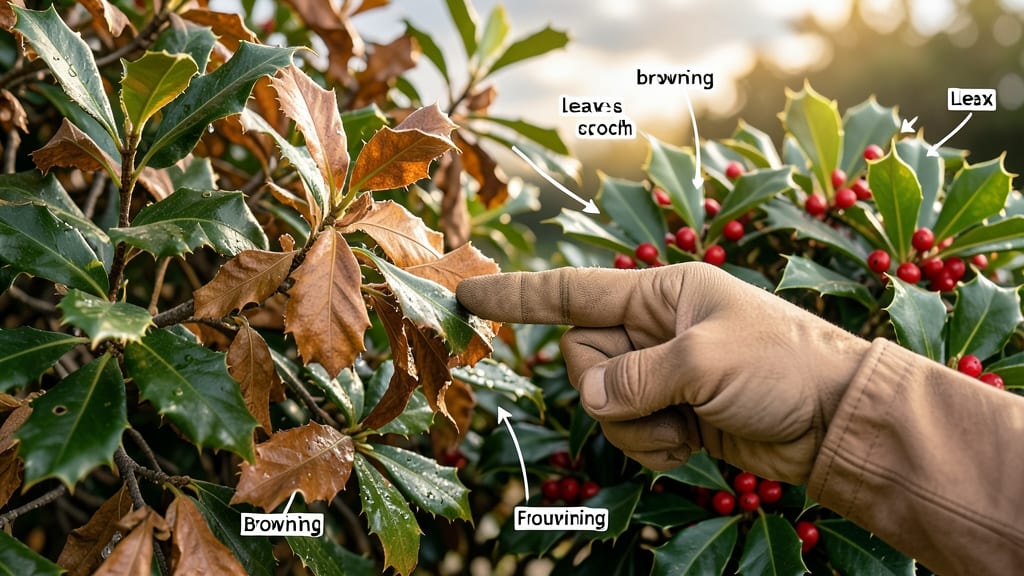
When your holly bush turns brown, it’s usually screaming for help—not just from pests or disease, but from something simpler you might be missing. 🌿 I’ve nursed back more than a few holly bushes from that crispy, sad state, and the fix often comes down to one overlooked detail in care.
The good news? Most browned holly leaves aren’t a death sentence—they’re just telling you what’s wrong.
Brown holly leaves almost always point to one of three culprits: too much sun (especially in hot afternoons), not enough water (or the opposite—overwatering that drowns roots), or a pest invasion like spider mites hiding on the undersides.
Iron chlorosis can sneak in too, turning leaves yellow between the veins before they brown. The first step? Check the soil moisture with your finger—if it’s dry 2 inches down, that’s your answer.
Reviving your holly is easier than you’d think. Prune back the brownest branches in late winter or early spring, then give the roots a deep drink if the soil’s dry.
A handful of iron chelate (for chlorosis) or neem oil spray (for pests) works wonders. Within weeks, you’ll see fresh green growth pushing out—proof the bush is still strong.
Here’s the secret most gardeners miss: Holly bushes hate soggy feet. If your soil drains poorly, amend it with compost or sand to keep roots happy. Once you fix the root cause, your holly will bounce back—often faster than you expect.
Let’s get it back to that glossy, deep green we all love.
Root Causes Of Holly Browning
Holly bushes turning brown can be frustrating, but understanding the why behind it is the first step to revival. Below, we break down the most common culprits—each with a clear scientific explanation and actionable insights to help you diagnose the issue accurately.
Holly bushes are hardy, but extreme conditions can push them over the edge. Heat, drought, and cold snaps all contribute to browning by disrupting cellular processes in the leaves.
- Drought Stress 💧: When soil moisture drops below 30%, holly leaves lose turgor pressure, causing edges to crisp and turn brown.
This is especially common in sandy or well-drained soils where water retention is poor. - Heat Scorch 🔥: Prolonged exposure to temperatures above 90°F (32°C) can lead to oxidative damage in leaves, turning them brown and papery.
This often starts on the sun-exposed sides of the bush. - Winter Burn ❄️: Cold winds combined with low humidity in winter can dry out evergreen holly leaves, causing a bronzing or browning effect. This is more common in exposed locations with poor windbreaks.
Pro Tip: 💡 Mulch heavily (3–4 inches) with organic matter (like shredded bark) to retain moisture and insulate roots from temperature swings.
If browning appears patchy, irregular, or accompanied by spots, a pathogen is likely at play. Holly bushes are susceptible to several foliar diseases that thrive in moist, humid conditions.
| Disease | Symptoms | Cause |
|---|---|---|
| Leaf Spot (Cercospora) | Brown, target-like spots with yellow halos; often on lower leaves. | Fungal spores spread in wet, warm conditions (75–85°F). |
| Anthracnose | Sunken, brown lesions with dark margins; can cause defoliation. | Fungal pathogen (Gloeosporium_) thrives in spring rains. |
| Bacterial Leaf Scorch | Edge browning with vein clearing (veins stay green while tissue dies). | Xylella fastidiosa* bacteria clogs water-conducting vessels in leaves. |
Pro Tip: ✨ Prune infected branches 6–12 inches below the damage (fungi often linger on old leaves) and sterilize pruners with 70% isopropyl alcohol to prevent spread.
Insects can sap nutrients from holly leaves, leading to browning, curling, or skeletonization (where only veins remain). Common culprits include:
- Spider Mites 🕷️: Tiny pests that pierce cells, causing stippling and bronzing (especially in dry conditions). Look for fine webbing on undersides of leaves. - Scale Insects 🐛: Sap-sucking invaders that excrete honeydew, attracting sooty mold (a black fungal growth).
Infested leaves turn yellowish-brown and crispy. - Holly Leafminer 🐛: Larvae tunnel between leaf layers, creating blistered, brown patches.
Pro Tip: 🔥 Blast pests off with a strong spray of water (early morning) or use neem oil (1 tsp per quart of water) for organic control.
Holly bushes are not heavy feeders, but soil imbalances can lead to browning. The most common deficiencies include:
- Iron (Fe) Deficiency 🔴: Causes interveinal chlorosis (yellowing between veins) that progresses to browning. Common in alkaline soils (pH > 7.0). - Magnesium (Mg) Deficiency 🌿: Older leaves develop brown patches between veins first, then spread.
Often seen in sandy or leached soils. - Potassium (K) Deficiency ⚡: Leaves turn brown at tips and margins, with weak growth. Common in overwatered or cold-stressed plants.
Pro Tip: 💪 Test your soil (pH and nutrient levels) and amend with:
- Iron chelate (for Fe deficiency)
- Epsom salt (magnesium sulfate) for Mg
- Wood ash (for potassium, but use sparingly—holly prefers acidic soil)
Overzealous gardening can burn holly leaves faster than pests or disease. Watch for:
- Fertilizer Burn 🧪: Excess salt buildup (from synthetic fertilizers) disrupts root function, causing leaf edges to crisp and brown.
- Herbicide Drift 🌱: Glyphosate or broadleaf herbicides can bleach or brown holly foliage if sprayed nearby.
- Salt Spray ❄️: In winter, road salt runoff can accumulate in soil, leading to osmotic stress and browning.
Pro Tip: 🎯 Flush soil with water after fertilizing to prevent salt buildup, and avoid herbicides within 10 feet of holly bushes.
Sometimes, the issue isn’t biological—it’s mechanical. Check for:
- Wind Scorch 🌪️: High winds desiccate leaf edges, causing brown, papery margins.
- Hail or Frost Damage ❄️: Bruising from ice or hail can turn leaves black or brown in patches.
- Animal Browsing 🦌: Deer or rabbits may chew leaves, leaving ragged, browned edges.
Pro Tip: 🌡️ Protect young holly bushes with burlap windbreaks in exposed areas, and install deer fencing if browsing is an issue.
Revive Your Holly Bush Now
Seeing your once-vibrant holly bush turn brown can feel like a gut punch—especially when you’ve put care into nurturing it. 🌿 But don’t lose hope! The good news is that most brown holly issues are fixable with the right approach.
Below, we’ll break down the most common causes of browning leaves or stems and pair them with simple, actionable solutions. Think of this as your step-by-step guide to bringing your holly bush back to life.
If your holly bush is sitting in soggy soil, its roots may be suffocating, leading to yellowing or browning leaves. Overwatering is a sneaky culprit—too much moisture cuts off oxygen, causing root rot and stress.
💧 How to Fix It:
- Check the soil: Stick your finger 2 inches into the soil. If it’s damp, wait before watering again.
- Improve drainage: Amend the soil with compost or perlite to help water flow through more easily.
- Adjust watering habits: Water deeply but less frequently—aim for about 1 inch of water per week (including rain).
- Raise the bed (if needed): If your holly is in a low spot, consider elevating the soil or planting it on a slight mound.
💡 Pro Tip: If root rot is severe, you may need to trim back affected roots and repot the bush in fresh, well-draining soil.
Holly bushes love sunlight, but too much intense heat—especially in dry conditions—can scorch leaves, turning them brown and crispy at the edges. This is common in late summer when temperatures spike.
☀️ How to Fix It:
- Provide afternoon shade: If your bush is in full sun, consider adding temporary shade cloth (30-50% coverage) during peak heat hours (11 AM–3 PM).
- Water deeply in the morning: Wet the soil thoroughly before the sun gets too harsh to help the plant retain moisture.
- Mulch generously: Spread 2–3 inches of mulch around the base (but not touching the trunk) to keep roots cool and retain moisture.
- Avoid fertilizing in extreme heat: Fertilizer can stress the plant further; wait until temperatures cool.
✨ Prevention Tip: If you’re planting a new holly, choose a variety suited to your climate (e.g., Ilex opaca for hot, humid regions or Ilex × ‘Nellie R. Stevens’ for milder areas).
Fungal infections thrive in humid, shady conditions and can cause brown spots, wilting, or a powdery coating on leaves. Left unchecked, they weaken the plant and spread quickly.
🍄 How to Fix It:
- Prune infected leaves: Remove and destroy (don’t compost!) any leaves with brown spots or fungal growth to prevent spread.
- Apply fungicide: Use a copper-based or neem oil spray (follow label instructions) every 7–10 days until the issue clears.
- Improve airflow: Thin out dense branches or nearby plants to let air circulate around the holly.
- Water at the base: Avoid overhead watering, which can splash spores onto leaves.
🎯 Prevention Tip: Space holly bushes at least 3–5 feet apart to reduce humidity around the foliage.
Tiny pests like spider mites or scale insects suck sap from leaves, causing browning, stippling, or sticky residue (honeydew). If you spot webbing or tiny black/brown bugs, pests are likely the culprit.
🐜 How to Fix It:
- Blast off pests: Spray the bush with a strong stream of water to dislodge mites or scale.
- Use insecticidal soap: Mix 2 tablespoons of mild dish soap with 1 quart of water and spray thoroughly (reapply every 5–7 days).
- Introduce beneficial insects: Ladybugs or lacewings prey on aphids—release them near the bush or plant companion flowers like marigolds to attract them.
- Apply horticultural oil: For stubborn infestations, use oil-based sprays (like neem oil) in early spring or fall.
💡 Pro Tip: Check the undersides of leaves where pests love to hide. Early detection = easier treatment!
Brown, brittle leaves can signal a lack of essential nutrients, like nitrogen, iron, or magnesium. Poor soil quality or over-farming can deplete these over time.
🍂 How to Fix It:
- Test your soil: A simple soil test kit (available at garden centers) will tell you what’s missing.
- Add organic matter: Mix in compost or aged manure to improve soil structure and nutrient availability.
- Fertilize appropriately:
- For nitrogen deficiency (yellowing leaves): Use a balanced fertilizer (10-10-10) in early spring.
- For iron/chlorosis (yellow between veins): Apply iron chelate or use a sulfur-based amendment.
- Avoid over-fertilizing: Too much fertilizer can burn roots—follow package instructions closely.
🌿 Prevention Tip: Mulch annually with compost to slowly enrich the soil and prevent nutrient loss.
With these targeted fixes, your holly bush should start showing signs of recovery within a few weeks. The key is acting quickly—don’t wait until the problem spreads! 🌟 For persistent issues, consult a local nursery or extension service for a soil/pest analysis. Happy gardening!
Frequently asked questions
Why are my holly bush leaves turning brown only on the edges?
Edge browning usually signals drought stress or heat scorch. Holly leaves lose moisture quickly when soil is dry or temperatures exceed 90°F (32°C). Check soil moisture 2 inches down—if dry, water deeply and mulch with 2-3 inches of organic matter to retain moisture. Morning watering helps prevent evaporation.
Can I save my holly bush if half the leaves are already brown?
Yes! Prune back 50% of the browned branches in late winter/early spring to encourage new growth. Focus on removing crispy or dead leaves (they won’t recover). Improve care by adjusting watering (deep but infrequent) and testing soil pH—holly prefers acidic soil (pH 5.0-6.5). With proper care, new green leaves will emerge within 4-6 weeks.
How do I tell if my holly bush has a fungal disease vs. pest damage?
Fungal issues show as spots with yellow halos or powdery coatings, while pests cause stippling, webbing, or honeydew residue. Check leaf undersides for tiny bugs or eggs. Fungal spores spread in wet conditions, so improve airflow and avoid overhead watering. For pests, use neem oil spray (1 tsp/quart of water) or insecticidal soap.
Is it too late to fix my holly bush if it's been brown for months?
Not necessarily! Even long-term browning can improve with corrective care. Start by pruning all dead branches (cut to live wood). Test soil for nutrient deficiencies (especially iron or magnesium) and amend with compost. If roots are healthy, new growth should appear within 2-3 months. For severe cases, consult a local extension service for a soil analysis.
Will fertilizing help my holly bush recover from browning?
Only if the browning stems from nutrient deficiency—over-fertilizing can worsen stress! First, test soil pH and nutrients. If deficient, use a balanced fertilizer (10-10-10) in early spring, but avoid fertilizing during heatwaves. For iron chlorosis (yellow between veins), apply iron chelate instead. Always water thoroughly after fertilizing to prevent root burn.