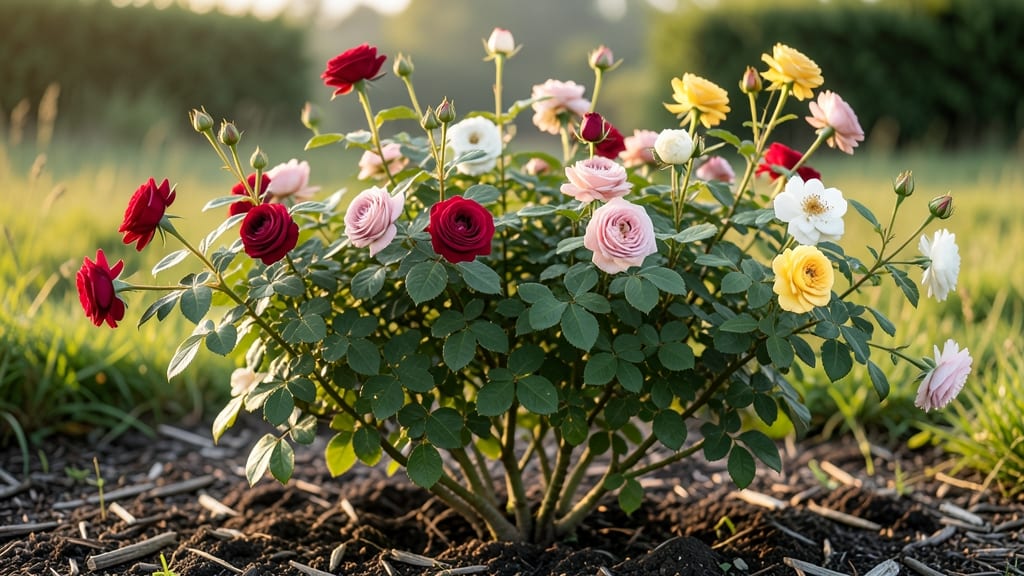
Rose bushes bloom for anywhere from two weeks to six months, depending on the variety and how you care for them.
Wondering why your 🌹 seem to have bursts of beauty followed by long periods of dormancy? The blooming duration of roses varies dramatically by type, care, and even your local climate—here’s the science behind it.
Hybrid teas, for example, often produce one spectacular bloom per stem that lasts about 7-10 days, while climbers like 'New Dawn' can flower continuously for three months or more if pruned correctly.
In this guide, you’ll learn how to read your roses’ blooming signals, adjust care for your zone, and extend their flowering season—no matter where you garden.
Rose blooming seasons: how long each variety stays in flower
If you've ever wondered why your hybrid tea roses produce stunning blooms for weeks while your climbing roses seem to have brief but intense displays, the answer lies in their genetic blooming patterns.
Roses aren't one-size-fits-all when it comes to flower duration—some varieties bloom continuously for months, while others have just one glorious 4-6 week window each year. Understanding these differences helps you plan your garden for year-round color or strategic planting to extend your blooming season.
The key factor separating rose varieties is whether they're repeat bloomers or once-blooming types. Repeat bloomers like floribundas and grandifloras produce multiple flushes of flowers throughout the growing season, while old garden roses (like Alba or Bourbon varieties) typically bloom just once per year.
Even within repeat bloomers, duration varies—some may give you 8-12 weeks of near-continuous flowers, while others need careful pruning to encourage second and third flushes.
Here's where it gets interesting: climbing roses often have the longest individual bloom periods (up to 6 weeks per flush), but they may only produce 2-3 flushes per season. Meanwhile, shrub roses like Knock Out® varieties can bloom continuously from spring until frost with minimal care.
Your local USDA hardiness zone also plays a role—roses in Zone 7+ often enjoy longer blooming seasons than those in Zone 5 or colder, where early frosts cut seasons short.
Let's break down the blooming duration for the most popular rose types so you can choose varieties that match your garden's timeline and your desire for continuous color. The comparison below shows typical bloom durations, seasonal patterns, and care tips to maximize each variety's potential.
Rose Type
Bloom Duration
Flushing Pattern
Seasonal Notes
Care Tip
Hybrid Teas
4-6 weeks per flush
2-4 flushes/year
Peak spring/summer; needs deadheading
Prune after each flush
Floribundas
6-10 weeks continuous
3-5 flushes/year
Longer season than hybrid teas
Light pruning encourages clusters
Climbing Roses
5-6 weeks per flush
2-3 flushes/year
Late spring to early fall
Prune to encourage lateral canes
Shrub Roses
8-12 weeks continuous
Near-continuous blooms
Knock Out® blooms all season
Minimal pruning; drought-tolerant
Old Garden Roses
4-5 weeks once/year
Single flush (spring)
Fragrant, historic varieties
No deadheading; natural habit
Grandifloras
6-8 weeks per flush
3-4 flushes/year
Hybrid of hybrid teas + floribundas
Deadhead spent blooms promptly
Climate Zones and their impact on rose blooming timing
Your USDA hardiness zone plays a bigger role in rose blooming than you might think. Roses in Zone 5 (like Chicago) often bloom 2-3 weeks later than those in Zone 9 (like Los Angeles).
This delay happens because colder zones need warmer soil to trigger growth, while hotter zones can start earlier but may struggle with heat stress after blooming begins.
Frost dates are the real game-changer. In Zones 3-6, early spring frosts can delay blooming by 4-6 weeks compared to frost-free zones. Meanwhile, roses in Zones 8-10 may experience continuous blooming if temperatures stay mild, but extreme heat (above 95°F) can cause buds to drop prematurely.
🌡️ Zones 3-5: Blooms late May-July due to late frost dates and cooler soil
🌿 Zones 6-7: Peak blooming June-August with repeat cycles if deadheaded
☀️ Zones 8-9:Year-round blooms possible with mild winters and consistent watering
🔥 Zones 10+:Heat stress shortens blooming; shade cloth extends season
Heat tolerance varies by variety. David Austin English roses thrive in Zones 5-8 but may need afternoon shade in Zone 9 to prevent bud drop. Meanwhile, Knock Out® roses handle Zone 4-10 heat better due to their disease-resistant foliage.
To extend blooming in cold zones, plant late-blooming varieties like 'The Fairy' (Zone 3-9) and use row covers to protect buds. In hot zones, mulch with straw or wood chips to keep roots cool and water deeply at dawn to reduce evaporation.
Even in ideal zones, pruning timing matters. In Zones 6-7, prune in early March to encourage early blooms, while in Zones 8-9, wait until late February to avoid heat-induced stress.
Remember: Climate isn't destiny. With the right variety and care, you can coax 6-8 weeks of blooms in almost any zone—just adjust your approach based on your local last frost date and summer highs.