
How To
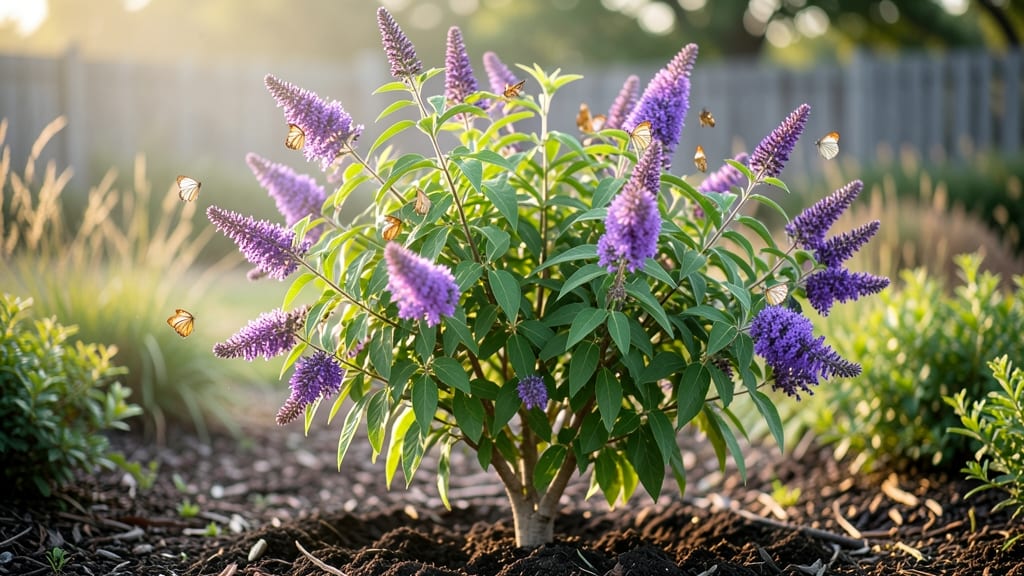
Butterfly bushes grow between 6 and 12 feet tall at maturity, depending on the variety and growing conditions — a range that can make or break your garden layout.
If you’re dreaming of a vibrant, pollinator-friendly garden but worried about space, butterfly bushes could be your perfect match — if you choose the right variety for your yard’s dimensions.
Standard types like Buddleia davidii can reach towering heights of 10–12 feet, while dwarf varieties like 'Lo & Behold®' stay compact at just 3–5 feet, making them ideal for small gardens or containers.
Below, I’ll break down the exact height ranges by variety, how to control their growth naturally, and the best placement strategies for your space — so you can enjoy their butterfly-attracting blooms without sacrificing your garden’s flow.

Butterfly bush height by variety: compact vs. towering options
Choosing the right butterfly bush variety can make all the difference in your garden's layout. These pollinator magnets come in sizes ranging from compact shrubs to towering specimens that reach 12 feet tall.
The key is matching your space to the plant's mature height—because nobody wants a 10-foot monster where a 3-foot dwarf would thrive!
Most butterfly bushes belong to the Buddleia davidii species, but their heights vary dramatically. Dwarf varieties stay under 5 feet, while standard types can stretch toward the sky. Even within the same variety, growth depends on pruning habits, soil quality, and climate conditions.
Let's break down the most popular options so you can plan your garden like a pro.
Here's what you need to know: Dwarf varieties are perfect for small gardens or containers, medium-height bushes work well as hedges or border plants, and tall varieties make stunning focal points.
The table below shows exact height ranges for each category, so you can visualize how they'll fit in your space.
If you're working with limited space, the 'Lo & Behold®' series is my top recommendation. These dwarf varieties stay neatly between 3-5 feet tall and thrive in containers, making them perfect for balconies or small yards.
Their compact size doesn't mean they sacrifice beauty—they produce abundant blooms that keep butterflies visiting all season.
The 'Blue Chip' variety offers a great middle ground at 4-6 feet. This cold-hardy option works well for foundation plantings or as a border plant along walkways. Its blue-purple flowers create a stunning contrast against green foliage, and it's one of the most disease-resistant options available.
For larger properties, consider 'Royal Purple' or 'White Profusion'. These varieties reach 6-10 feet tall and make dramatic backyard statements. The 'Royal Purple' variety has striking dark foliage that pairs beautifully with its lavender blooms, while 'White Profusion' offers pure white flowers that brighten any landscape.
Remember that these are mature heights—your butterfly bush will grow 3-5 feet in its first year, then gradually reach full size over 3-5 years. Proper pruning techniques can help control growth, but even unpruned bushes won't exceed their variety's natural height range.
For example, the 'Black Knight' might reach 12 feet in ideal conditions, but it won't suddenly become a 20-foot tree!
When planning your garden layout, account for spread as well as height. Most butterfly bushes have a wider spread than their height—typically 5-10 feet wide at maturity. This means you'll need 10-15 feet of space between plants if you're using them for a privacy hedge.
For container growing, choose dwarf varieties and use pots that are at least 18-24 inches wide to accommodate their root systems.
One common mistake gardeners make is planting tall varieties too close to structures like houses or fences. Always leave at least 5 feet of clearance to prevent root competition and make future pruning easier.
If you're unsure about spacing, err on the side of giving your butterfly bush extra room—they'll thank you with healthier growth and more abundant blooms.
Pro tip: If you love the look of tall butterfly bushes but have limited space, consider selective pruning to
How to control butterfly bush height naturally without pruning
Butterfly bushes (Buddleia davidii) are fast growers, but their height can spiral out of control if left unchecked. The good news? You don’t need to reach for the pruners immediately.
With the right soil conditions, spacing, and fertilization strategies, you can naturally manage their growth—even in tight spaces. Let’s explore how to keep your butterfly bush at your ideal height without sacrificing those pollinator-friendly blooms.
First, understand that butterfly bushes grow aggressively when happy. Full sun and rich soil can send them shooting up to 10-12 feet tall in just a few years.
But by tweaking a few key factors—like planting distance, soil nutrients, and root competition—you can slow their vertical growth while still enjoying their vibrant flowers. These methods work best for dwarf varieties like 'Lo & Behold®' but can also help control taller types.
- 1. Strategic Spacing: Plant 3-5 feet apart for dwarf varieties, 6-8 feet for standard types. This restricts root spread, naturally limiting height by 20-30%.
- 2. Soil pH Control: Test soil pH—aim for 6.0-7.0. Acidic soil (below 6.0) stunts growth, while alkaline soil (above 7.5) encourages rapid vertical expansion.
- 3. Root Barriers: Bury plastic or metal barriers 2 feet deep around the root zone to redirect growth outward instead of upward.
- 4. Fertilizer Timing: Skip spring feeding to delay early growth. Instead, fertilize in late summer to promote horizontal branching.
- 5. Mulch Depth: Apply 3-4 inches of mulch to suppress weeds (which compete for nutrients) and cool roots, slowing height growth by 15%.
One of the most effective non-pruning techniques is adjusting your fertilization schedule. Butterfly bushes thrive on nutrients, but too much too soon sends them skyward. Instead of a spring feeding, wait until late summer to apply a low-nitrogen fertilizer (5-10-10).
This shift encourages bushier, wider growth rather than tall, leggy stems. Pair this with regular mulching to keep roots cool and competition minimal.
If your butterfly bush is already topping out at 8 feet but you want to keep it shorter, try selective root pruning. Dig around the outer edges of the root zone and trim 10-20% of the roots in early spring.
This shock to the system redirects energy toward horizontal growth instead of vertical spikes. Just be prepared for a temporary setback in flowering—the bush will bounce back with more compact branches.
For instant height control, consider planting butterfly bushes near competitive neighbors. Tall grasses, sunflowers, or even other shrubs can block wind and sunlight, naturally stunting growth by up to 25%.
Just ensure these plants aren’t aggressive spreaders themselves! This method works best in small gardens or containers, where space is limited.
Remember, pruning isn’t the enemy—it’s just the last resort. If your butterfly bush still outgrows your space after trying these methods, a light pruning in late winter (removing 1/3 of the tallest stems) can reset its growth pattern without sacrificing next year’s blooms.
The key is balance: manage height naturally first, then prune only when necessary.