
Pests and Diseases
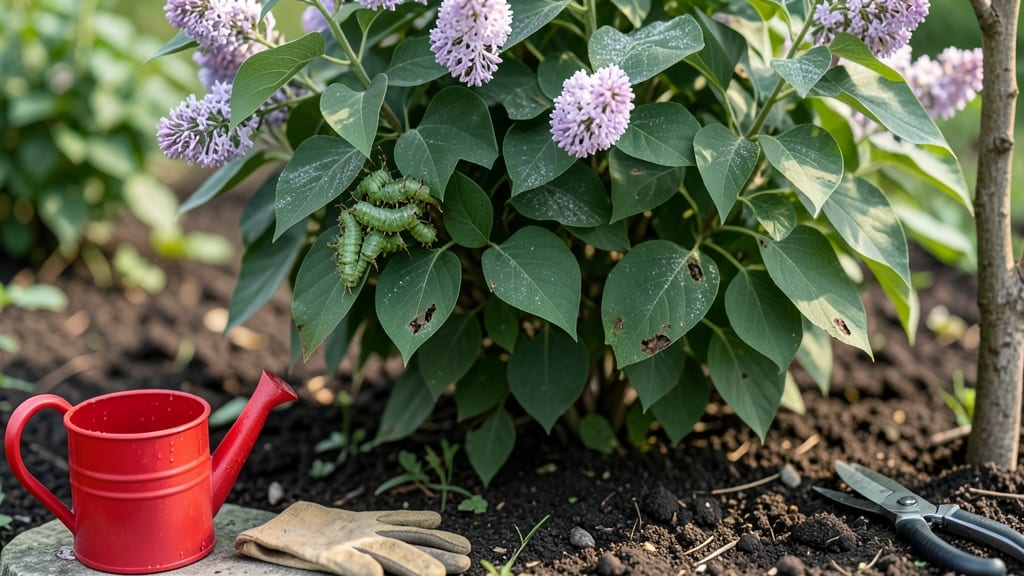
Your lilac bush leaves curling into crispy little edges is a clear SOS from your plant—🌿 and I’ve seen this exact problem turn around in just a few weeks with the right approach.
The culprit is almost always one of three things: spider mites hiding on the undersides, fungal stress from overwatering, or simple drought creeping in during hot spells. What’s frustrating is that lilacs are tough plants, so when they show these symptoms, it’s usually a fixable issue—not a death sentence.
The first step is a quick inspection: grab a magnifying glass and check the leaf undersides for tiny webs or specks (that’s mites), or flip them over to see if the edges are brown and papery (that’s thirst or fungal stress).
Lilacs hate soggy roots, so if the soil feels damp more than an inch down, that’s your problem. The good news? Once you identify the issue, the fixes are simple—organic sprays, pruning dead growth, or adjusting your watering schedule—and you’ll see fresh, smooth leaves within weeks.
By the end of this, your bush will be back to its lush, fragrant self with 3 simple steps: treating the root cause (pests, fungus, or dryness), pruning the worst-affected branches, and giving it consistent care.
The crispy edges will soften, new growth will push out, and you’ll have that classic lilac scent back in your garden before you know it. Let’s get those leaves looking healthy again.
Here’s the kicker: once you fix the immediate problem, you’ll also prevent it from happening next year by adjusting your watering routine and keeping an eye out for early signs of stress.
Lilacs are forgiving, but they do need your attention—especially during dry spells or when pests get sneaky. Stick with me, and you’ll have a bush that’s thriving, not just surviving.
Understanding Leaf Curling Causes
When your lilac bush leaves start curling like a crispy edge on a forgotten lasagna, it’s not just a visual blunder—it’s a cry for help from your plant! 🌿😬 Understanding the root causes is the first step to bringing those leaves back to their lush, flat glory.
Let’s break down the most common reasons why lilac leaves curl, why they happen, and what’s really going on in your bush’s world.
Lilacs are hardy, but they’re not fans of sudden temperature swings. When hot days give way to chilly nights—or vice versa—your lilac’s leaves can react by curling inward to protect their delicate tissues. This is especially true if your bush is transitioning from dormancy to growth or vice versa.
Why it happens:
- Heat stress: When temperatures soar above 90°F (32°C), lilac leaves can’t regulate moisture properly, causing them to curl and dry out. Think of it like your skin getting sunburned—your lilac is essentially wilting in protest. 🔥
- Cold shock: A sudden frost or late-season freeze can damage cell walls, leading to curling as the plant tries to minimize further harm. If your lilac is in a low-lying area where cold air pools, it’s even more vulnerable.
- Windburn: Strong, dry winds can dehydrate leaves quickly, making them curl at the edges. This is common in exposed garden spots.
Actionable fix: Monitor your local weather forecast and provide temporary shade or windbreaks during extreme conditions. Mulching around the base of the bush also helps regulate soil temperature and retain moisture.
Water is the lifeblood of your lilac bush, but like Goldilocks, it needs things “just right.” Too much or too little water can throw your lilac into a tailspin, and curling leaves are often the first sign of distress.
Why it happens:
- Underwatering: When soil dries out completely, lilac leaves curl inward to reduce water loss through transpiration. This is a survival mechanism, but it’s a clear sign your bush is thirsty. 🏜️💦
- Overwatering: Soggy soil cuts off oxygen to the roots, leading to root rot. When roots struggle, the plant can’t absorb nutrients or water efficiently, causing leaves to curl or yellow. It’s like trying to drink through a clogged straw—frustrating and ineffective!
- Improper drainage: If your lilac is planted in heavy clay soil or a spot where water pools, the roots suffocate, and the leaves curl as a distress signal.
Actionable fix:
- Water deeply but infrequently—aim for 1-1.5 inches of water per week, including rainfall. Use your finger to check soil moisture; if the top 2 inches are dry, it’s time to water.
- Improve drainage by amending the soil with compost or planting in a raised bed if your garden is prone to waterlogging.
- Avoid wetting the leaves during watering to prevent fungal issues, which can exacerbate curling.
Pests are like uninvited guests at a dinner party—they show up when you least expect them and leave a mess behind. Curling lilac leaves are often a sign that something small is munching away or injecting toxins into your plant.
Why it happens:
- Spider mites: These microscopic pests thrive in dry, hot conditions and suck sap from leaves, causing them to curl, yellow, and develop fine webbing. 🕷️🌿
- Aphids: These tiny, sap-sucking insects cluster on the undersides of leaves, causing them to curl and distort as they feed. They also excrete honeydew, which can attract sooty mold.
- Japanese beetles: Adult beetles chew on leaf edges, while their larvae (grubs) damage roots. Both can lead to curling and stunted growth.
- Scale insects: These armored pests attach to stems and leaves, draining nutrients and causing leaves to curl or drop prematurely.
Actionable fix:
- Inspect your lilac regularly, especially on the undersides of leaves, for signs of pests like webbing, tiny bugs, or sticky residue.
- Blast pests off with a strong stream of water or use insecticidal soap for mild infestations.
- For severe cases, apply neem oil or a horticultural oil spray according to package instructions.
- Encourage natural predators like ladybugs or lacewings by planting companion flowers like marigolds or yarrow nearby.
Just like you need the right balance of vitamins and minerals, your lilac bush relies on nutrients to thrive. When something’s off—whether it’s a deficiency or an excess—your lilac’s leaves may start curling as a sign of distress.
Why it happens:
- Nitrogen deficiency: Nitrogen is crucial for leaf growth. If your lilac isn’t getting enough, leaves may curl, turn yellow, or develop a pale green hue. This often happens in older soil or if the bush was over-pruned without replenishing nutrients. 🌱💚
- Potassium deficiency: Potassium helps regulate water and nutrient movement in plants. A deficiency can cause leaf edges to curl and brown, a condition called “scorch.”
- To much salt or fertilizer: Over-fertilizing or using poor-quality water (like well water with high salt content) can lead to nutrient imbalances. Excess salts in the soil can “burn” the roots, causing leaves to curl as the plant struggles to absorb water.
Actionable fix:
- Conduct a soil test to identify specific deficiencies or toxicities. Many local extension offices offer affordable testing kits.
- Amend the soil with compost or a balanced, slow-release fertilizer (like a 10-10-10 or 5-10-5 formula) in early spring.
- If you suspect salt buildup, flush the soil with several inches of water to leach out excess salts.
- Avoid fertilizing in late summer or fall, as this can encourage tender new growth that’s vulnerable to winter damage.
Sometimes, curling leaves are a sign of an unseen battle raging within your lilac bush. Fungal and bacterial infections can wreak havoc on leaves, causing them to curl, spot, or develop strange patterns.
Why it happens:
- Powdery mildew: This fungal disease thrives in humid conditions and appears as a white, powdery coating on leaves. Infected leaves often curl and distort as the fungus spreads. 🍄❄️
- Botrytis blight (gray mold): This fungus attacks stressed plants, causing leaves to curl, brown, and develop fuzzy gray mold. It’s common in wet, shady conditions.
- Bacterial leaf curl: Caused by Pseudomonas syringae, this bacterial infection leads to curled, cupped leaves with yellow or brown margins. It’s often spread by splashing water or insects.
Actionable fix:
- Improve air circulation around your lilac by pruning dense growth and spacing plants appropriately.
- Water at the base of the plant in the morning to allow leaves to dry quickly, reducing humidity.
- Apply a fungicide labeled for powdery mildew or botrytis if you spot early signs of infection. Neem oil or copper-based sp
Quick Fixes for Wrinkled Lilac Foliage
If your lilac bush leaves are curling into tight, crispy edges, don’t panic—these practical fixes can restore their lush, healthy glow. The key is identifying the root cause (from the previous section) and applying the right remedy.
Below, we’ve mapped out step-by-step solutions for each common trigger, plus prevention tips to keep your lilac thriving long-term.
When lilac leaves curl due to soggy roots, the first step is correcting moisture levels. Overwatering suffocates roots, leading to yellowing, wilting, and that dreaded crispy curl.
💦 Step 1: Check the Soil Moisture
Stick your finger 2 inches deep into the soil. If it feels damp or sticky, your lilac is getting too much water. Lilacs prefer well-draining soil—think "damp sponge," not "muddy puddle."
🌱 Step 2: Improve Drainage
- Amend the soil: Mix in compost or perlite (1 part to 3 parts soil) to loosen heavy clay. For container lilacs, repot into a pot with drainage holes.
- Raise the bed: If planted in a low spot, mound soil or create a slight slope to encourage runoff.
- Avoid mulch piles: Keep mulch 2–3 inches away from the stem to prevent moisture buildup.
📅 Step 3: Adjust Your Watering Routine
Water deeply but infrequently—aim for 1–1.5 inches per week, including rainfall. Use the "soak-and-dry" method:
- Water until moisture reaches 6 inches deep, then let the top 2 inches dry out before watering again.
- Water at the base, not overhead, to reduce fungal risks.
- Morning is best: Watering early allows foliage to dry quickly, preventing mildew.
💡 Pro Tip: If your lilac is in a pot, ensure it has multiple drainage holes and never sits in saucers of standing water. Elevate pots on feet or pebbles!
Scorching afternoon sun or a sudden heatwave can cause leaves to curl as a protective measure. Here’s how to cool things down for your lilac.
☀️ Step 1: Provide Temporary Shade
If your lilac is in a hot, exposed spot, create shade with:
- A lightweight shade cloth (30–50% coverage) draped over the bush for a few weeks.
- Nearby trees or a lattice screen to filter direct sun.
- Move potted lilacs to a spot with afternoon shade if possible.
💧 Step 2: Boost Hydration
Heat-stressed lilacs need extra water—but avoid wetting leaves to prevent sunburn. Try:
- Drip irrigation or soaker hoses to deliver water directly to roots.
- Mulch heavily (3–4 inches) with straw or wood chips to retain moisture.
- Morning watering + evening mist (lightly spray leaves with a fine mist at dusk to cool them).
🌿 Step 3: Trim Damaged Foliage
Severely curled leaves won’t recover. Use sterilized pruners to:
- Cut back brown or crispy leaves to the nearest healthy growth.
- Shape the bush lightly to improve airflow (but avoid heavy pruning in summer—wait until early spring).
🎯 Prevention Tip: Plant lilacs where they’ll get full sun (6+ hours/day) but with afternoon shade in hot climates. Varieties like 'Dwarf Korean' tolerate heat better than standard types.
If aphids, spider mites, or scale insects are sucking the life out of your lilac, act fast with these organic and chemical-free solutions.
🦟 Step 1: Inspect and Confirm the Pest
Check the undersides of leaves and new growth for:
- Aphids: Tiny green/black bugs clustered on stems.
- Spider mites: Fine webbing and speckled yellow leaves.
- Scale insects: Bumpy, shell-like spots on branches.
🚿 Step 2: Blast Them Off
Start with a strong spray of water to dislodge pests:
- Use a hose nozzle or spray bottle to hit all leaf surfaces.
- Repeat every 3–4 days for 2 weeks to break their life cycle.
🌿 Step 3: Apply Natural Repellents
Mix one of these sprays and apply in the early morning or evening:
| Pest | DIY Solution | How to Use |
|---|---|---|
| Aphids | 1 tsp dish soap + 1 quart water + 1 tbsp neem oil | Spray until leaves glisten; repeat weekly. |
| Spider Mites | 1 tbsp horticultural oil + 1 quart water | Spray thoroughly; mites hate oil-coated leaves! |
| Scale Insects | 70% rubbing alcohol + water (1:3 ratio) | Dab onto infested areas with a cotton swab. |
✨ Pro Tip: Introduce beneficial insects like ladybugs or lacewings—they’re natural pest predators! Buy them online or from garden centers.
Powdery mildew or leaf spot fungi thrive in humid conditions, causing leaves to curl and develop white or brown spots. Here’s how to starve the fungus and protect your lilac.
✂️ Step 1: Remove Infected Leaves
Cut off all curled or spotted leaves and dispose of them in the trash (not compost). Sterilize pruners with rubbing alcohol between cuts.
🌬️ Step 2: Improve Airflow
Fungi love stagnant air. Thin out dense growth by:
- Pruning crossing branches to open the bush.
-
Frequently asked questions
1Why are my lilac bush leaves curling at the edges but staying green?
This is often a sign of underwatering or heat stress. Lilacs need consistent moisture—check if the top 2 inches of soil are dry. If so, water deeply until moisture reaches 6 inches down. Mulching with 2-3 inches of organic material helps retain moisture and protect roots from temperature swings.
2How do I tell if my lilac leaves are curling from pests or disease?
Flip leaves over—if you see tiny webs or speckled yellowing, it’s likely spider mites. Sticky residue means aphids. For disease, look for white powder (mildew) or brown spots. Pests often cluster on new growth, while diseases spread more evenly. Inspect with a magnifying glass for accuracy!
3Can I prune curled leaves off my lilac bush to help it recover?
Yes! Remove severely curled or brown leaves using sterilized pruners to prevent spreading disease. Cut back to the nearest healthy growth. Avoid heavy pruning in summer—wait until early spring for major shaping. Pruning improves airflow, which helps prevent fungal issues.
4Will fertilizing my lilac fix curling leaves caused by pests?
No—fertilizer won’t solve pest problems! First treat the infestation with neem oil or insecticidal soap. Once pests are under control, fertilize with a balanced 10-10-10 formula in early spring to support recovery. Over-fertilizing can actually stress the plant further.
5How long does it take for lilac leaves to uncurl after fixing the problem?
New growth typically appears in 2-4 weeks if the root cause is addressed. Severely damaged leaves won’t recover, but healthy leaves should flatten out as the plant focuses energy on fresh foliage. Monitor soil moisture and pest levels during this time for best results.