
Diseases
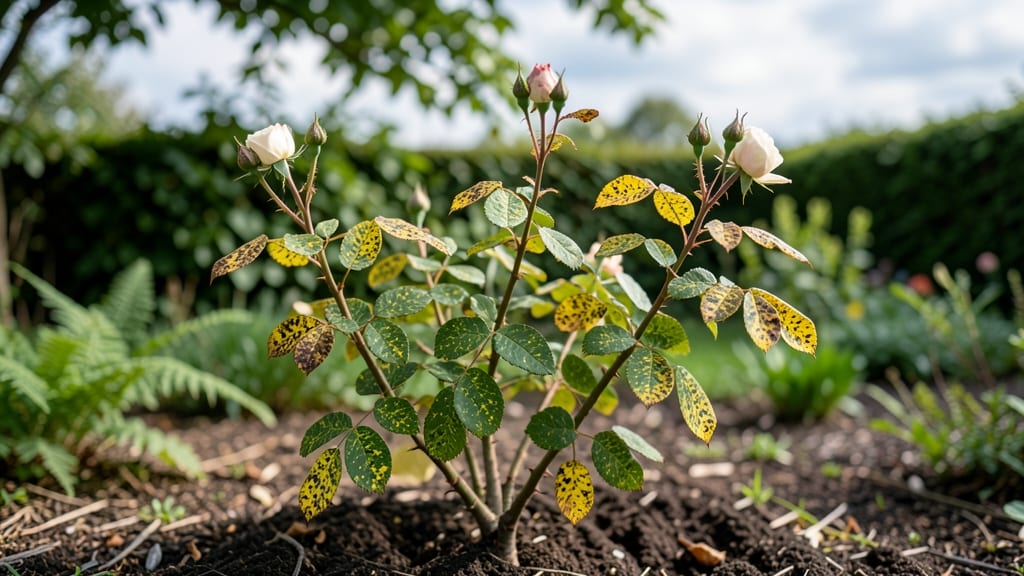
Those yellow spots on your rose leaves aren't just ugly—they're a warning sign. 🌿 Black spot, powdery mildew, or even spider mites could be turning your once-vibrant roses into a sad, spotted mess, and ignoring them means your bushes will struggle to bloom next season.
The good news? Most of these issues have simple fixes once you know what you're dealing with—and I've spent years testing the best organic and chemical solutions to get roses thriving again.
First, check the spots: are they powdery white (likely mildew), black with yellow halos (black spot), or tiny specks with webbing underneath (mite damage)? Each problem needs a different approach, but they all start with better airflow and less overhead watering.
I've seen roses go from looking like they were hit by a disease curse to putting out fresh, healthy leaves within weeks after just a few adjustments—and the key is acting fast before the fungus or pests spread.
You'll learn how to treat each issue without sacrificing your roses' long-term health, plus my go-to prevention tips that keep my bushes looking lush and disease-free year after year.
No more guessing what's wrong or wasting money on the wrong treatments—just clear steps that actually work, whether you're dealing with a new outbreak or trying to stop it before it starts.
Even if your roses are already struggling, this works for any stage of the problem. The sooner you identify the issue, the faster you'll see those spots fading and new growth pushing through.
Let's get those roses back to their best—strong stems, glossy leaves, and blooms that turn heads at the neighborhood.
Root Causes Behind Spotted Leaves
Yellowing leaves with spots on your rose bush aren’t just a cosmetic issue—they’re a cry for help from your plant! Understanding the why behind these symptoms is the first step to saving your roses.
Below, we break down the most common culprits, backed by science, so you can diagnose and act fast.
Fungal diseases are the #1 reason for yellow spots on rose leaves, and they thrive in warm, damp conditions. Here’s how they strike:
- **Black Spot (Diplocarpon rosae) - How it spreads: Spores land on leaves, germinate in moisture, and release toxins that kill leaf tissue. - Why leaves yellow: The fungus blocks chlorophyll production, starving the leaf of energy.
Spots start purple-red, then turn yellow as cells die. - Red flag: Dark spots with yellow halos, often on lower leaves first.
- Powdery Mildew (Erysiphe spp.)
- Why leaves yellow: The mildew disrupts photosynthesis, causing leaves to weaken and turn yellowish-green or brown.
- Red flag: White, dusty patches (especially on undersides) that spread rapidly in dry heat.
💡 Pro Tip: Fungi love humidity—water leaves early in the day (so they dry quickly) and avoid overhead watering to prevent spore splash.
Not all leaf damage comes from fungi—some pests feed on sap, inject toxins, or spread diseases that trigger yellowing.
- Spider Mites (Tetranychus urticae)
- Red flag: Fine webbing on leaf undersides + leaves that look "bronzed" or yellow between veins.
🔥 Action Step: Blast pests off with a strong spray of water or use neem oil** (1 tsp per quart of water) to disrupt their life cycle.
Sometimes, yellow spots aren’t a disease or pest—they’re your roses’ way of saying, "I’m uncomfortable!"
- Overwatering or Poor Drainage
- Why it happens: Waterlogged soil cuts off oxygen to roots, leading to root rot (Phytophthora fungi). The plant can’t absorb nutrients, so leaves yellow and develop brown, water-soaked spots.
- Red flag: Mushy stems, foul-smelling soil, and leaves that wilt even when watered.
- Nutrient Deficiencies
- Iron or Nitrogen Shortage: Leaves turn yellow between veins (iron) or pale green/yellow overall (nitrogen).
- Magnesium Deficiency: Yellow spots appear along leaf edges (like a "scorched" look).
- Red flag: Slow growth + small, weak new leaves.
- Sunburn or Heat Stress
- Why it happens: Intense afternoon sun (especially after rain) can scorch leaves, causing yellow or white patches with crispy edges.
- Red flag: Damage on exposed leaves (e.g., those facing south) during heatwaves.
🌡️ Quick Fix: Adjust watering (deep but infrequent), mulch to retain moisture, and provide afternoon shade if your roses are in a hot, dry spot.
Ironically, the "cure" can sometimes cause the problem. Here’s how:
- Over-Fertilizing (Especially with Salt-Based Fertilizers)
- Why it happens: Excess salts in soil burn root tips, preventing water/nutrient uptake. Leaves yellow and develop brown, crispy edges.
- Red flag: White crust on soil surface + stunted growth.
- Herbicide Drift or Overuse
- Why it happens: Systemic herbicides (like glyphosate) can drift onto roses, causing yellowing, wilting, or spotting within days.
- Red flag: Symptoms appear suddenly on all leaves, not just spots.
✨ Solution: Flush soil with water to dilute salts, and test soil pH (roses prefer 6.0–6.5). If herbicide drift is suspected, remove affected leaves and monitor for recovery.
Sometimes, yellow spots are a symptom of deeper problems:
- Viral Infections (e.g., Rose Rosette Virus)
- How it spreads: Transmitted by errant mites or infected cuttings.
- Why leaves yellow: The virus disrupts vascular tissue, causing mosaic patterns, stunted growth, and reddish-yellow distorted leaves.
- Red flag: Excessive thorns, witch’s broom (dense, tangled growth), and no flowers.
- **Bacterial Leaf Spot (Pseudomonas syringae) - How it spreads: Bacteria enter through wounds (pruning cuts, thorns) and thrive in wet conditions. - Why leaves yellow: Bacteria clog stomata, preventing gas exchange.
Spots start watery, then turn yellow-brown with a greasy sheen. - Red flag: Marginal leaf scorch + oozing lesions when wet.
🔪 Last Resort: Viral infections have no cure—remove infected plants immediately to prevent spread. For bacterial issues, prune infected leaves and sterilize tools with rubbing alcohol**.
Step-by-Step Fixes for Yellow Spots
Reviving your rose bush starts with identifying the root cause of those pesky yellow spots—but once you know what’s ailing your plant, action is the next step! Below, we’ve mapped out practical, step-by-step solutions for the most common culprits behind yellow-spotted leaves, from fungal infections to environmental stressors.
Each fix includes prevention tips to keep your roses thriving long-term.
If your rose bush is battling a fungal foe, act fast—these diseases spread like wildfire in damp conditions. Here’s how to treat and prevent them:
🔥 Step 1: Prune Infected Leaves (The First Line of Defense)
- Remove all spotted or yellowing leaves using sterilized pruners (wipe with rubbing alcohol between cuts).
- Dispose of pruned leaves in the trash (not compost)—fungal spores can survive in yard waste.
- Prune for airflow: Thin out crowded branches to reduce humidity near the foliage.
🍳 Step 2: Apply Fungicidal Sprays (Targeted Treatment)
Choose one of these options based on severity: - Baking Soda Spray (for mild cases): Mix 1 tsp baking soda + 1 tsp horticultural oil + 1 tsp dish soap in 1 quart of water.
Spray early morning (avoid direct sunlight) every 7–10 days until new growth appears. - Neem Oil Solution (organic & effective): Combine 1 tbsp neem oil + 1 tsp mild soap in 1 quart of water. Shake well and spray undersides of leaves (fungi love hiding there!).
Reapply every 2 weeks. - Copper-Based Fungicide (for severe infections): Follow label instructions—these are fast-acting but use them last if organic methods fail.
🌡️ Step 3: Adjust Growing Conditions (Prevent Recurrence)
Fungi thrive in wet, shady environments.
Make these changes to starve them out: - Water at the base (not overhead) to keep leaves dry. - Space plants 3–4 feet apart for airflow. - Avoid mulching too close to the stem (keep 2–3 inches away). - Prune for sunlight: Thin out branches to allow 6+ hours of sunlight daily.
✨ Pro Tip: Preventative sprays (like neem oil) in spring and fall can save you from a full-blown outbreak!
Not all yellow spots are fungal—sometimes, your rose is screaming for help in a different way. Here’s how to fix it:
👨🍳 Step 1: Check the Sun Exposure
- Sudden yellowing + crispy edges = sunburn.
- Move the bush to partial shade (especially in hot afternoons).
- Use shade cloth (30–50% coverage) if relocating isn’t an option.
🥗 Step 2: Test & Amend Soil (Nutrient Fix)
Yellow leaves can signal deficiencies or overwatering.
Try this: - Take a soil test (kit from garden centers or send to a lab). - Fix common issues: - Yellow leaves with green veins = Nitrogen deficiency → Add compost or blood meal. - Pale yellow leaves + weak stems = Iron deficiency → Apply chelated iron or Epsom salt (1 tbsp per gallon of water, spray foliage). - Soggy soil + yellowing = Overwatering → Let soil dry 2–3 inches deep between waterings.
💡 Step 3: Adjust Watering Habits
- Water deeply but infrequently (1–2 inches per week, depending on climate).
- Improve drainage by amending soil with perlite or sand if it’s clay-heavy.
- Water in the morning to reduce evaporation and fungal risk.
Tiny pests can sap nutrients and leave behind yellowed, spotted leaves. Here’s how to evict them:
🔪 Step 1: Blast Off Pests (Physical Removal)
- Spray with water (strong stream) to knock off aphids and spider mites.
- Wipe leaves with a soapy sponge (mild dish soap + water) for stubborn bugs.
- Use sticky traps for soft-bodied insects like whiteflies.
🎯 Step 2: Introduce Natural Predators
- Ladybugs (eat aphids) – Buy from garden centers.
- Predatory mites (control spider mites) – Release in early morning.
- Neem oil spray (disrupts pest life cycles) – Reapply every 5–7 days.
🌿 Step 3: Strengthen Plant Resilience
- Fertilize with fish emulsion (boosts natural pest resistance).
- Plant companion flowers (like marigolds or nasturtiums) to repel pests.
- Avoid over-fertilizing with nitrogen (makes plants more attractive to pests).
Need a fast reference? Here’s a cheat sheet:
| Problem | Quick Fix | Prevention Tip |
|---|---|---|
| Fungal blight | Prune + neem oil spray | Space plants, water at base |
| Sunburn | Move to partial shade | Use shade cloth in peak sun |
| Nitrogen deficiency | Add compost or blood meal | Test soil annually |
| Overwatering | Let soil dry, improve drainage | Use mulch to retain moisture evenly |
| Pest infestation | Soap spray + ladybugs | Plant pest-repelling companions |
Final Thought: Most yellow-spotted leaf issues are fixable with the right care—but prevention is key. Once your rose bush rebounds, stay vigilant with regular checks and adjustments. Happy gardening! 🌹💚
Frequently asked questions
Why do my rose bush leaves have yellow spots with black centers?
Those are classic signs of black spot disease, a common fungal infection. The dark spots with yellow halos appear first on lower leaves and spread upward. This fungus thrives in damp conditions, so prune infected leaves immediately and avoid overhead watering. Use a fungicide spray (like neem oil) every 7-10 days until new growth appears.
Can I still save my rose bush if half the leaves are yellow and spotted?
Yes, but act fast! First, remove all infected leaves with sterilized pruners. Then improve airflow by spacing plants 3-4 feet apart and water at the base (not overhead). For fungal issues, apply a baking soda spray (1 tsp baking soda + 1 tsp oil + 1 tsp soap per quart of water) every 7-10 days. With proper care, new growth should appear within 2-3 weeks.
Are yellow spots on rose leaves always caused by disease?
Not always! Yellow spots could also mean nutrient deficiencies (like iron or nitrogen), pest damage (spider mites or aphids), or even sunburn. Check for webbing (mites), sticky residue (aphids), or crispy edges (sunburn). Test your soil—roses need 6.0-6.5 pH and regular feeding with compost or balanced fertilizer.
How do I know if my rose bush has a viral infection instead of fungus?
Viral infections (like Rose Rosette Virus) show mosaic patterns, excessive thorns, and witch's broom (dense, tangled growth) with no flowers. Unlike fungus, viruses have no cure—remove infected plants immediately to prevent spread. Look for these red flags: yellow-green distorted leaves, stunted growth, and red streaks on stems.
Will pruning my rose bush help with yellow spotted leaves?
Pruning does three things: removes infected leaves (stopping spore spread), improves airflow (reducing humidity), and redirects energy to healthy growth. Always use sterilized tools (wipe with rubbing alcohol) and prune in dry weather. Cut back to healthy green tissue—never leave stubs. Thin out crowded branches by 20-30% for best results.