
Pruning
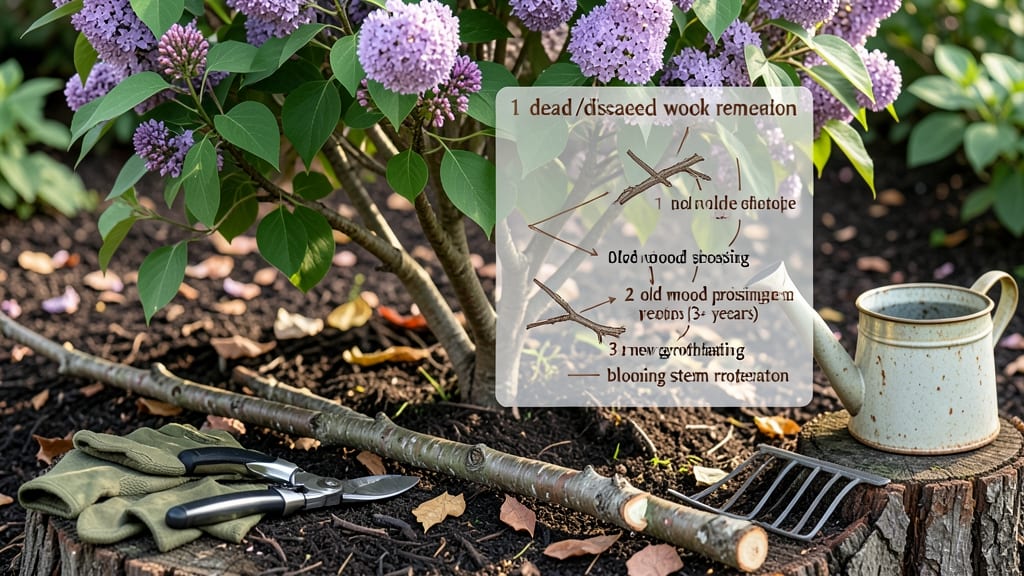
That first burst of purple blooms in May starts with a few sharp cuts in February—this lilac bush pruning diagram shows you exactly where to begin. ✂️ Pruning lilac bushes isn’t just about shaping—it’s about teaching your plant to focus its energy on next year’s flowers instead of last year’s dead wood.
I’ve turned my overgrown lilac from a tangled mess into a fragrant, blooming star by following this exact method every year.
The secret lies in timing and technique: you’ll cut back old stems to just above a strong bud, thin out crowded branches, and avoid pruning too late in the season. Most people over-prune, which weakens the plant—we’re aiming for one-third of the oldest stems removed, not more.
With the right cuts, you’ll see fresh green growth within weeks, and those fat buds will turn into heavier, more abundant blooms next spring.
You’ll need just three tools: sharp pruners, heavy-duty gloves, and a bucket for clippings. After pruning, give your lilac a light feeding and watch how it transforms—thicker stems, better airflow, and flowers that last longer. The best part? This method works for both mature bushes and young plants.
Whether you’re dealing with a single bush or a whole hedge, these steps keep your lilacs healthy for decades. Let’s get those pruners ready—your future blooms will thank you.
📚 In This Guide
- What you need
- Instructions
- Tips and common mistakes
- Wrapping up and next steps
What you need
- ● Pruning shears or secateurs: Sharp, clean, and bypass-style (for clean cuts) – 1 pair
- ● Loppers: For thicker branches (1.5"–2" diameter) – 1 pair
- ○ Pruning saw: For stubborn, large branches (optional but helpful) – 1
- ● Garden gloves: Heavy-duty, cut-resistant (to protect hands) – 1 pair
- ● Disinfectant (rubbing alcohol or bleach solution): To sterilize tools between cuts – small bottle
- ● Trash bags or bucket: For collecting pruned branches – 1–2
- ● Lilac pruning diagram: Printed or digital (for reference) – 1
- ● Hand pruners with a bypass blade (for precision cuts)
- ● Knee pads or stool (for comfort during long sessions)
- ● Spray bottle with water (to keep tools cool and clean)
- ● Sharpie or marker (to label branches if needed)
- ● Compost bin (for recycling pruned material)
Step-by-step lilac bush pruning for abundant spring blooms
Pruning lilacs right after flowering keeps them healthy and packed with blossoms. Here’s how I do it—simple, effective cuts that work for any mature bush.
✂️ Step 1: Time Your Pruning After Flowering
Wait until 2-4 weeks after your lilac finishes blooming—this gives the plant time to store energy for next year’s flowers. If you prune too early, you’ll cut off next spring’s buds, which form on last year’s growth. I always mark my calendar after the last lilac bloom fades completely.
Look for brown, spent flower clusters as your signal. These indicate the plant has finished flowering and is ready for a haircut. Avoid pruning in late summer or fall, as new buds need time to develop before winter dormancy.
✂️ Step 2: Remove Dead, Weak, or Crossing Branches First
Start by cutting out any dead, diseased, or crossing branches—these compete with healthy growth and reduce air circulation. Use clean, sharp pruners to make 45-degree cuts just above a healthy outward-facing bud or branch. I always disinfect my tools with rubbing alcohol between cuts to prevent spreading disease.
If a branch is thicker than ½ inch, make a larger cut by first removing a small notch below the branch collar, then cutting through the branch from the top. This prevents tearing the bark. Remove up to ⅓ of the bush’s total branches in this step—never more.
✂️ Step 3: Thin Out Overcrowded Areas
Next, focus on thinning out the center of the bush to improve airflow and sunlight penetration. Select older, woodier branches in the middle and cut them back to the base. I target branches that are smaller than pencil-thick—these are easier to remove and won’t leave large wounds.
Step back often to visualize the shape. Your goal is an open, vase-like structure with branches spaced 6-12 inches apart. Avoid leaving too many branches at the same height, as this creates a dense, shaded interior where flowers struggle to develop.
✂️ Step 4: Shape the Outer Canopy Lightly
For the final touch, lightly trim the outer edges to maintain a rounded, natural shape. Cut just above a bud or branch that grows outward, never at a sharp angle. I avoid heavy pruning here—just enough to encourage a full, balanced silhouette. Never remove more than 10-15% of the bush’s total foliage in one year.
Step back again to check your work. The bush should look open and airy, not hacked or skeletal. If you’ve removed too much, next year’s blooms will suffer. Lilacs are forgiving, but they reward patience with bigger, healthier flowers.
⏰ Step 5: Clean Up and Fertilize for Next Year
After pruning, remove all clippings from the area to prevent disease buildup. I collect them in a trash bag and dispose of them immediately—never compost lilac trimmings, as they can harbor fungal spores. Once the cuts are healed (after 2-3 weeks), apply a balanced, slow-release fertilizer (like 10-10-10) to replenish nutrients.
Water deeply after fertilizing to help the roots absorb nutrients. Avoid heavy watering right after pruning, as fresh cuts are vulnerable to rot. By late summer, your lilac will be busy forming next year’s flower buds—just wait until spring to enjoy the results.
Tips & tricks for perfect lilac pruning
These simple strategies will help you prune your lilacs like a pro—without sacrificing next year's blooms.
Timing Secret: The 2-4 week window after flowering is non-negotiable for lilacs. I've learned this the hard way—pruning too early cuts off next spring's buds, which form on last year's growth. Mark your calendar the day the last bloom fades completely. If you're unsure, wait until you see those brown, spent flower clusters—they're nature's "ready" sign.
Tool Prep: Never skip disinfecting your pruners between cuts! I use rubbing alcohol on a paper towel between each branch to prevent spreading disease. For branches thicker than ½ inch, make that small notch below the branch collar first—it prevents tearing the bark and gives you a cleaner cut. Think of it like making a clean incision rather than a jagged rip.
Visualization Tip: Step back often during Steps 3 and 4 to check your work. The goal is an open vase shape with branches spaced 6-12 inches apart. I imagine looking at a chandelier—you want light and air to flow through the center just like light through crystal. If you're leaving too many branches at the same height, you're creating a dense canopy that blocks sunlight from reaching the center.
Aftercare Strategy: Those 2-3 weeks before fertilizing are crucial for healing. I've seen fresh cuts rot when watered too heavily right after pruning. Instead, wait until the cuts have sealed over, then water deeply after applying fertilizer. Think of it like letting a paper cut scab over before you put a bandage on it—patience prevents problems.
Pro Tips for Lilac Bush Lilac Pruning Diagram
- These simple strategies will help you prune your lilacs like a pro—without sacrificing next year's blooms.
- Timing Secret: The 2-4 week window after flowering is non-negotiable for lilacs.
- Tool Prep: Never skip disinfecting your pruners between cuts!
Frequently asked questions
Got questions about pruning your lilac bush? You’re not alone! Whether you’re a first-time pruner or looking to refine your skills, these answers will help you keep your lilac blooming beautifully. Here’s what we hear most often:
When is the best time to prune a lilac bush?
The ideal time is right after flowering, typically in late spring or early summer. This ensures you don’t cut off next year’s blooms, which form on old wood. Avoid pruning in fall or winter—lilacs need time to heal before dormancy. Pro tip: If you miss the window, a light trim in early spring (before buds swell) is better than nothing!
How much can I cut back my lilac bush?
Never remove more than one-third of the plant in a single year. For rejuvenation, you can prune back older stems to the ground, but do this gradually over 2–3 years. Over-pruning stresses the bush and may reduce flowering. Use your lilac pruning diagram as a guide to visualize safe cuts!
Why did my lilac bush stop blooming after pruning?
Lilacs bloom on old wood, so heavy pruning in late summer or fall can remove next year’s flower buds. If this happens, adjust your timing—stick to post-bloom pruning. Troubleshooting: Check for pests (aphids, borers) or disease (powdery mildew), which can also stunt blooms. A balanced fertilizer in early spring may help revive growth.
Can I shape my lilac bush like a hedge?
Yes, but lilacs aren’t natural hedges—they thrive with an open, airy shape to prevent disease. If you want a formal look, prune lightly in spring to encourage bushier growth, then trim lightly after flowering. Avoid shearing heavily; instead, focus on removing dead, crossing, or overcrowded branches for a cleaner silhouette.
What if my lilac bush is overgrown and woody?
Don’t panic! Overgrown lilacs can be revived with rejuvenation pruning. In stages, cut back 1/3 of the oldest stems to the ground each year for 3 years. This encourages new, vigorous growth. Pair it with regular pruning after flowering, and your lilac will bounce back with lush blooms!
Wrapping up and next steps
Pruning your lilac bush doesn’t have to be intimidating—with the right timing, tools, and diagram-guided cuts, you’ll unlock vibrant, year-round blooms and a healthier plant. 🌸 Remember, the key is patience and precision: deadhead spent flowers, shape strategically, and avoid over-pruning to keep your bush thriving.
Now that you’re armed with knowledge, grab those shears and give your lilac the TLC it deserves! For extra confidence, bookmark our pruning diagram and revisit it before your next session. Happy gardening!