
Flowers
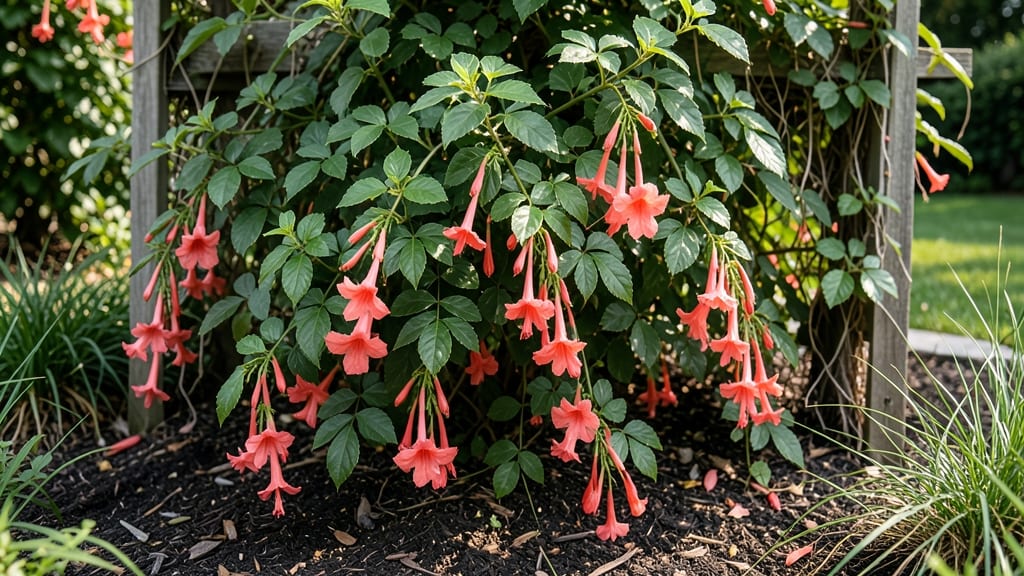
The pink trumpet flower bush (Campsis radicans) bursts into bold, fiery blooms that stop neighbors in their tracks. ✨ I’ve grown mine for five years, and the secret to its year-round drama isn’t just planting—it’s pruning at the right times.
One wrong cut can turn a showstopper into a tangled mess, but master this, and you’ll have cascading pink trumpets from early summer through frost.
This vigorous climber thrives in zones 4-9, where it clings to trellises or sprawls across fences with ease. It loves sun—at least 6 hours daily—and tolerates poor soil, though it rewards rich, well-draining earth with longer blooms and healthier vines.
Space plants 10-15 feet apart if letting them climb; closer for bushier forms. My first mistake? Crowding them—I had to dig up one after it choked its neighbor.
Pruning is where the magic happens: late winter for shaping, right after blooming to encourage new flowers. Use clean shears to cut just above a leaf node, and never trim more than 1/3 of the plant at once.
With this rhythm, you’ll get three flushes of blooms per season, plus lush foliage that turns golden in fall. The fragrance? Lightly sweet, like honey on a warm breeze.
For propagation, semi-hardwood cuttings in summer root best—dip in rooting hormone, keep moist, and they’ll establish in 4-6 weeks. Watch for aphids (they adore new growth) and powdery mildew in humid summers.
But don’t stress: this plant’s resilience makes it worth every pruning session. Ready to grow one that steals the show?
📚 In This Guide
- What you need
- Instructions
- Tips and common mistakes
- Wrapping up and next steps
What you need
- ● Pink trumpet flower bush: Choose a healthy Campsis radicans (trumpet creeper) or Bignonia variety from a nursery. Opt for a 1-2 gallon container-grown plant for best results.
- ● Well-draining potting mix: A blend of 60% garden soil, 30% compost, and 10% perlite or sand (for containers or in-ground planting).
- ● Fertilizer: A balanced, slow-release granular fertilizer (e.g., 10-10-10) or organic options like composted manure.
- ● Pruning tools: Bypass pruners (for thin stems)
- ● Loppers (for thicker branches)
- ● Hand saw (for overgrown or woody stems)
- ● Support structure: A trellis, arbor, or sturdy fence (if growing as a vine) or pruning to shape as a bush.
- ● Mulch: Organic mulch (e.g., shredded bark or pine straw) to retain moisture and regulate soil temperature.
- ● Gloves: Heavy-duty gardening gloves to protect your hands from thorns.
- ● Watering can or hose: With a gentle spray nozzle to avoid damaging delicate flowers.
- ● Soil pH tester: To ensure your soil is slightly acidic to neutral (pH 6.0–7.0).
- ○ Epsom salt: (Optional) For magnesium boosts if leaves show yellowing between veins.
- ● Plant ties: Soft fabric or rubber ties to secure vines to trellises.
- ● Seed-starting kit: (If propagating from seeds) Includes seed trays, grow lights, and seed-starting mix.
Step-by-step guide to planting and pruning your pink trumpet flower bush
Here’s how to establish a thriving pink trumpet bush that blooms reliably year after year.
🌱 Step 1: Choose the Perfect Planting Location
Pink trumpet bushes (Brugmansia) thrive in partial shade—think 4-6 hours of morning sun with afternoon shade to prevent leaf scorch. I always plant mine near a north-facing wall or under high-canopy trees where dappled light filters through. The key is protection from harsh afternoon rays, which can bleach the petals and stress the plant.
Dig a hole twice as wide as the root ball but only as deep as the container it came in. The top of the root ball should sit 1 inch above ground level—this prevents waterlogging, which pink trumpets hate. Amend the native soil with 3 inches of compost mixed into the bottom of the hole to improve drainage and nutrient retention.
🪴 Step 2: Plant and Water for Immediate Establishment
Gently remove the bush from its container and loosen any circling roots with your fingers—this encourages outward growth. Place it in the hole, backfill with the amended soil, and water deeply until moisture reaches 6 inches down. You’ll know it’s soaked enough when water pools on the surface for 10-15 seconds before draining.
Mulch the base with 2-3 inches of organic mulch (like shredded bark) to retain moisture and regulate soil temperature. Keep the mulch 3 inches away from the trunk to prevent rot. Water twice weekly for the first month, ensuring the soil stays evenly moist but not soggy. Overwatering at this stage is the fastest way to invite root rot.
☀️ Step 3: Prune for Shape and Encourage Blooms
Prune right after flowering (late spring to early summer) to shape the bush and stimulate next year’s blooms. Use clean, sharp pruners to make cuts at a 45-degree angle just above a leaf node. Remove 1/3 of the oldest stems to open up the center for airflow—this prevents fungal issues and encourages new growth.
If your bush gets leggy, prune back by 1/2 on overlong stems. You’ll see new shoots emerge within 2-3 weeks—these will produce next year’s flowers. Avoid heavy pruning in fall or winter; the plant needs its foliage to photosynthesize for winter resilience.
⏰ Step 4: Winter Care for Year-Round Health
Pink trumpets are tender perennials—they’ll die back in frost but regrow from the roots. In Zone 8 or colder, mound 6-8 inches of mulch around the base after the first frost. This insulates the roots and protects against temperature swings. In Zones 9-10, reduce watering in winter but keep the soil slightly moist—dormancy is the time to let the plant rest.
In early spring, remove dead foliage but leave any remaining stems—new growth will push through naturally. Resume watering when you see new shoots emerge (usually late February to March in most climates). Fertilize lightly with a balanced 10-10-10 formula in early spring to kickstart growth.
✂️ Step 5: Maintain Blooms Through the Season
Deadhead spent flowers weekly to redirect the plant’s energy into new blooms. Simply pinch off faded trumpets at the base with your fingers—no pruners needed. This keeps the bush looking tidy and encourages continuous flowering from spring through fall.
Feed with a low-nitrogen, high-phosphorus fertilizer (like 5-10-5) every 6 weeks during the growing season. Too much nitrogen = lush foliage, fewer flowers. Watch for aphids or spider mites—a strong spray of water usually dislodges them, but neem oil works if they persist.
Tips & tricks for perfect pink trumpet flower bush care
These proven strategies will help you cultivate a pink trumpet bush that thrives through every season.
Light Balance: The 4-6 hours of morning sun is non-negotiable for vibrant blooms. I've seen pink trumpets struggle when planted in full sun—leaves turn yellow and petals bleach out. If your yard only gets direct afternoon sun, consider placing the bush near a lattice or trellis to create natural shade during peak heat hours. The key is mimicking the dappled light conditions of their native forest understory.
Root Development: When planting, focus on creating an ideal root environment from the start. After loosening circling roots, I like to add a handful of mycorrhizal fungi to the planting hole—this beneficial soil organism helps roots absorb nutrients more efficiently. The 1-inch elevation above ground level is crucial; it prevents water from pooling around the stem, which is a common cause of root rot in these tropical plants.
Pruning Precision: The 45-degree angle cut just above a leaf node isn't just aesthetic—it's essential for directing growth. I always sterilize my pruners with rubbing alcohol between cuts to prevent spreading disease. When removing 1/3 of oldest stems, look for woody, brownish branches—they're the ones that won't produce new flowers. New shoots typically appear within 2-3 weeks, but if you don't see growth after 4 weeks, your cuts might be too severe.
Winter Protection: The 6-8 inches of mulch in colder zones creates a critical insulation layer. I've found that using straw instead of wood chips works even better—it breaks down more slowly and provides better insulation. In Zones 9-10, I actually increase winter watering slightly (about once every 3-4 weeks) to prevent the soil from drying out completely during dormancy. The goal is to keep roots just moist enough to prevent desiccation.
Pro Tips for Pink Trumpet Flower Bush
- These proven strategies will help you cultivate a pink trumpet bush that thrives through every season.
- Light Balance: The 4-6 hours of morning sun is non-negotiable for vibrant blooms.
- Root Development: When planting, focus on creating an ideal root environment from the start.
Frequently asked questions
Got questions about your pink trumpet flower bush? You’re in the right place! Whether you’re a new gardener or a seasoned pro, these answers will help you keep your bush thriving with vibrant blooms year-round.
When is the best time to prune my pink trumpet flower bush?
The ideal time to prune is late winter or early spring, just before new growth begins. This encourages robust flowering in spring and summer. Avoid pruning in fall—it can stimulate tender new growth that won’t survive winter frosts. Pro tip: Use clean, sharp tools to prevent disease!
How cold-hardy is the pink trumpet flower bush?
Most varieties tolerate USDA Zones 7-10, meaning they can handle temperatures down to 0°F (-18°C). In colder zones, mulch the base with 2-3 inches of organic material (like wood chips) to protect roots. If you’re in Zone 6 or below, consider growing it in containers for winter relocation.
What pests or diseases should I watch for?
Common issues include aphids, spider mites, and powdery mildew. To prevent pests, spray leaves with water to dislodge aphids or use neem oil. For mildew, ensure good airflow and avoid overhead watering. Early intervention is key—remove affected leaves promptly!
Can I grow a pink trumpet flower bush in a container?
Choose a large container (at least 18-24 inches wide) with drainage holes. Use well-draining potting mix and repot every 2-3 years. Container-grown bushes thrive in full sun and need regular watering. Just remember: they’ll need winter protection in cold climates!
How long does it take to see flowers after planting?
With proper care, you can expect blooms within 1-2 years of planting. For faster results, choose a mature bush (3-5 feet tall) at a nursery. Patience pays off—healthy roots mean more vibrant trumpets!
What if my bush isn’t blooming?
Lack of blooms often signals over-pruning, poor nutrition, or shade. Ensure it gets 6+ hours of sunlight daily and fertilize in early spring with a balanced, slow-release formula. If pruning was too aggressive, give it a season to recover—new growth = more flowers!
Still stumped? Drop your question below—we’re happy to help your pink trumpet bush shine!
Wrapping up and next steps
The pink trumpet flower bush is a stunning addition to any garden, offering year-round beauty with the right care—especially through strategic pruning. Whether you’re a seasoned gardener or just starting, this vibrant plant rewards patience and attention with bursts of color and resilience.
Now that you’re armed with the knowledge to nurture it, why not take the next step? Grab your pruners, mark your calendar for seasonal maintenance, and watch your garden thrive with Allamanda cathartica’s dazzling blooms! 🌸