
Plants
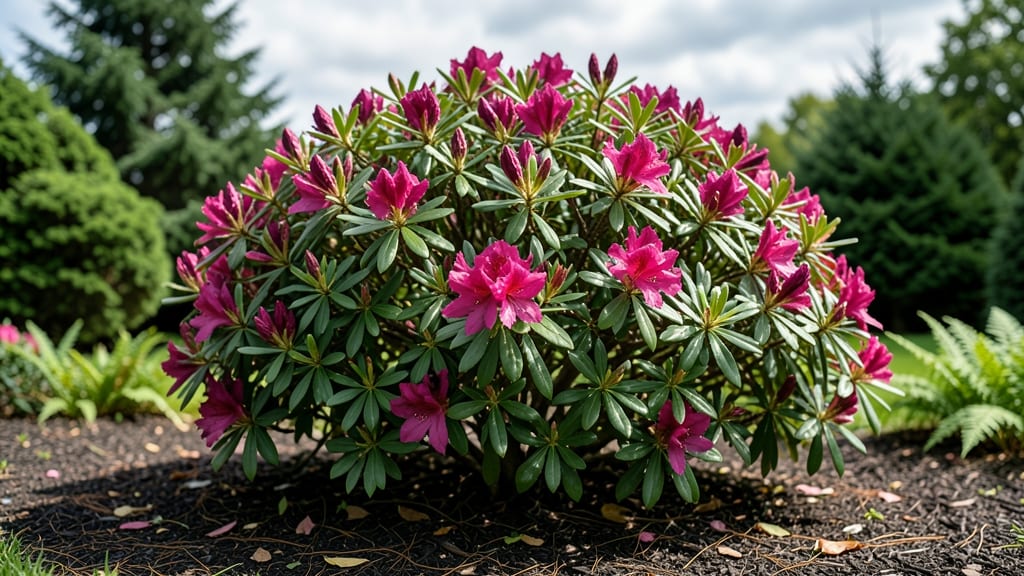
Azalea bushes look like lush, compact shrubs with glossy, dark green leaves that grow in tight clusters along sturdy stems. Their signature feature is the vibrant, trumpet-shaped blooms in bold colors like pink, red, purple, or white, creating a dense, rounded shape that typically stays between 3 to 6 feet tall and wide. Many varieties maintain their evergreen foliage year-round in mild climates.
Azaleas are instantly recognizable by their dramatic floral displays and dense foliage structure. 🌸 The leaves, which are typically elliptical or oblong with serrated edges, create a rich green backdrop that makes the flowers pop. Unlike rhododendrons (their close relatives), azaleas often have smaller leaves and more delicate stems.
Their flowers can appear in clusters of single or double blooms, with some varieties producing flowers that bloom just once a year while others offer season-long color if given proper care. This combination of foliage and flowers makes them a standout choice for garden borders, foundation plantings, or container gardens.
What sets azaleas apart visually is their growth habit—they naturally form a neat, rounded shape without sprawling like some other shrubs. This compact form makes them perfect for small spaces or as accent plants.
The evergreen varieties in warmer regions add year-round interest, while deciduous types still provide stunning seasonal color. Whether you're identifying one in your yard or selecting plants for your garden, focusing on these key features will help you spot azaleas anywhere.
💡 In This Article
- Identifying Azalea Leaves and Flower Types
- Optimal Azalea Growth Habits and Care Tips
Identifying azalea leaves and flower types
Azalea leaves are one of their most distinctive features, typically measuring 1 to 4 inches long with a smooth, leathery texture that feels slightly waxy to the touch. The edges are finely serrated, creating a delicate saw-tooth pattern that's easily visible under close inspection.
These leaves grow in alternating patterns along the woody stems, forming a dense canopy that provides shade for the flowers below. 🌿 The dark green color often has a slight blue-green tint when viewed in bright sunlight, which helps distinguish them from rhododendrons that tend to have broader leaves with more pronounced veins.
The trumpet-shaped flowers are where azaleas truly shine, with each bloom measuring between 1 to 2 inches across and featuring five petals that flare outward dramatically. What makes them unique is their corolla tube—the elongated base of the flower—that can be as long as the petals themselves.
These flowers grow in clusters called racemes, with some varieties producing up to 50 flowers per stem. The color spectrum is vast, from pale blush pinks to deep magenta, with some rare varieties displaying bi-color patterns or even white blooms with yellow centers.
One key distinction between azalea types lies in their bloom patterns. Ever-blooming azaleas produce flowers in spring and again in fall, creating a prolonged display, while seasonal varieties focus their energy on a single spectacular spring bloom.
The flower structure also varies—single blooms have one layer of petals, while double blooms feature multiple layers that create a fuller, more lush appearance. This variation in flower types allows gardeners to choose azaleas that match their preferred seasonal color cycles or visual impact.
When comparing azaleas to their close relatives, rhododendrons, you'll notice several key differences. Azalea leaves are generally smaller and more delicate, while rhododendrons have broader, more robust foliage. The flower clusters on azaleas are typically more compact, with individual blooms appearing more clustered together.
Additionally, azalea flowers often have a slight fragrance, while many rhododendrons are scentless. These subtle but important distinctions help gardeners make informed choices when selecting plants for their landscapes.
For those interested in advanced identification, consider examining the calyx—the leaf-like structure at the base of each flower. Azalea calyxes are typically hairy and persistent, meaning they remain attached to the plant even after the flower fades.
This feature helps distinguish them from other flowering shrubs that might have similar leaf structures but different calyx characteristics. 🌸 The combination of these visual cues makes azaleas easily recognizable to trained eyes.