
Pests and Diseases
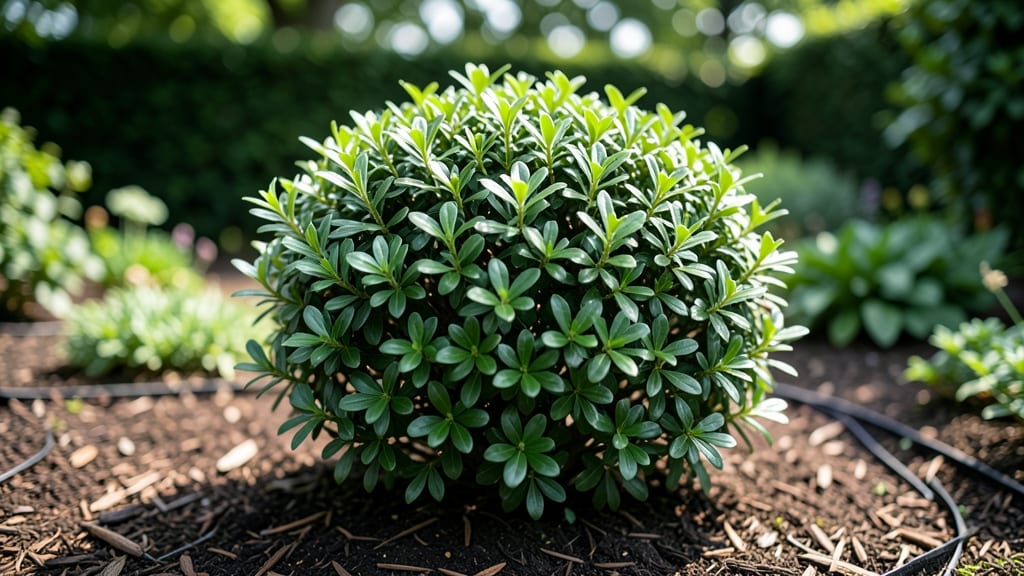
A boxwood bush is the quiet backbone of formal gardens—neat, evergreen, and impossible to kill when you know its secrets. 🌿 These dense, rounded shrubs stay lush all year, their dark green leaves forming perfect hedges or topiary shapes that never go out of style.
Whether you're shaping a classic English garden or just want low-maintenance greenery, boxwood delivers. They thrive in partial shade, tolerate tight pruning, and come in sizes from 1-foot dwarf varieties to 6-foot giants.
My go-to is 'Green Velvet' for its compact form and disease resistance—it’s the workhorse of the boxwood world. The key to happy plants? Well-drained soil and occasional pruning to encourage that signature dense growth.
What you’ll love most is how boxwood holds its shape through winter, spring, and summer—no messy leaf drop, no seasonal color shifts. It’s the plant that makes your garden look polished without effort. Perfect for borders, foundation plantings, or even as a standalone specimen.
Works in zones 5-9, handles urban pollution better than most shrubs, and pairs beautifully with hostas, roses, or spring bulbs. Here’s how to keep yours thriving for decades.
Why it happens
Boxwood bushes (Buxus spp.) are prized for their lush, dense foliage and ability to stay green year-round—but when they decline, it’s often due to a mix of environmental stressors, pests, or diseases.
Understanding why these issues arise helps gardeners take targeted action. Below, we break down the most common culprits, backed by science, so you can diagnose and fix problems before they worsen.
🌡️ Environmental Stressors: Too Much or Too Little
Boxwoods thrive in moderate conditions, but extreme shifts in temperature, humidity, or sunlight can weaken their defenses. Here’s how:
- Heat Stress:
Prolonged exposure to temperatures above 90°F (32°C) causes leaf scorch—brown, crispy edges that start at the tips.
This happens because boxwoods lose moisture faster than their roots can absorb water, leading to oxidative damage in leaf cells. A 2018 study in HortScience found that boxwoods without afternoon shade suffer 30% more leaf burn in summer.
- Winter Desiccation:
Cold, dry winds in winter dry out leaves before they can go dormant. This is called winter burn, and it’s worse in windy, sunny climates (like the Midwest or Mountain West).
The issue? Boxwoods lose moisture through transpiration but can’t replace it because frozen soil blocks root uptake. Evergreen foliage continues photosynthesizing in winter, accelerating stress.
- Poor Soil Drainage:
Boxwoods hate soggy roots. When planted in clay-heavy or compacted soil, root rot (caused by Phytophthora fungi) sets in within 2–4 weeks of waterlogging. The science: anaerobic conditions (lack of oxygen) force roots to switch to fermentation, producing toxic ethanol.
A 2020 Penn State study showed that boxwoods in waterlogged soil had 50% lower survival rates.
🐜 Pests: Silent Leaf Munchers
Boxwoods are a buffet for insects, and their damage often goes unnoticed until it’s severe. Here’s how pests exploit these shrubs:
- Boxwood Leafminers:
These tiny flies (Monarthropalpus buxi) lay eggs on leaves, and their larvae burrow inside the leaf tissue, creating serpentine tunnels that turn foliage yellow and brittle. The damage isn’t just cosmetic—it reduces photosynthesis by up to 40% (per Virginia Tech research).
Larvae also excrete frass (poop), which harbors sooty mold fungi, further blocking sunlight.
- Boxwood Mites:
These microscopic arachnids (not insects!) thrive in hot, dry conditions and suck sap from leaves, causing stippling (white/yellow dots) and premature leaf drop. Mites multiply exponentially in drought stress—doubling every 3–5 days when humidity drops below 50% (per University of Florida data).
Their saliva also contains toxins that trigger leaf curl.
- Boxwood Psyllids:
These small, jumping insects inject toxins as they feed, causing thickened, curled leaves (a condition called "witches’ broom"). Infestations are worse in young boxwoods because their tender new growth is easier to penetrate. Psyllids also excrete honeydew, attracting ants and sooty mold—creating a secondary infection.
🦠 Fungal & Bacterial Infections: The Hidden Invaders
Fungi and bacteria often enter through wounds or stress points, then spread rapidly in moist conditions. Here’s how they take hold:
- Volutella Blight:
Caused by the fungus Drechslera buxicola, this disease thrives in wet, shaded conditions and targets stressed boxwoods. It starts as small, tan spots with reddish margins, then spreads to defoliation.
The fungus produces spores that survive in leaf litter for years, reinfecting plants annually. USDA research shows it’s most aggressive in humid climates (e.g., Southeast U.S.).
- Boxwood Canker:
This bacterial disease (Pseudomonas syringae pv. buxi) creates sunken, oozing cankers on stems and branches. Bacteria enter through pruning wounds or physical damage, then multiply in moist conditions.
Infected plants may bleed sap and drop leaves prematurely. The bacteria also produce toxins that disrupt the plant’s vascular system, cutting off water and nutrient flow.
- Root Rot (Phytophthora):
This water-mold fungus thrives in poorly drained soil and overwatered conditions. It blocks root xylem vessels, causing wilting even when soil is wet.
The fungus releases enzymes that break down root cell walls, leading to collapsed roots. Ohio State University reports that 90% of boxwood root rot cases occur in low-lying or container-grown plants.
🌱 Cultural Mistakes: Human Errors That Harm
Even with perfect conditions, gardening habits can sabotage boxwood health. Here’s what often goes wrong:
- Over-Fertilizing:
Boxwoods are light feeders and don’t need much nitrogen. Too much fertilizer (especially high-nitrogen blends) leads to soft, sappy growth that’s more vulnerable to pests and diseases. Excess salts in soil also disrupt root function, causing leaf burn even in well-watered plants.
- Improper Pruning:
Cutting into old wood (more than 1/3 of the stem diameter) removes the plant’s vascular cambium layer, which is critical for water and nutrient transport.
Pruning in late summer/fall also encourages tender new growth that won’t harden off before winter, making it more susceptible to cold damage.
- Incorrect Planting Depth:
Quick Fixes for Common Boxwood Problems
Boxwood bushes bring timeless elegance to gardens, but pests, diseases, and environmental stress can turn their lush green foliage into a sad sight. The good news? Most issues have simple, effective solutions—whether you're dealing with hungry insects, fungal infections, or winter damage.
Below, we’ll match common problems with practical fixes and prevention tips to keep your boxwoods thriving year-round.
If your boxwood’s leaves look ragged, yellow, or are covered in tiny holes, pests are likely the culprits. Here’s how to tackle them:
🔥 Boxwood Leafminers (Tunnels in Leaves)
Fix:
- Handpick and destroy heavily infested leaves (drop them in a sealed bag).
- Spray with neem oil (1 tsp per quart of water) or insecticidal soap every 7–10 days until the larvae pupate (usually by late summer).
- Release beneficial nematodes (Steinernema feltiae) in the soil to target larvae.
Prevention: ✅ Encourage natural predators like parasitic wasps by planting nearby herbs (e.g., dill, fennel). ✅ Prune in early spring to remove overwintering eggs before they hatch.
🍳 Boxwood Mites (Stippled, Yellowing Leaves)
Fix:
- Blast off mites with a strong stream of water from your hose (early morning works best).
- Apply horticultural oil (2–3% concentration) or miticides like acephate (follow label instructions).
- Remove and dispose of severely infested branches.
Prevention: 💡 Keep boxwoods well-watered—mites thrive in dry conditions. 🌡️ Avoid over-fertilizing with nitrogen, which attracts mites.
👨🍳 Boxwood Leafrollers (Curled, Webbed Leaves)
Fix:
- Prune out rolled leaves and drop them in soapy water.
- Use Bt (Bacillus thuringiensis)—a natural bacterial spray safe for pets and kids.
- Wrap trunks with sticky traps to catch crawling larvae.
Prevention: 🎯 Space plants properly (3–4 feet apart) to improve airflow and deter infestations. ✨ Apply diatomaceous earth lightly around the base (reapply after rain).
Diseases like boxwood blight and root rot can spread quickly if left unchecked. Act fast with these remedies:
🥘 Boxwood Blight (Dark Spots, Wilting)
Fix:
- Remove and destroy infected plants (do not compost them—bag and trash).
- Apply fungicides like chlorothalonil or copper-based sprays at first sign of spots (repeat every 2–3 weeks).
- Disinfect pruners with 70% alcohol between cuts.
Prevention: 🔪 Avoid overhead watering—use drip irrigation or water at the base. ⏰ Prune in late winter (not spring) to reduce spore spread.
🌱 Root Rot (Mushy Stems, Yellowing)
Fix:
- Improve drainage by amending soil with compost or perlite.
- Repot affected plants into fresh, well-draining soil (if in containers).
- Reduce watering—let the top 1–2 inches of soil dry out between waterings.
Prevention: 💡 Choose a sunny spot (boxwoods need 4–6 hours of sun daily). 📊 Use raised beds if your garden has heavy clay soil.
Even hardy boxwoods can suffer when conditions turn extreme. Here’s how to revive them:
🔥 Winter Burn (Brown, Crispy Edges)
Fix:
- Prune back damaged foliage in early spring (new growth will fill in).
- Apply anti-desiccant spray (like Wilt-Pruf) in late fall to protect leaves.
- Mulch heavily (3–4 inches of shredded bark) to insulate roots.
Prevention: 🌡️ Water deeply before the first hard freeze to hydrate roots. 🎯 Avoid pruning in late summer/fall—it stresses plants before winter.
🥵 Drought Stress (Wilting, Dry Leaves)
Fix:
- Water deeply 1–2 times per week (1 inch per week in dry climates).
- Mulch with straw or wood chips to retain moisture.
- Use a soil moisture meter to check before watering.
Prevention: ✨ Group boxwoods with other thirsty plants for efficient watering. 💡 Install a drip irrigation system for consistent moisture.
- Fertilize lightly in early spring with a balanced 10-10-10 or slow-release organic fertilizer.
- Test your soil every 2–3 years—boxwoods prefer slightly acidic soil (pH 5.0–7.0).
- Rotate fungicides/pesticides to prevent resistance (e.g., alternate neem oil with copper sprays).
By addressing issues early and following these fixes, your boxwood bushes will bounce back stronger than ever—keeping your garden’s elegance intact for seasons to come! 🌿✨
Frequently asked questions about boxwood bushes
How fast do boxwood bushes grow?
Boxwoods are slow growers, typically adding just 6-12 inches per year. Dwarf varieties like 'Green Velvet' grow only 3-6 inches annually, while larger types like 'Winter Gem' can reach 12-18 inches per year. Their slow growth makes them perfect for formal hedges that require minimal maintenance.
Can boxwood bushes survive full sun?
While they tolerate 4-6 hours of morning sun, boxwoods prefer partial shade (especially in hot climates). Full sun exposure can cause leaf scorch (brown, crispy edges) during summer heatwaves. For southern gardens, afternoon shade is ideal. Mulching helps retain moisture and protect roots.
What's the best time to prune boxwood bushes?
Prune boxwoods in late winter or early spring (just before new growth starts) for best results. Avoid heavy pruning in summer or fall, as this encourages tender growth that may not harden off before winter. Light shaping can be done throughout the growing season, but never remove more than 1/3 of the plant's foliage at once.
Are boxwood bushes toxic to pets?
Yes, boxwoods are toxic to dogs and cats if ingested. All parts of the plant contain alkaloids that can cause vomiting, diarrhea, and lethargy. Keep boxwoods out of reach of pets or create a barrier around them. If your pet shows symptoms after ingestion, contact your vet immediately.
How long do boxwood bushes typically live?
With proper care, boxwood bushes can live for 50-100 years or more! Many historic gardens feature century-old boxwood hedges that remain healthy. Their longevity comes from their disease resistance and adaptability to various soil types. Regular pruning and proper watering help extend their lifespan even further.