
Pests and Diseases
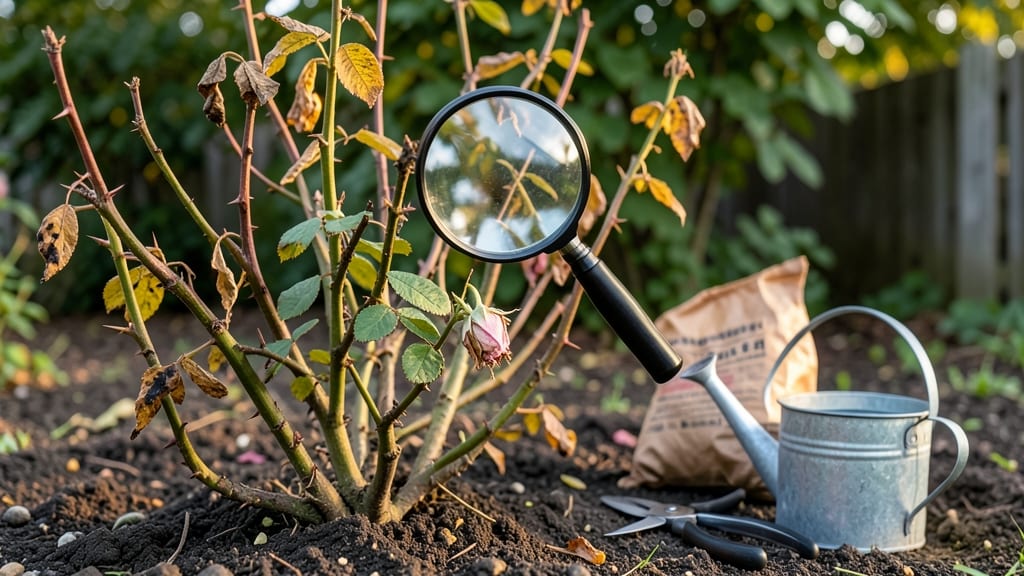
Your rose bush losing leaves isn’t a death sentence—it’s a cry for help. 🌿 Most gardeners panic when they see bare stems, but the real challenge is figuring out why it’s happening before it’s too late.
The good news? With just three focused steps, you can diagnose the problem and get your roses back to their lush, blooming selves.
Black spot leaves dark, irregular splotches that spread fast, while powdery mildew coats leaves in white dust. Spider mites cause tiny yellow specks and webbing, and aphids cluster on new growth like tiny green bugs.
Overwatering leads to yellowing leaves that stay soft, while underwatering makes them crispy at the edges. Seasonal stress? That’s usually just your roses adjusting to heat or cold—no fix needed beyond patience.
Start by pruning infected leaves (sterilize your shears with rubbing alcohol first) and watering at the base—not the leaves—to prevent fungal spread. For pests, a strong spray of water or neem oil does the trick.
Nutrient issues? A balanced fertilizer and mulch will revive your plant within weeks. The key is acting fast—once you spot the problem, you’ve already lost some leaves, but you can stop it from getting worse.
This method works for hybrid teas, floribundas, and even old garden roses. By summer’s end, you’ll have roses that look like they’ve been in the ground for decades—not just a few seasons. Let’s get those leaves back where they belong.
Root Causes Behind Leaf Loss
If your once-lush rose bush is now shedding leaves like it’s auditioning for a fall foliage contest, don’t panic—there’s usually a logical (and fixable) explanation. 🌿💨 Understanding the why behind the leaf loss is the first step to reviving your plant.
Below, we break down the most common culprits, from environmental stressors to sneaky pests, with science-backed insights to help you diagnose the issue accurately.
Roses are drought-tolerant once established, but too much water can suffocate their roots, leading to yellowing, wilting, or dropping leaves. Here’s why:
- Root Rot: Excess moisture creates anaerobic conditions in the soil, where harmful fungi like Phytophthora thrive. These pathogens block nutrient uptake, causing leaves to yellow and fall prematurely.
- Oxygen Deprivation: Waterlogged soil forces roots to "breathe" through oxygen-starved pores, triggering stress signals that manifest as leaf drop.
- Nutrient Leaching: Overwatering washes away essential minerals (e.g., nitrogen, potassium) from the root zone, weakening the plant’s ability to support foliage.
Actionable Fix: Test your soil’s drainage by digging a 6-inch hole and filling it with water. If it doesn’t drain within 30 minutes, amend the soil with perlite or compost to improve aeration. Water only when the top 2 inches of soil are dry.
While roses hate soggy roots, they also despise drought stress, especially during hot summers. Here’s the science:
- Transpiration Overload: When soil moisture drops below 30%, roses close stomata (leaf pores) to conserve water. This disrupts photosynthesis, causing leaves to curl, brown, and detach.
- Cell Membrane Damage: Prolonged drought leads to oxidative stress, where free radicals damage leaf cell walls, accelerating senescence (aging).
- Root Shriveling: Roots shrink to minimize water loss, reducing their surface area for nutrient absorption—leaves react by shedding to prioritize survival.
Actionable Fix: Water deeply 2–3 times per week during dry spells (1–1.5 inches per session). Mulch with 2–3 inches of organic matter (e.g., wood chips) to retain moisture and regulate soil temperature.
Fungi like Diplocarpon rosae (black spot) or Marssonina rosae (angular leaf spot) are notorious for causing leaf drop. Here’s how they hijack your rose bush:
- Spore Germination: Fungal spores land on leaves, germinate in humid conditions (>75% humidity), and penetrate through stomata or wounds, releasing toxins that kill leaf tissue.
- Necrosis Spread: Infected leaves develop dark spots with yellow halos, which expand and cause premature abscission (leaf drop) to limit the fungus’s spread.
- Systemic Stress: Severe infections weaken the plant’s vascular system, reducing water/nutrient transport—leaves fall as a last-resort survival tactic.
Actionable Fix:
- Remove and dispose of (not compost) fallen leaves and debris.
- Apply copper fungicide or a baking soda spray (1 tbsp baking soda + 1 quart water + a drop of dish soap) every 7–10 days.
- Prune for airflow: Trim branches to improve air circulation, reducing humidity near foliage.
Sap-sucking pests like aphids, spider mites, and Japanese beetles don’t just nibble—they drain your rose’s vitality. Here’s their modus operandi:
- Aphids/Mites: These tiny vampires insert stylets into leaf tissue, sucking out cell sap. Their saliva contains toxins that trigger honeydew (sticky residue) and sooty mold, blocking sunlight and forcing leaves to detach.
- Japanese Beetles: Adults skeletonize leaves (eating between veins), while larvae chew on roots, disrupting nutrient uptake. The plant sheds leaves to conserve energy.
- Scale Insects: These armored pests attach to stems/leaves, excreting honeydew that fosters mold. Their feeding weakens the plant’s photosynthetic capacity, leading to defoliation.
Actionable Fix:
- Blast pests off with a strong stream of water (early morning).
- Use neem oil or insecticidal soap (1 tsp per quart of water) to suffocate eggs and adults.
- Introduce beneficial predators like ladybugs or lacewings for long-term control.
Leaves are your rose’s factories—if they’re malnourished, they’ll shut down. Common deficiencies linked to leaf loss include:
| Deficiency | Visual Clues | Cause |
|---|---|---|
| Nitrogen (N) | Pale yellow leaves (starting with older ones), stunted growth | Poor soil organic matter or leaching from overwatering |
| Potassium (K) | Brown leaf edges ("scorch"), weak stems | Overuse of synthetic fertilizers or acidic soil |
| Magnesium (Mg) | Interveinal yellowing (between veins), crispy edges | Compacted or sandy soil with low organic content |
Actionable Fix:
- Test your soil (pH 6.0–6.5 is ideal for roses). Adjust with lime (to raise pH) or sulfur (to lower pH) as needed.
- Apply a balanced fertilizer (e.g., 10-10-10) in early spring, followed by a potassium-rich supplement (e.g., wood ash or greensand) in summer.
- Top-dress with compost annually to replenish organic matter.
Roses are resilient, but sudden changes can trigger leaf loss as a survival mechanism. Common triggers:
- Temperature Swings: Frosts below 25°F or heatwaves above 90°F disrupt cellular metabolism, causing leaves to abscise (drop) to protect the plant’s core.
- Wind Burn: Prolonged exposure to dry winds desiccates leaf tissue, leading to browning and detachment.
- Transplant Shock: Moving roses disrupts root-mycorrhizal relationships (beneficial fungi), halting nutrient uptake and causing leaf drop for 2–4 weeks.
Actionable Fix:
- Protect from wind with a windbreak (e.g., burlap screen) or mulch heavily to insulate roots.
Quick Fixes for Dropping Rose Leaves
When your rose bush starts shedding leaves, don’t panic—most issues have straightforward solutions! Below, we’ve mapped the most common causes to easy fixes, so you can revive your roses fast. Each remedy includes prevention tips to keep your plants thriving long-term.
Fix: Adjust your watering habits and improve soil conditions.
- Check the soil moisture 💧
- Stick your finger 2 inches deep into the soil. If it’s soggy, cut back on watering.
- Water only when the top 1-2 inches feel dry (usually 1-2 times per week, depending on climate).
- Boost drainage 🏗️
- Amend heavy clay soil with compost or perlite (mix in a 50/50 ratio).
- Plant roses in raised beds or mounds if your yard holds too much water.
- Ensure pots have drainage holes and use a well-draining potting mix.
- Avoid wet foliage 🌧️❌
- Water at the base (not overhead) to prevent fungal diseases like black spot.
- Water early in the morning so leaves dry quickly.
💡 Prevention Tip:
- Mulch around the base (2-3 inches of organic mulch) to retain moisture without suffocating roots.
Fix: Shield your roses from extreme conditions.
- Provide afternoon shade 🌳
- If your roses are in a hot, southern exposure, add a light shade cloth (30-50%) during peak sun (12 PM–4 PM).
- Use lattice screens or tall plants (like sunflowers) for natural shade.
- Deep water in heatwaves 💦
- Roses need more water in summer—soak the soil deeply 2-3 times per week instead of light daily sprinkles.
- Mulch heavily (3-4 inches) to lock in moisture.
- Prune for airflow 🌬️
- Thin out crowded canes to improve circulation and reduce heat buildup.
💡 Prevention Tip:
- Choose heat-tolerant varieties like ‘Knock Out’ roses or ‘Earth-Kind’ roses if you live in a hot climate.
Fix: Identify the culprit and treat naturally or chemically.
| Pest | Signs | Fix |
|---|---|---|
| Aphids | Sticky leaves, curled buds | Spray with soapy water (1 tsp mild soap + 1 quart water) or neem oil. 🍃 |
| Spider Mites | Yellowing, webbing on leaves | Mist leaves daily with water; apply horticultural oil at dusk. 🕷️ |
| Japanese Beetles | Skeletons of leaves, chewed flowers | Handpick beetles (drop in soapy water); use milky spore for long-term control. 🪲 |
| Rose Slugs (Sawfly Larvae) | Ragged leaves, black sawfly pupae | Remove larvae by hand; spray with Bt (Bacillus thuringiensis). 🐛 |
💡 Prevention Tip:
- Encourage beneficial insects (ladybugs, lacewings) by planting dill, fennel, or marigolds nearby.
Fix: Improve airflow and treat with fungicides.
- Remove infected leaves 🗑️
- Prune any black, yellow, or spotted leaves and dispose of them in the trash (not compost).
- Apply fungicide 🧴
- Use copper fungicide or neem oil (spray every 7-10 days until the issue clears).
- For powdery mildew, mix 1 tsp baking soda + 1 quart water + a drop of soap and spray undersides of leaves.
- Space plants properly 📏
- Ensure 3-4 feet of airflow between bushes to prevent humidity buildup.
💡 Prevention Tip:
- Water at the base (never overhead) and avoid overhead sprinklers.
- Prune for airflow—remove crossing canes and thin out dense growth.
Fix: Test soil and adjust feeding.
- Test your soil 📊
- Use a DIY soil test kit (available at garden centers) to check pH and nutrient levels.
- Roses prefer slightly acidic soil (6.0–6.5 pH).
- Fertilize correctly 🌱
- Under-fertilized? Apply a balanced rose fertilizer (10-10-10) in early spring and mid-summer.
- Over-fertilized? Flush soil with water to leach excess salts; reduce feeding for 2 months.
- Add organic matter 🍂
- Mix compost or aged manure into the soil to replenish nutrients naturally.
💡 Prevention Tip:
- Follow package instructions—over-fertilizing burns roots and causes leaf drop!
- Use slow-release fertilizers for steady nutrition.
Fix: Protect roses from temperature swings.
- Cover young or tender roses 🧥
- Use frost blankets or burlap wraps on nights below 28°F (-2°C).
- Pile mulch high (6 inches) around the base for insulation.
- Avoid late-season pruning ⏳
- Prune only in early spring—cutting back in fall exposes fresh growth to frost.
- Choose cold-hardy varieties ❄️
- If you live in a Zone 4-5, opt for ‘Dr. Huey’ or ‘David Austin’ roses (hardy to -30°F).
💡 Prevention Tip:
- Plant roses in south-facing spots where they get winter sun (helps prevent frost cracks).
Fix: Give your rose time to recover.
- Water deeply 💦
- Keep soil consistently moist (not soggy) for 4-6 weeks post-transplant.
- Avoid fertilizing 🚫🌱
- Wait 6-8 weeks before applying fertilizer to let roots establish.
- Provide shade 🌿
- Use a shade cloth for the first 2 weeks to reduce stress.
💡 Prevention Tip:
- Transplant in early spring or fall (avoid extreme heat or cold).
- Dig a wide hole (twice as wide as the root ball) to minimize root disturbance.
Frequently asked questions
Why are my rose bush leaves turning yellow before dropping?
Yellowing leaves usually signal nutrient deficiencies or overwatering. Check for pale yellow leaves (nitrogen deficiency) or yellowing between veins (magnesium deficiency). Overwatering creates root rot, blocking nutrient uptake. Test your soil and adjust watering to 1-2 times per week when the top 2 inches are dry.
What's the difference between black spot and powdery mildew on roses?
Black spot shows as dark purple/black spots with yellow halos, while powdery mildew appears as white dusty coatings on leaves. Both spread in humid conditions. Treat black spot with copper fungicide and remove infected leaves. For mildew, use a baking soda spray (1 tbsp baking soda + 1 quart water) every 7-10 days.
Can I save my rose bush if it's completely bare?
Not necessarily—but act fast! If the canes are still green (not brown), your rose may regrow. Prune back 1/3 of the plant, fertilize with balanced rose food, and water deeply. If canes are brown, the plant may be dead. Check for green buds at the base before giving up.
How often should I prune my roses to prevent leaf loss?
Prune 2-3 times per year: early spring (before new growth), summer (after blooming), and late fall (cleanup). Remove dead/diseased wood first, then thin out 1/3 of the oldest canes to improve airflow. Always sterilize shears with rubbing alcohol between cuts to prevent disease spread.
Are there any rose varieties that naturally resist leaf loss?
Yes! Knock Out roses and David Austin English roses are bred for disease resistance. Earth-Kind roses (like 'Belinda's Dream') thrive with minimal care. For hot climates, try 'Double Knock Out'—it handles heat and humidity better than traditional varieties. Always check your zone's hardiness ratings when selecting new plants.